

























































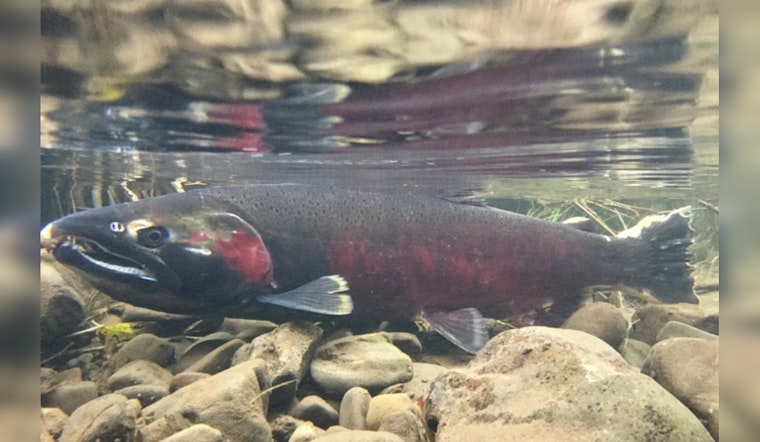
A little-known tire chemical, 6PPD-quinone, is quietly turning storm drains and artificial turf into death traps for coho salmon all over Puget Sound. The compound, used in almost every car tire, washes off crumb rubber infill and busy roadways in high enough concentrations to kill fish within hours. Local agencies are scrambling to respond, testing soil filters, treating runoff and swapping out turf infill. The fixes are not cheap, ranging from hundreds of thousands of dollars for field conversions to multi-million-dollar bridge pilots aimed at stopping die-offs most people never see.
Turf Fields Are Leaching Tire Toxins
A University of British Columbia research team found that synthetic turf fields using crumb rubber keep leaching 6PPD-quinone even after 10 to 15 years in place, and that runoff from older fields can exceed levels lethal to juvenile coho, according to UBC Engineering. The researchers estimate an average turf field holds roughly 125 tonnes of crumb rubber, the equivalent of about 20,000 tires, which effectively turns each field into a long-term pollution source unless its drainage is treated.
The Chemistry That Kills
The tire antioxidant 6PPD reacts with ozone in the air and transforms into 6PPD-quinone, a byproduct that scientists first tied to coho salmon die-offs in a landmark identification study, as detailed in research published on PubMed. State agencies now classify 6PPD-quinone as a contaminant of concern because it is acutely toxic to coho and can harm other salmon species at extremely low concentrations, according to the Washington Department of Fish & Wildlife.
Road Runoff And The Unseen Toll
Researchers say roadways, particularly congested stop-and-go corridors where tires grind down faster, can shed even higher concentrations of 6PPD-quinone than turf fields. The UBC group and others have seen that pattern in runoff measurements. Field tests have been sobering: Washington State University researchers reported about 80% mortality among juvenile coho exposed to stormwater from a small watershed, with many fish dying within hours, a result that has pushed cities and counties to move stormwater treatment up the priority list. The combination of abundant sources and rapid, acute toxicity helps explain the repeated, once-mysterious coho die-offs in urban streams.
What Works: Filters, Bioretention And Cork
King County trials show that high-performance bioretention soil mixes can strip more than 96% of 6PPD-quinone out of runoff from the Ship Canal Bridge, and juvenile coho exposed in lab tests to that treated water survived, according to county test results released by its environmental services team. On the turf front, Seattle Parks has shifted most of its synthetic fields away from crumb rubber and toward cork infill, while King County has stopped using crumb rubber in new fields and is piloting thermoplastic elastomer infill alternatives. Converting an existing field is a big-ticket item, roughly $700,000 to $1,000,000 per site, which is why counties are pairing material swaps with engineered stormwater treatment, KUOW reports.
State Funding And A Bridge Pilot
The 2022 Move Ahead Washington investment package reserved about $500 million over 16 years for Washington State Department of Transportation stormwater retrofits, and the agency is moving forward on a pilot stormwater-treatment facility for the I-5 Ship Canal Bridge that would capture and clean runoff, including 6PPD-quinone, before it enters the Ship Canal, according to WSDOT. The project is designed as a test bed to see what works at scale and to guide where limited retrofit funding should land first.
Industry Options And Legal Pressure
Tire manufacturers have launched a search for substitutes. A global consortium convened by the U.S. Tire Manufacturers Association has screened more than 60 potential replacement chemicals and selected five substances for deeper review in a Stage-1 alternatives analysis, the industry reports in USTMA materials. At the same time, tribes and fishing groups have taken their fight to regulators and the courts, filing petitions and lawsuits to speed action and demand accountability, as covered by the Associated Press.
Regulators warn that it does not take much. Washington Department of Ecology staff have cautioned that a single drop of 6PPD-quinone could kill large numbers of coho in confined waters, a stark point highlighted in reporting by KUOW. For now, the region is leaning on a patchwork of expensive field conversions, targeted filtration pilots and accelerated research, stopgap measures while scientists, regulators and industry test whether a safer tire formula can keep cars on the road without wiping out the salmon swimming beneath Seattle’s bridges.





