

























































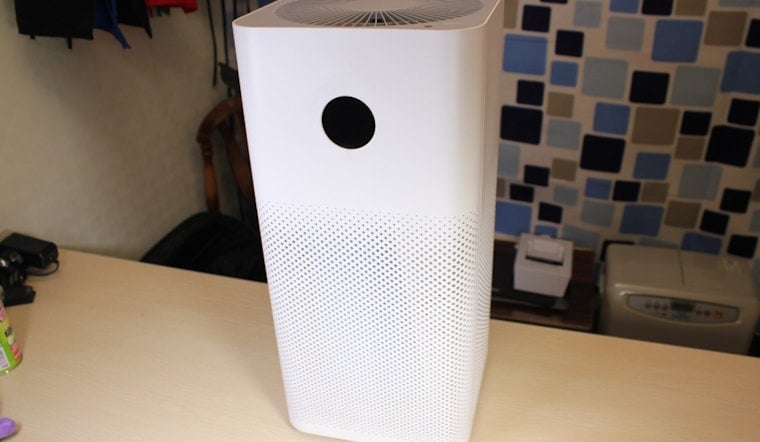
Running a HEPA air purifier at home for a month gave adults over 40 a measurable mental edge in a Boston-area trial, trimming their time on a classic executive-function test by about 12 percent. The randomized study followed people living near busy roadways in Somerville, Massachusetts, and compared a working HEPA unit with a lookalike sham device.
The result comes from a secondary outcome analysis in Scientific Reports, which examined Trail Making Test scores from 119 participants in the Home Air Filtration for Traffic-Related Air Pollution (HAFTRAP) randomized crossover trial. Everyone in the study was at least 30 years old and spent 30 days with true HEPA filtration and 30 days with sham filtration, separated by a one-month washout period. Among those 40 and older, the analysis found a statistically significant improvement on Part B of the Trail Making Test, with average completion times of 54.0 seconds versus 61.4 seconds, a ratio of means of 0.88 (p = 0.02).
Study co-authors laid out who was in the sample and what the findings do and do not prove in a piece for The Conversation, republished by outlets such as Medical Xpress. About 42 percent of the analyzed group was 40 or older, and fewer than ten participants were over 60. The trial specifically recruited residents who lived within roughly 200 meters of major roadways in Somerville. The authors emphasize that this cognitive result was a secondary outcome and that it needs to be replicated in larger, older cohorts before anyone treats it as settled science.
How the trial worked and its limits
The HAFTRAP protocol randomized homes to run HEPA purifiers in living rooms and bedrooms for 30 days, followed by a 30-day washout and then 30 days of sham filtration, according to the trial registry on ClinicalTrials.gov. In a subset of 19 homes that also had monitors, the peer-reviewed analysis reports that HEPA filtration cut indoor PM2.5 levels by about 52 percent and ultrafine particle counts by roughly 32 percent, a drop that supports exposure reduction as a plausible mechanism for any brain benefits.
The team is also quick to flag the study’s soft spots. Repeatedly taking the same cognitive test can lead to learning effects, and each intervention period lasted only one month. The test administrator knew which phase people were in, which raises the risk of subtle bias, and the sample skewed predominantly White and higher income. Put together, it is the kind of result researchers describe as promising but very much preliminary.
Where this fits with other evidence
This is not the first hint that in-home HEPA filtration can do more than tidy up your particle counts. The same research group has previously reported reductions in systolic blood pressure in a larger near-highway sample, findings highlighted by the American College of Cardiology in coverage of the JACC paper. Those cardiovascular shifts add biological plausibility to a sharper-thinking result, even if they do not prove cause and effect on their own.
Public-health experts, however, are not tearing up their playbooks. They continue to point to community-level fixes like traffic mitigation, cleaner fuels and better building ventilation as the main tools for reducing harm from traffic-related air pollution. Portable filters are framed more as helpful add-ons for individuals, not substitutes for broader environmental cleanup.
Practical takeaways
HEPA stands for High Efficiency Particulate Air, and true-HEPA units are designed to capture fine particles such as PM2.5, according to EPA guidance on residential air cleaners. The agency also recommends matching a purifier’s clean-air delivery rate, or CADR, to the size of the room and running units continuously if you want meaningful exposure reductions rather than just a cosmetic boost.
Looking ahead, the HAFTRAP researchers say they plan to test whether air filtration helps protect or restore brain white matter and alters metabolites in ways that could explain the short-term cognitive shift, work they outline in their summary on Medical Xpress. Until those data arrive, the Somerville trial offers an intriguing, if early, sign that cleaning up the air inside your home might also sharpen what is going on inside your head.





