

























































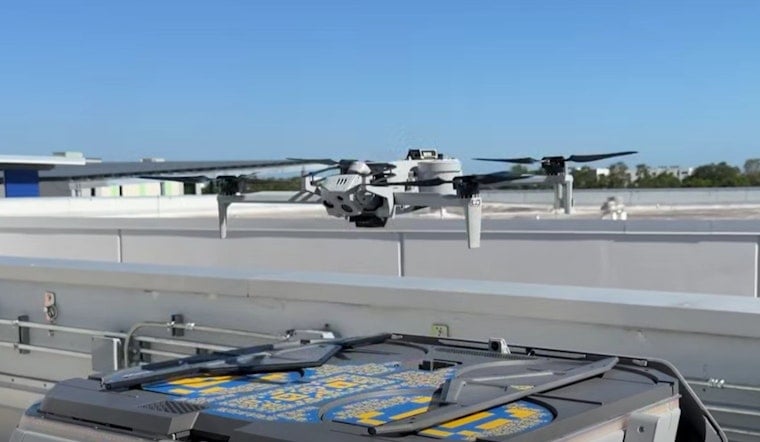
St. Petersburg police just rolled out a new high-tech toy, and it is not subtle. On Wednesday, the department unveiled a “drone hive,” parking three unmanned aircraft inside its new Real Time Intelligence Center so officers can get live aerial views of unfolding calls. The idea is to spot missing people, safety hazards, and fleeing suspects faster than traditional on-the-ground responses.
In a Facebook reel from the St. Petersburg Police Department, officials explain that the three drones will be flown remotely by pilots inside the Real Time Intelligence Center to “get eyes on a scene faster.” The reel says the drones are intended to help search for missing children and endangered adults, flag potential safety issues, and support officers following suspects on the move. The department also says it expects to roll out additional drone hives across St. Pete over the next two years.
How the drone hive will work
The department’s 2025 annual report lays out the basic architecture for the program. It states that the Real Time Intelligence Center (RTIC) will be supervised by a sergeant, staffed by two sworn officers who are certified pilots, and supported by civilian analysts. The report notes that work is underway in room 2030 to install drone landing platforms and the electrical infrastructure they require. Framing the RTIC as a “Drone as First Responder” initiative, the report says the goal is to expand real-time response and intelligence support for both investigative units and patrol officers. The annual report details the staffing plan and construction work.
What this means for policing in St. Pete
On the ground in St. Pete, the RTIC setup could cut the time it takes to collect aerial information at crime scenes, search areas, and large public events. That kind of quick overhead view may influence which calls get priority and how patrol units are deployed. At the national level, police use of drones and related tools such as artificial intelligence that analyzes video has been growing, with both clear practical advantages and familiar concerns about how far the technology might go. Axios has reported that many departments are expanding drone programs to move faster on calls and to document incidents from the air.
Privacy and oversight
Civil liberties advocates warn that drone-as-first-responder programs can slide into near-constant aerial monitoring if agencies do not set and follow strict public rules. Those groups say departments should clearly define when drone footage can be collected, how long it is kept, and who is allowed to view or share it. The American Civil Liberties Union has called for tight limits, including warrants for routine surveillance and only narrow carve-outs for true emergencies. At the same time, the Federal Aviation Administration has issued guidance and granted waivers that allow public-safety agencies to fly certain missions beyond a pilot’s visual line of sight. The ACLU and the FAA outline those privacy debates and the technical rules agencies must follow.
Legal implications
Using drones in investigations also raises legal questions, especially around when officers will seek warrants and how collected data will be handled. Federal guidance allows public-safety agencies to request waivers for flights beyond visual line of sight and to use certain emergency authorizations, but it leaves many choices about data retention and public disclosure to local policy. Materials from the Congressional Research Service and the FAA describe how those waivers work and what options agencies have as they develop tactical drone programs. Congressional Research Service
So far, the department’s reel focuses on how the drones will be used in the field, and the planning documents zero in on staffing and infrastructure. Whether St. Petersburg will publish detailed rules for how drone footage can be used and stored is still unknown. What is clear is that officials expect the drone program to expand across the city over the next two years, according to the department’s reel.





