

























































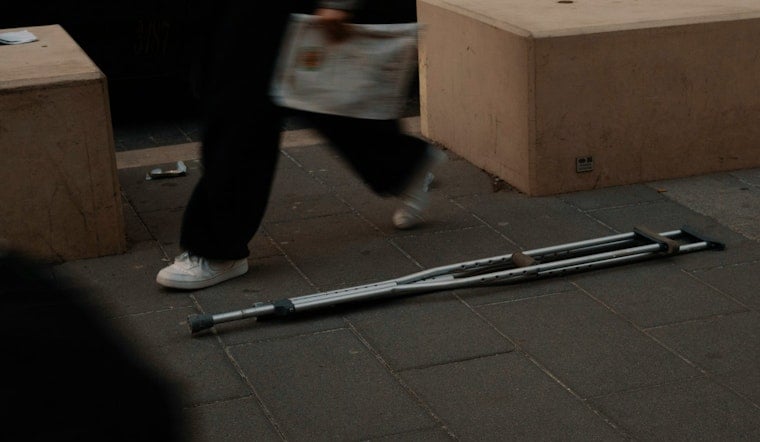
New Yorkers scrolling their feeds lately have been stopping on the same unsettling sight: towering piles of abandoned crutches. The stark black-and-white photos, apparently taken in the bowels of the transit system, show lost-and-found rooms jammed with mobility aids, dentures, musical instruments and assorted commuter castoffs. The images are having a second life online just as the physical prints get ready for a very analog debut at a major antiquarian book fair, and together they are kicking up fresh questions about how the city handles unclaimed property and riders with temporary injuries.
The photos were shot by Hans Reinhart in the mid-1940s and recently surfaced in the inventory of a Brooklyn gallery. The prints, offered as a set, are expected to appear at the ABAA New York International Antiquarian Book Fair at the end of April, as reported by Curbed. The carefully composed still lifes of crutches, false teeth, instruments and other leftovers were originally created for newsroom archives and catalogued through the era’s press services. Daniel/Oliver, the gallery handling the materials, says the set will be available to view during the Park Avenue Armory fair.
Many locals first stumbled on the photos when the story was folded into the “Extra Extra” daily roundup at Gothamist. That brief mention linked the gallery and the book fair, pushing what could have stayed a niche archival-art curiosity into a broader conversation about New York City commuting and what happens to the things, and people, the system leaves behind.
Today’s transit lost-and-found looks a lot less like a medical supply closet. Modern caches lean heavily on phones, wallets and other bits of everyday tech. A FiveThirtyEight analysis logged more than 168,000 items in the MTA system at one point, a reminder of just how sprawling and eclectic the collection can be. The agency now runs an online Lost and Found portal that walks riders through filing claims. Taken together, the numbers show how the archive has shifted from mid-century oddities to the disposable electronics and everyday gear of the modern commute.
Accessibility And What It Means Today
Those mountains of forgotten crutches hit a nerve because the subway is still notoriously hard to use for riders who rely on mobility aids, even temporarily. The New York City Public Advocate’s “Out of Service” report notes that only 141 of the system’s 493 stations currently have elevators, and it highlights a 2023 settlement that requires the MTA to make 95 percent of subway and Staten Island Railway stations accessible by 2055; details are laid out in the Public Advocate's report. For a rider on crutches, a broken leg is not just a hassle, it is a logistical problem that can mean elaborate detours, extra travel time and greater reliance on paratransit services that are themselves often criticized as unreliable.
The original wartime caption for Reinhart’s photo did not exactly mince words: “How so many people can forget a crutch in a subway train and walk off without it,” a line reproduced in Curbed. The dry disbelief still lands, but contemporary viewers tend to tack on an extra thought: a “forgotten” crutch is not just an odd human moment, it is also a quiet signal of a transit system where navigating with an injury can be so difficult that every leg of a trip feels like a small negotiation.
Where To Check If You Lost One
If you or someone you know has misplaced a mobility aid, the MTA’s first stop is its online Lost and Found portal, which explains how and when to file a claim. Riders can also reach out to station police to start the process. For those who would rather go looking for the images than their own belongings, the ABAA New York International Antiquarian Book Fair is scheduled for April 30 through May 3 at the Park Avenue Armory. The gallery that handled the photo set lists an East Williamsburg appointment space in its inventory; check the ABAA New York International Antiquarian Book Fair site and the Daniel/Oliver gallery listing for viewing details.
Whether they read as darkly funny artifacts from another era or as a pointed reminder of who gets left waiting on the platform, the crutch photos are giving New Yorkers a fresh excuse to think about who the transit system is built to serve. The prints, the lost-and-found data and the long horizon for accessibility upgrades all point to the same uneasy conclusion: the story of crutches on the subway is part historical oddity, part snapshot of an accessibility debate that is still very much in progress.



