

























































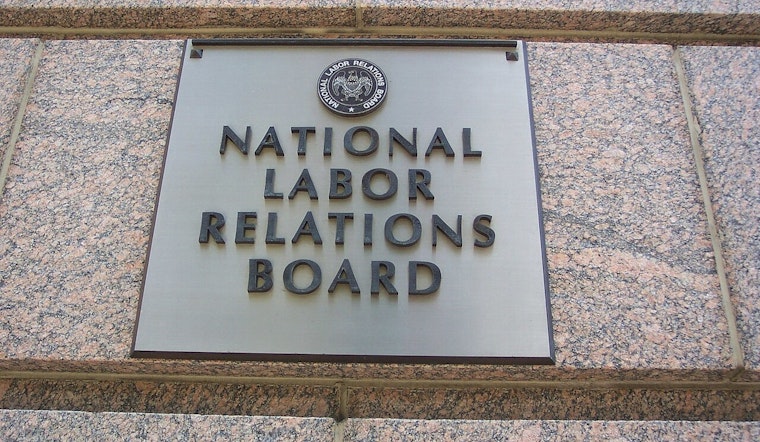
President Donald Trump on April 13, 2026 nominated longtime labor lawyer James Macy to a seat on the National Labor Relations Board, a move that would tilt the already-contentious agency further to the right if the Senate signs off. Macy would step into a board that has been at the center of legal battles and headline-grabbing staffing drama after operating without a full quorum for much of last year. The White House’s latest batch of nominations also includes a renomination for sitting member David Prouty.
According to Reuters, the administration said Macy’s appointment would give Republicans a 3-1 edge on the NLRB’s five-member panel if senators confirm him. Reuters noted that Macy spent more than four decades in private practice, most recently at Von Briesen & Roper, before taking a post at the Labor Department last year. The outlet reported that the nominations went up to the Senate on Monday.
On its leadership page, the Department of Labor lists Macy as director of the Office of Workers' Compensation Programs and says he joined the department in 2025 after serving as acting administrator of the Wage and Hour Division. The DOL biography sketches a career steeped in wage-and-hour, collective bargaining and workers' compensation work in private practice, presenting Macy as a veteran labor attorney who has operated on both the enforcement and counseling sides of the table.
Board Balance And Recent Moves
The NLRB returned to full operational strength earlier this year after two Republican members were sworn in and the agency resumed issuing rules and decisions. The board lists James R. Murphy as chair and shows Murphy and Scott A. Mayer taking their oaths earlier this year, restoring the functioning quorum that had been missing in 2025.
With that quorum back in place, the agency in late February formally restored the 2020 joint-employer standard, a regulatory shift that tightens the test for when two companies can be treated as joint employers, according to the NLRB. That change effectively revives a more limited approach to joint responsibility just as the board’s partisan balance is poised to tilt further.
What This Could Mean For Workers And Employers
Labor advocates argue that returning to a narrower joint-employer test will make it tougher for unions to hold multiple companies accountable during organizing drives, while business groups counter that the tightened standard offers much-needed legal clarity. Policy analysts point out that the 2020 rule requires “substantial direct and immediate control” over an employee’s core terms and conditions before a firm can be deemed a joint employer, which narrows potential liability for parent companies and contractors, according to the Economic Policy Institute. In practice, that standard could loom large in franchise, staffing and subcontracting arrangements that depend on shared or delegated oversight at work sites.
Next Steps
Macy’s nomination now heads to the Senate, where he will face hearings and a confirmation vote. If confirmed, he would step into a board that will be positioned to shape the outcome of high-stakes labor disputes for years. The pick underscores how a single personnel move at an independent agency can quickly reset the playing field on questions ranging from union organizing to employer liability.



