

























































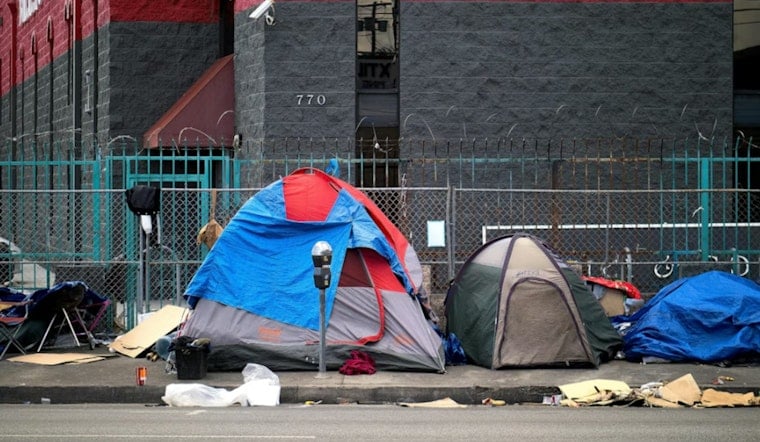
Clark County leaders say the county’s growing homeless crisis is being fueled first and foremost by lack of affordable housing and rising rents, not primarily by addiction or mental illness. While local officials race to add more short-term shelter beds, the focus is increasingly shifting to permanent, income-restricted housing and stronger support services to keep people housed for good.
On the numbers
The county’s one-night Point-In-Time count tallied about 1,530 people experiencing homelessness, roughly a 12% jump from the previous count. Of those, 742 people were unsheltered, 560 were staying in emergency shelters and 228 were in transitional housing, according to Clark County. The same presentation reported that about 29% of those counted were chronically homeless and 38% identified as people of color.
Officials point to housing costs, not addiction
Local advocates and homelessness staff, including Sesany Fennie-Jones of the Council for the Homeless and Jamie Spinelli, Vancouver’s homeless response manager, told KGW that escalating rents, steady population growth and gaps in federal funding are doing most of the damage. Fennie-Jones emphasized that housing-first policies are considered best practice and added that "not all people experiencing homelessness are on the street because of mental illness or drug addiction," noting that even when people complete treatment they often have no immediate path into stable housing.
What the county and city are doing
Vancouver and Clark County say they are pushing a two-pronged plan: expand short-term shelter capacity and "safe stay" communities while speeding up construction of affordable housing and related support services, as outlined in the city’s Homelessness Emergency situation report. The strategy pairs outreach and navigation teams with low-barrier shelters and safe stays, with the goal of moving people into permanent, income-restricted units as those homes become available, according to local staff.
Early results and shelter projects
The situation report tracks several efforts already in motion, including a new bridge shelter, the Hope Village site and other safe-stay communities, and it highlights some early outcomes. In one understated example, the report notes, "The Outpost: 1 resident transitioned into housing," while other sites report residents securing IDs, entering treatment and landing jobs. City staff point to those details as signs that the model can help people stabilize, provided there is actual housing for them to move into; see the full update from the City of Vancouver.
Why affordability matters locally
Advocates and housing officials say the local affordability gap is unusually stark. Andy Silver of the Vancouver Housing Authority told OPB that between 2011 and 2021, rents climbed about 70% while incomes rose less than 20%, a mismatch that particularly squeezes fixed-income seniors and low-wage renters. County documents also put the average Clark County apartment rent at roughly $1,700 per month, according to Clark County, a number officials say leaves very little room in the budget for households living on fixed or limited incomes.
What advocates say
The Council for the Homeless stresses that the Point-In-Time count is only a one-night snapshot and likely misses people who are doubled-up with friends or family or otherwise precariously housed. The group urges long-term investment in both emergency shelter and deeply affordable housing, and publishes its data and explanations through the Council for the Homeless. Nonprofits and county dashboards show outreach teams and safe-stay sites handling the immediate front-line work, but advocates argue that far more affordable units and stable funding will ultimately decide whether the county’s homeless numbers actually start to fall.




