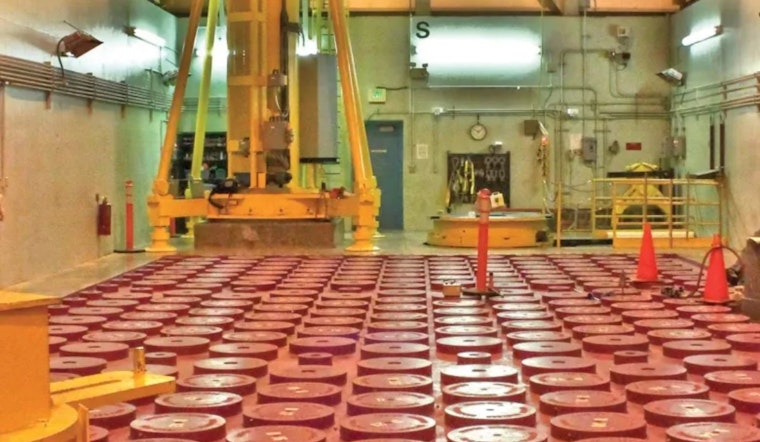
A short drive north of Denver, tucked near Platteville, Colorado, is already babysitting about 33,069 pounds of spent reactor fuel. The roughly 15 metric tons of nuclear leftovers from the state’s only commercial reactor sit in a reinforced concrete vault at the old Fort St. Vrain power plant, where they have remained under federal supervision since the reactor stopped generating electricity in 1989. For nearby communities, the nuclear debate is not an abstract policy argument; the waste is already here, on a schedule, and under a microscope.
As reported by The Colorado Sun, the on-site storage installation that holds the Fort St. Vrain fuel elements sits about four miles east of Interstate 25, not far from the Platteville community center. In the 1980s, some fuel was shipped to Idaho, but roughly 15 metric tons remained in Colorado after political pushback halted additional transfers. That remaining inventory, 33,069 pounds of spent fuel, is now Exhibit A in the fight between supporters and critics of expanding nuclear power in the state.
What the vault contains
The Fort St. Vrain Independent Spent Fuel Storage Installation is essentially a massive concrete strongbox: about 143 feet long, 72 feet wide, and 80 feet high. Inside are six vaults and 244 loaded fuel-storage containers holding roughly 1,464 fuel elements. According to the Nuclear Waste Technical Review Board, the facility was purpose-built for Fort St. Vrain’s graphite-and-thorium fuel. It was designed to store about 1,482 fuel elements using passive air cooling and thick concrete shielding rather than complex active systems.
The board’s materials describe fuel elements that are roughly 31 inches tall and 14 inches across, slotted into straightforward but sturdy storage holes. A crane system handles the heavy lifting inside the vault, reinforcing the point that the setup is more about brute-force durability than high-tech theatrics.
Who oversees the site and the ticking clock
The U.S. Nuclear Regulatory Commission keeps tabs on the installation. In an April 2024 inspection documented by the U.S. Nuclear Regulatory Commission, the agency reported that the Independent Spent Fuel Storage Installation was in good condition and operating within the terms of its license. The Department of Energy took over responsibility for the spent fuel in 1999, when the NRC license for the facility was formally transferred to DOE.
The Hazardous Materials Section of the Colorado State Patrol notes that a written agreement requires DOE to remove all Fort St. Vrain spent fuel from Colorado by Jan. 1, 2035. The state also points out that it already serves as the routing authority for any future transport, meaning Colorado will have a direct say in how and where the material moves once shipments begin.
Management, security and why it stays put
Day-to-day management at the site falls to contractors working for DOE. Recent DOE materials identify the Idaho Environmental Coalition as the facility manager and outline upgrades to infrastructure and security at the Independent Spent Fuel Storage Installation. Federal budget and program documents also list Protection Strategies Incorporated as responsible for physical security services at Fort St. Vrain under DOE contracts.
The vault was designed around Fort St. Vrain’s unusual fuel type and is already woven into DOE’s long-term storage plans. That combination has kept the material in place while federal agencies work through how to repackage the fuel and eventually ship it off-site. For now, staying put is part of the plan.
Policy tug-of-war
While the waste sits near Platteville, state policy has been moving in a different direction. In 2025, the Colorado General Assembly passed HB25-1040, which adds nuclear power to the state’s statutory definition of a "clean energy resource." On paper, that opens doors for financing and planning future reactors even as the leftovers from the 1979–1989 Fort St. Vrain experiment remain in storage just up the road.
That disconnect between policy green lights and the unresolved practicalities of waste management has become a central tension in Colorado’s conversation about a nuclear future. Supporters point to potential low-carbon power; critics point to the concrete vault and ask what happens when the next batch of fuel needs a home.
Local reaction
Plenty of Coloradans are not thrilled about the idea of adding more nuclear to that equation. As reported by The Colorado Sun, opponents include retired investigators who once worked on Rocky Flats. They argue that talking up new reactors while Fort St. Vrain’s fuel sits in what is still considered temporary storage is asking for trouble.
"Nuclear energy will generate nuclear waste without a plan to store or dispose of such nuclear waste," Jon Lipsky told The Sun, a line that has become a rallying point for community groups. Those critics point directly to the Fort St. Vrain stockpile as evidence that the country still has not fully answered the question of where such waste should ultimately go.
What happens next
Federal records and technical assessments outline a relatively straightforward near-term path: DOE plans to continue safe, licensed storage at Fort St. Vrain while it prepares to repackage the fuel and ship it to Idaho National Laboratory. From there, the material is expected to head to an interim or permanent repository, if and when one is available.
The Nuclear Waste Technical Review Board reiterates that under Colorado’s agreement, DOE must remove all Fort St. Vrain fuel by Jan. 1, 2035. Both state and federal agencies emphasize that any transport will require careful planning for routes, security, and emergency response. In other words, getting 33,069 pounds of nuclear waste out of Colorado will be at least as complicated as keeping it there in the first place.