

























































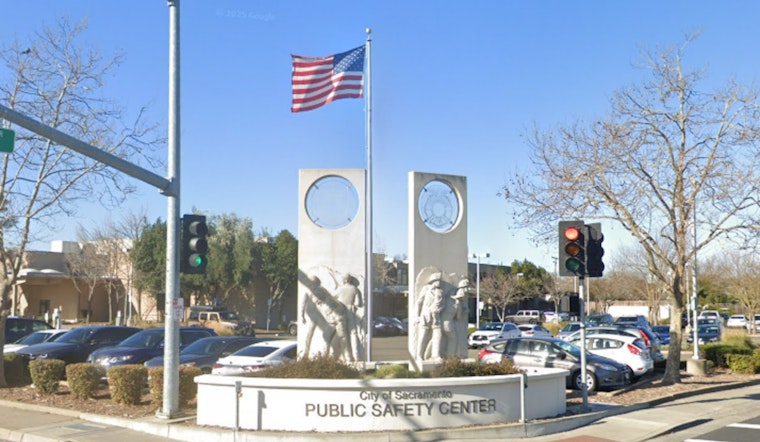
The ACLU of Northern California is calling out Sacramento police over how often officers pull over Black and Latino drivers, accusing the department of skewed traffic enforcement that hits communities of color hardest. In a fresh look at 2023-2024 stop data, the group says Black residents accounted for about one third of Sacramento Police Department traffic stops while making up only about 12% of the city’s population, and that Black drivers were more than three times as likely to be stopped as white drivers. Most of those stops, the ACLU argues, were tied to non-safety, equipment or administrative issues, with Black and Latino motorists also searched at higher rates.
ACLU analysis of state stop data
In its report, the ACLU of Northern California says it examined 46,076 traffic stops Sacramento officers reported to the state under California’s RIPA law in 2023-2024. According to the analysis, Black drivers made up 33% of those stops despite representing about 12% of the city’s residents. The group calculates that Black drivers were 3.1 times more likely to be stopped than white drivers, and that Black and Latino motorists were, respectively, about 2.1 and 1.5 times more likely to be searched once pulled over.
The report notes that roughly 90% of those searches did not turn up any contraband, and that more than a quarter of all stops ended without so much as a warning, citation or arrest. For civil rights advocates, that combination of high stop rates, high search rates and low hit rates is exactly what pretextual policing looks like on paper.
Sacramento police respond
The Sacramento Police Department told KCRA it is aware of the ACLU’s findings and pointed to its training on “fair and principled policing,” which the agency says begins in the academy and continues through an officer’s career. The department said it remains committed to reviewing its policies and practices to support both effective policing and community trust.
Local advocates quoted in the coverage counter that training by itself will not solve what they describe as built-in patterns of discretion that push Black and Latino drivers into repeated contact with police over low-level issues.
Oversight had already flagged tinted-window stops
The concerns raised in the ACLU report track closely with a 2023 external audit from the city’s Office of Public Safety Accountability, which focused in part on complaints about tinted-window traffic stops. During the audit period, OPSA found those tint-related misconduct complaints came only from Black and Latino drivers. The office also documented cases in which officers used tinted windows or other minor violations as a pretext to investigate unrelated criminal activity.
OPSA recommended clearer search and seizure rules and better recordkeeping around the reasons officers give for initiating traffic stops.
Policy push and state context
Against that backdrop, the ACLU is urging Sacramento leaders to adopt a policy that would bar officers from making stops based solely on non-safety equipment violations and other low-risk, highly discretionary infractions. The push comes as the statewide Racial and Identity Profiling Advisory Board, whose work is posted by the state Attorney General’s office, has highlighted ongoing disparities in traffic and pedestrian stops and has urged limits on discretionary enforcement.
The California Department of Justice has released RIPA data showing how these disparities play out across California. Meanwhile, some cities are already moving to tighten the rules. In Los Angeles, for example, the City Council voted in May to press for stricter limits on pretextual stops, and the Los Angeles Times reports that city leaders have asked police overseers to narrow when officers can use minor violations as a springboard to look for more serious crimes.
What the ACLU recommends
The ACLU’s Sacramento report calls for a ban on stops rooted in non-safety equipment issues that are frequently used as pretext to fish for unrelated offenses. It also suggests shifting enforcement of low-risk matters into channels that do not require an officer to initiate a traditional traffic stop.
“Targeting Black and Latino drivers for minor violations like tinted windows is basically stop-and-frisk for driving,” Carlos Montes-Ponce, a senior organizer at the ACLU of Northern California, said in the group’s release. The organization stresses that its recommendations come directly from mandatory RIPA data that Sacramento police already submit to the state, and it argues that the city needs concrete policy changes rather than relying on more training alone.
Next steps for Sacramento
With the ACLU’s analysis now sitting alongside the city’s own audit and statewide RIPA findings, Sacramento officials are under renewed pressure to rethink how officers use their discretion on traffic stops. The department’s pledge to review its practices leaves several options on the table, from new rules by the police commission to a City Council directive to a department-level rewrite of when officers may initiate stops for non-safety violations.
For now, the report adds another stack of numbers to a long-running local argument over whether, and how far, Sacramento should go in limiting pretextual traffic stops on its streets.




