

























































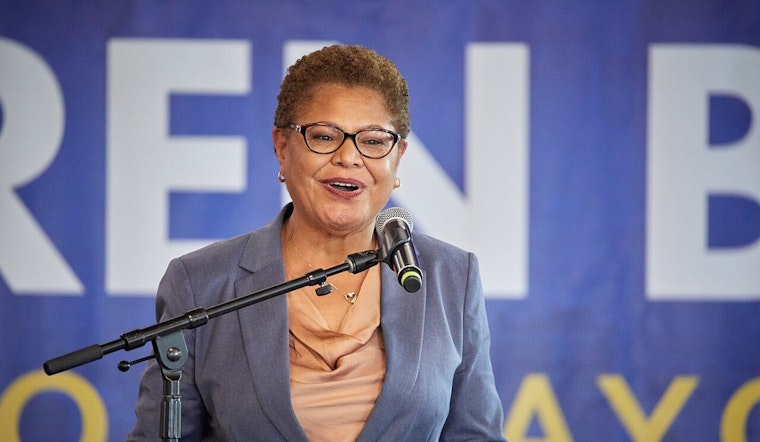
Los Angeles Mayor Karen Bass is getting the Metro gavel back just in time for some of the busiest years in the region’s transit history.
The Los Angeles County Metro Board voted Thursday to appoint Bass as board chair for fiscal year 2026–27, returning her to the role she last held in 2023–24. Her new one-year term starts July 1 and will put her at the center of planning for the 2026 World Cup and the run-up to the 2028 Olympic and Paralympic Games. As part of the same leadership shakeup, the board named Supervisor Kathryn Barger as first vice chair and Pomona Mayor Tim Sandoval as second vice chair, a slate meant to guide an agency that is reshaping its approach to safety and customer service. Fernando Dutra, who lost his Whittier reelection bid in April, is expected to step down from the board in July when membership changes take effect.
According to the Los Angeles Daily News, the board approved the new leadership lineup at its May 28 meeting and plans to formally pass the gavel at Metro’s State of the Agency event this summer. Directors said the timing is meant to give Bass clear authority to guide the agency through major international events and the rollout of expanded safety programs.
Leadership shuffle amid safety overhaul
Metro has been in the middle of a sweeping rethink of how it handles safety on buses, trains and in stations. In 2024, the board voted to create a Transit Community Public Safety Department and to expand its ambassador program, aiming to put more trained staff on the system who can respond to crises and help riders navigate their trips. In a press release, LA Metro said the new model is designed to better tailor enforcement and support services to the specific needs of different parts of the system.
At the same time, the agency is reviewing its board rules and representation in a broader governance review that could eventually change how seats are allocated. Officials say the goal is to match Metro’s decision making to shifting patterns in how the county is governed, so that the people at the table reflect regional realities on the ground.
How the board is made and why it might shift
Right now, the Metro Board has 13 voting members. They include the five Los Angeles County supervisors, the mayor of Los Angeles, who also appoints three members, and four representatives chosen by the county’s City Selection Committee, a structure explained on Metro’s governance pages. An ad hoc board composition committee is working on potential changes that could adjust representation as county governance evolves, a process that officials say is intended to keep Metro’s decisions aligned with regional shifts.
Board leaders told reporters that Dutra will vacate his Metro seat in July, and that the Gateway Cities Council of Governments and the county city selection committee will select his successor. Bass called the 2026 World Cup “a dress rehearsal” for 2028 and said the matches are a chance to test operations and safety procedures before the Olympic spotlight hits, according to the Los Angeles Daily News.
Why this matters for riders
Regional planning groups warn that the World Cup and the Olympics will push Southern California’s transportation network to its limits, requiring careful testing of transit capacity and security in 2026 and beyond. The Southern California Association of Governments has flagged both events as catalysts for faster mobility planning and tighter coordination across agencies, which helps explain why Metro’s leadership and safety decisions are drawing so much attention now.
For riders, the near term takeaway is simple enough. Expect to see more Metro ambassador teams on buses and trains and more operational experiments during World Cup service, as the agency tries out changes under real-world pressure. A formal leadership handoff and broader safety rollout are expected this summer, with officials saying the new leadership team is intended to keep service steady while Metro gears up for some of the highest-stakes events the region has ever hosted.





