

























































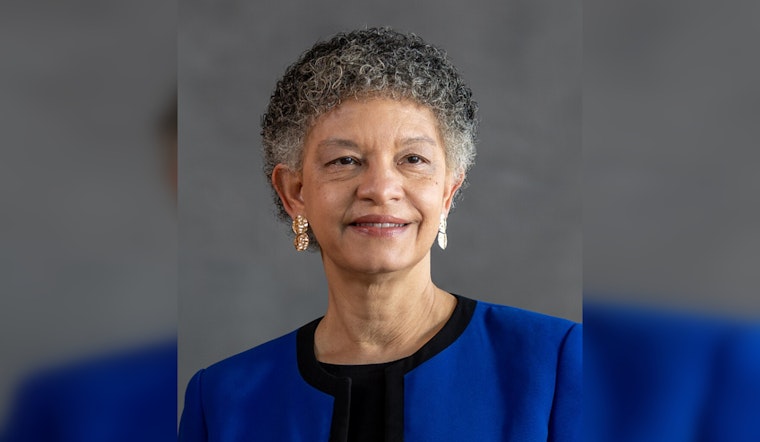
Boston Fed President Susan M. Collins is pushing back on how the central bank talks about its next move. She said she aligned with colleagues who dissented at last week’s FOMC meeting over wording that, in their view, suggested the Fed would soon resume cutting rates. Collins told interviewers the post-meeting statement should avoid language that creates “the presumption that the next move will be a cut.”
Collins on the Big Take
Speaking on Bloomberg’s Big Take podcast, Collins was interviewed by Maria Eloisa Capurro and host David Gura. She weighed in on inflation, the economic fallout from the conflict in Iran and “how the US central bank might evolve” under a new leader. In that conversation she said she was “strongly supportive” of leaving policy unchanged but preferred the committee’s statement be less suggestive of imminent easing, according to Bloomberg.
What Split the Committee
The April 28-29 meeting ended with the committee holding the federal funds target at 3.50%-3.75%, while several members raised objections to the forward guidance in the statement. The Federal Reserve said voting for the action included Chair Jerome Powell and eight others. Stephen I. Miran preferred a 25-basis-point cut, and three officials, Beth M. Hammack, Neel Kashkari and Lorie K. Logan, supported holding rates steady but opposed language that implied an easing bias.
Warsh’s Path and the Communications Question
Collins also addressed the likely transition to a new chair as President Trump’s nominee, Kevin Warsh, moves through confirmation. The nomination was advanced by the Senate Banking Committee in a 13-11 party-line vote, and The Washington Post reports Warsh has signaled he would scale back some of the Fed’s public communications, with fewer news conferences and less quarterly forward guidance. That shift could make markets more sensitive to each policy announcement, with every word from the Fed chair carrying even more weight.
Why This Matters for Boston
Collins’ stance matters close to home because Boston Fed research and regional reporting highlight how shifts in policy and rates affect household behavior. A recent Hoodline summary of Boston Fed work noted that higher card APRs quickly reduce spending for people carrying balances. With the 30-year mortgage averaging about 6.37% this week, per Freddie Mac, any shift in the Fed’s policy path, or in how it signals that path, could ripple through New England’s housing and consumer markets.
Traders are now watching the full Senate calendar, with a floor vote expected soon after the committee action. Markets will be parsing both the confirmation process and every turn of phrase in Fed statements for clues about how quickly borrowing costs may move. Collins’ comments make clear that Boston’s Fed is focused not only on the substance of policy, but on the language that shapes market expectations.


