

























































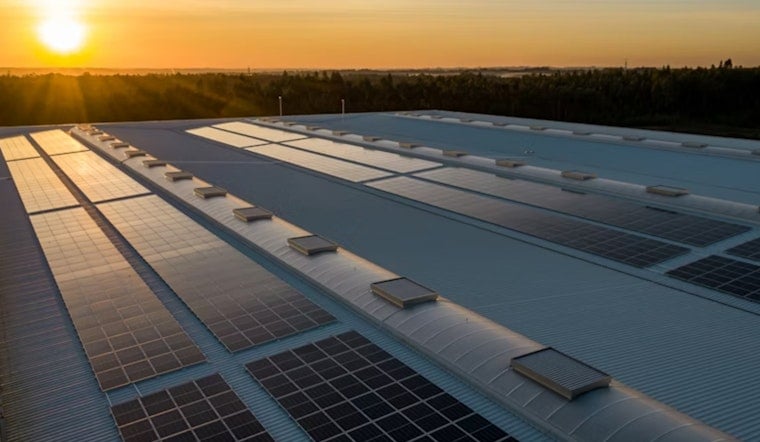
On May 1, Burbank Water & Power threw the switch on what is now the city’s largest solar-plus-storage project, turning the rooftop of the Regional Intermodal Transportation Center next to Hollywood Burbank Airport into a sprawling mini power plant. The installation combines a 2-megawatt rooftop solar array with an 8-megawatt-hour battery system spread across roughly 174,000 square feet, with about 4,260 American-made panels. Officials say the setup can supply the equivalent of roughly 585 homes. Construction wrapped in April, and city leaders marked the moment with a ribbon-cutting ceremony as the system went fully into service.
Burbank Water & Power says the project pairs a 2-megawatt solar system with a 2-megawatt/8-megawatt-hour lithium-ion battery that is now fully operational. “Today marks the official ribbon-cutting of the largest solar system in Burbank,” BWP General Manager Mandip Samra said in the utility's announcement. The roughly $17 million installation is described as a major step toward the city’s 100 percent zero-carbon goal, according to City of Burbank.
Rooftop Scope and Power Output
The RITC parking-structure rooftop offers about four acres of real estate for the solar buildout, and BWP says every inch counts. The utility reports the system includes 4,260 American-made solar panels. Taken together with the battery, Burbank Water & Power estimates the installation’s annual output is enough to power about 585 homes, according to Burbank Water & Power.
Battery Steps In When Demand Spikes
The lithium-ion battery is designed to soak up excess electricity during sunny daytime hours and send it back out when demand and prices climb in the evening. The project’s California Environmental Quality Act filing lists the battery at about 8 megawatt-hours of energy capacity and 2 megawatts of deliverable power, according to the project's CEQA documents.
Partners, Price Tag and Build Timeline
BWP developed the rooftop project in partnership with Hollywood Burbank Airport and the Burbank-Glendale-Pasadena Airport Authority. City procurement records show Baker Electric was selected for the job following a bidding process that began in August 2023. The utility and local coverage put the total project cost at roughly $17 million, and work on the installation finished in April, according to city documents and the Los Angeles Daily News.
How It Fits Burbank’s Clean Energy Game Plan
City officials say the RITC rooftop array is one piece of a bigger push to get Burbank to 100 percent zero-carbon energy by 2040, and a way to add local clean power while larger regional transmission projects inch along over years. “This project gets BWP one step closer to meeting our zero-carbon energy supply goal,” BWP leadership said in the city statement and at the ribbon-cutting, as reported by the City and local outlets.
The new system is meant to complement, not replace, the city’s broader clean-energy procurement. It rolls out alongside programs aimed at boosting small-scale solar and battery storage in homes and businesses. Those efforts include Burbank’s battery rebate program and its Solar Net Billing policy, according to Burbank Water & Power.





