

























































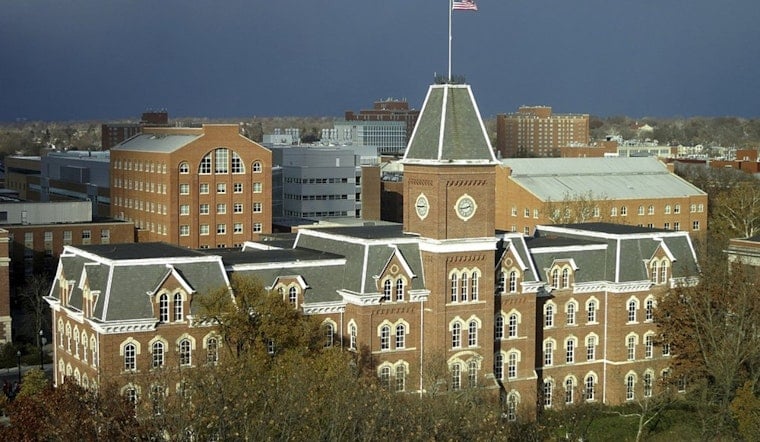
Ohio State University's ambitious redo of the 15th & High entrance is coming with a potentially steep cultural price tag: the possible loss of the Wexner Center for the Arts' basement film theater and the curved concrete steps students know as the "whispering wall." Planning documents show the design team will be asked to reconsider how the plaza functions, including what happens to the theater, and that prospect has already set off alarms among filmmakers, faculty and students. The fight sits squarely at the crossroads of campus planning, preservation and the Wexner's standing as a national arts hub.
What the board approved
In March, the Ohio State Board of Trustees signed off on $2.3 million in professional services to produce a preliminary design for the "15th & High Arts Plaza," according to the Ohio State Board of Trustees. The project data sheet (OSU‑260153) schedules design work from May 2026 through April 2027 and anticipates a separate construction vote by the board before any ground‑breaking, with a tentative construction window listed as mid‑ to late‑2027.
What the RFQ says
The university's Request for Qualifications that launched the planning process directs prospective design teams to evaluate the Wexner's lower‑level film space as part of the plaza overhaul. As reported by Columbus Underground, the RFQ states, "This evaluation will determine whether the theater should be modified or decommissioned and demolished for the area to be integrated into the project."
Film community and preservation worries
Inside the arts world, that sentence landed with a thud. Wexner staff and visiting filmmakers have warned that removing or gutting the theater would undercut the center's programming and archival work. David Filipi, the Wexner's head of film, told reporters that the language used in planning conversations suggested "it would mean the theater would be demolished," and other programmers argue the Wex's screening capabilities and curatorial presence would be extremely difficult to re‑create elsewhere. Those concerns are laid out in detail by Matter News, which gathered perspectives from filmmakers and faculty about archival standards and the cultural importance of the program.
Why the Wex matters
The Wexner Center for the Arts opened in 1989 as an interdisciplinary venue inside a Peter Eisenman‑designed building that many see as a defining piece of campus architecture. According to the Wexner Center's own history and architecture materials, the institution was conceived to put film and media on equal footing with visual and performing arts. Supporters say that mission would take a serious hit if the in‑house theater disappears.
University response
University leaders, for their part, describe the project as an effort to strengthen the campus "front door" along High Street, with details still to be worked out. In a statement relayed to local reporters, OSU spokesperson Ben Johnson said the Wexner "is aware and engaged in ongoing conversations about the project" and that "Ohio State remains committed to the center and its film department," language reported by Columbus Underground.
Timeline and next steps
The trustees packet frames the current effort as a design phase. Professional services were approved in March, and design work is expected to run through April 2027, according to the Ohio State Board of Trustees. The university will review RFQ responses, select a design team and use the resulting study to recommend whether the theater and plaza should be altered. Any demolition or major construction would still require a future vote by the board.
What to watch
All eyes now turn to RFQ submissions and public meetings during the design phase, which is when preservation advocates, faculty and filmmakers are most likely to push hardest for alternatives. If the evaluation leans toward removing the theater or the whispering wall, expect a long, loud debate and demands for a compromise that protects the Wexner's film programming while still reshaping how students and visitors enter campus.





.jpg)