

























































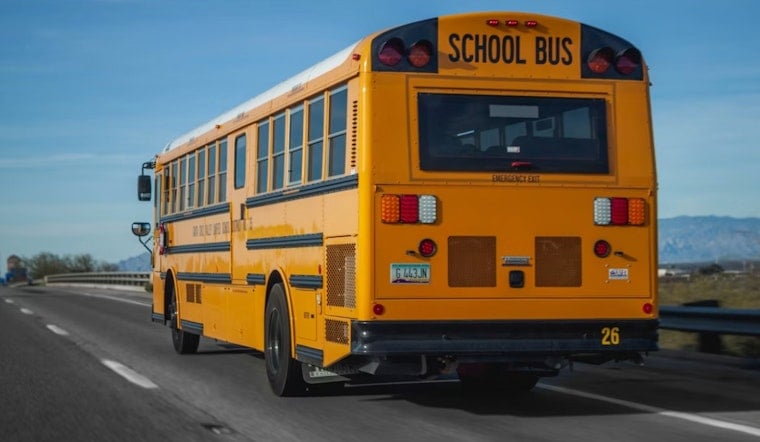
In Delaware County, a routine school-bus dispute has snowballed into a statewide case study in how Ohio decides which kids get a ride and which are left to fend for themselves. After Olentangy Local School District stopped running buses to a local parish school because of new bell times and instead offered families cash, one family pushed back. A hearing officer sided with the district, and now the Ohio Department of Education and Workforce has the final say. The standoff lands just as a draft state report shows tens of thousands of Ohio students were officially labeled “impractical to transport” this school year.
Delaware County dispute
According to Cleveland.com, Olentangy told families that shifting bell schedules made it too inefficient to keep running routes to St. Mary, a nearby parish school, and instead offered a state-authorized payment in lieu of busing. One family refused the cash and asked the Department of Education and Workforce to step in. A hearing officer ultimately backed the district’s call, leaving the department to decide whether that family gets interim transportation or must accept the payment offer. The dispute neatly walks through every procedural step districts use when they declare a route “impractical.”
How the law lets districts declare routes impractical
Ohio law generally requires school districts to transport many K–8 students who live in the district, but it also gives school boards a way out if they determine a particular route is “impractical.” The mechanics are laid out in Ohio Revised Code 3327.01 and Ohio Revised Code 3327.02. Those sections require boards to weigh six statutory factors: travel time and distance, likely ridership, cost of service, parity with public-school transportation, the impact on existing schedules, and whether reasonable alternatives exist.
The law also requires written notice to parents and to the state, and it mandates that districts offer a payment in lieu of bus service when they make an impracticality determination. Parents who reject that payment can request mediation. If that does not resolve the dispute, they can seek an administrative hearing, and the resulting decision can lock in how transportation is handled in future years as long as the underlying facts remain similar.
Workgroup findings and proposed fixes
A draft report from a legislative pupil-transportation workgroup, cited by Cleveland.com, found that districts declared transportation impractical for roughly 22,000 students this year, with about 21,000 of them attending private schools. The workgroup did not just tally the problem. It suggested fixes. Its recommendations include building a statewide transportation database, expanding the use of smaller vans on private-school routes with few riders, and developing regional transportation networks so districts can share routes and cut down on duplicated trips.
The workgroup was scheduled to deliver its final report to Gov. Mike DeWine and state lawmakers by June 30, and the ideas are already on policymakers’ radar. The County Commissioners Association of Ohio and legislators are discussing how to turn some of those recommendations into actual statutes.
Cash instead of a bus
Once a district officially declares a student “impractical to transport,” it is legally required to offer a cash payment instead of a seat on a school bus. In practice, families say those checks often do not come close to covering what it really costs to get a child to school every day. Spectrum News 1 reported that for the 2023–24 school year, the minimum and maximum payments ranged from about $596 to $1,193 per student, even though per-rider transportation funding can be higher. Districts point to chronic driver shortages and complicated, inefficient routing as key reasons they lean on the impracticality option.
State Sen. Andrew Brenner, who chairs the Senate education committee, told News 5 Cleveland that he is weighing legislation to tighten up the criteria for declaring transportation impractical and to explore letting state transportation dollars "follow the student" more directly.
Legal stakes
The fight over who gets a bus has already reached Ohio’s highest court. The Ohio Supreme Court recently dismissed a mandamus action filed by the attorney general over Columbus City Schools’ impracticality determinations, ruling that the attorney general lacked standing to bring the case. Even so, the court’s opinion walked back through the deadlines and procedures districts are supposed to follow when they pull bus service.
That ruling, combined with the department’s mediation and hearing system, means districts that botch the process or miss deadlines risk more than angry parents. Procedural missteps, late notices, or failure to provide required interim transportation can trigger funding clawbacks or corrective orders from the state. The court’s reasoning is summarized in a recent state decision, and the underlying opinion is available at Justia.
With the workgroup report due at the end of June and lawmakers already floating bill language, families, dioceses, and districts are watching closely for new guidance or law that could reshape routes, expand van use, and change how payments in lieu are handled. Until then, parents like the family in Delaware County remain stuck in limbo while state officials and mediators decide whether they will see a yellow bus roll up or just another check in the mail.



