

























































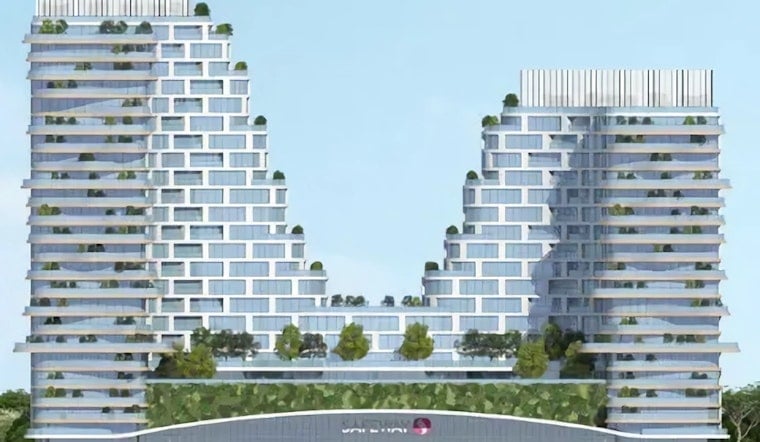
A plan to replace the iconic Marina Safeway with a 25-story, 790-unit apartment complex has ignited fierce opposition from neighborhood residents and elected officials, reviving old debates about waterfront development in one of San Francisco's most affluent neighborhoods.
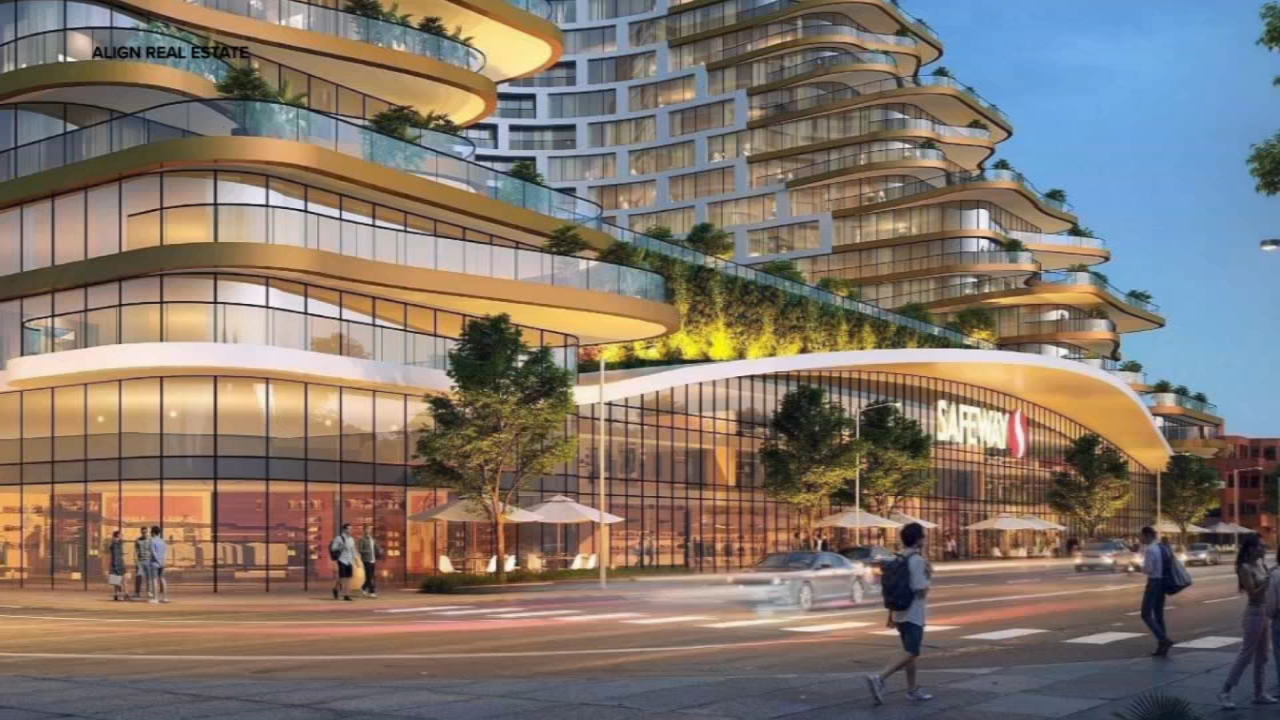
The proposal by Align Real Estate would demolish the 66-year-old Safeway at 15 Marina Boulevard—a celebrated modernist building designed by renowned architect William Wurster that became the prototype for hundreds of Safeway stores nationwide. In its place would rise a dramatic U-shaped tower complex reaching 250 feet at its highest point, according to the San Francisco Chronicle.
"We need a lot more housing in the neighborhood," said Marina Community Association President Eric Kingsbury, who typically backs pro-housing policies. "But along comes this behemoth right on the waterfront," he told the Chronicle.
A Waterfront Battleground Emerges
The controversy has united unusual political allies in opposition. Mayor Daniel Lurie, who just secured approval for his sweeping Family Zoning plan to build housing across the city, blasted the Marina proposal through a spokesperson. "A developer trying to sneak in a project before our plan takes effect is a complete violation of the spirit of that work," mayoral spokesman Charles Lutvak said, as reported by The Real Deal.
District 2 Supervisor Stephen Sherrill called the plan "outrageous," "cartoonish" and a "publicity stunt." "I won't let it go unchallenged," Sherrill said, according to the Chronicle. "Our neighborhoods deserve stability and real rules—not to be blindsided by cartoonish mega-projects trying to exploit loopholes in state law."
A Historic Building at Stake
The 1959 Marina Safeway represents more than just a grocery store. Designed by the celebrated firm Wurster, Bernardi & Emmons, the building features a distinctive barrel roof and glass facade that defined the "Marina style" of architecture, as detailed by architectural historians. The east wall displays a tile mosaic depicting the farm-to-table grocery ecosystem.
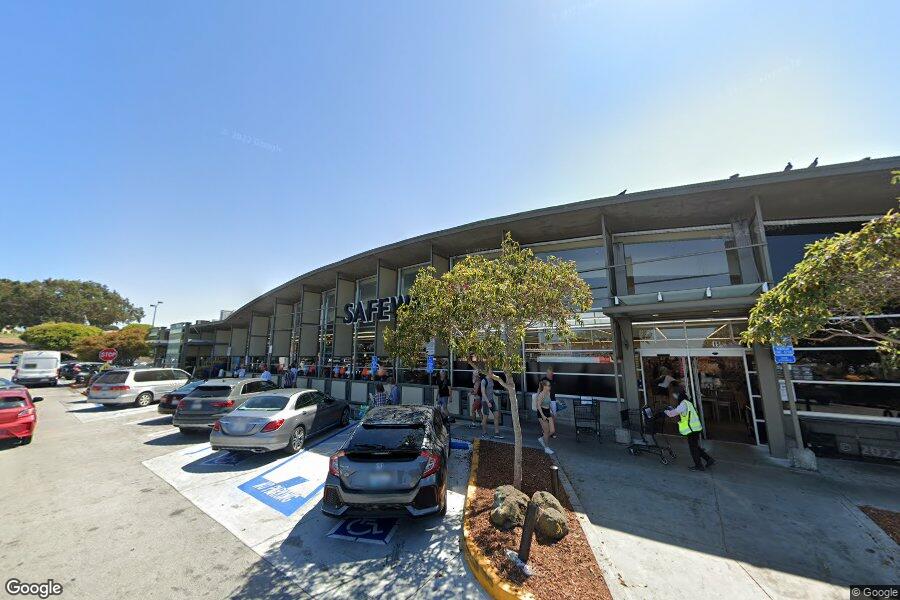
Source: Google Street View
"It was the first modern Safeway and it's one of the best," said San Francisco Heritage Executive Director Woody LaBounty, according to the Chronicle. "They put a lot of time and attention into that design—the barrel roof and glass facade and that mosaic on the eastside."
The store has also achieved pop culture status as "Singles Safeway" or "Dateway"—a nickname it earned in the 1970s as a pickup spot for young professionals, later featured in the "Tales of the City" television series, reported ABC7.
The Developer's Vision
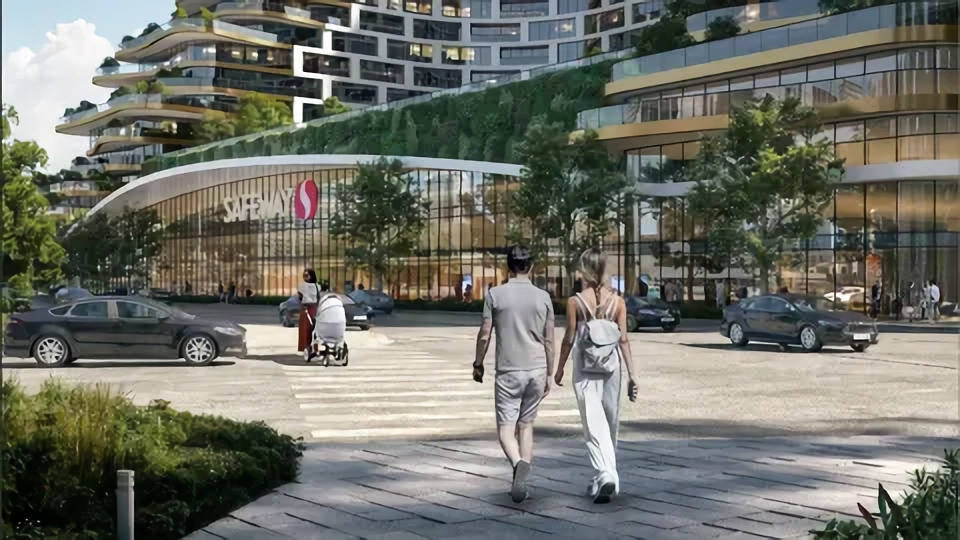
Align Real Estate's plan calls for 790 housing units, with 86 designated as affordable—representing six times more affordable housing than has been built in the Marina over the past two decades, according to CBS San Francisco. The development would include a new, larger Safeway store at ground level—expanding from the current 40,520 square feet to 63,000 square feet.
Arquitectonica, the architecture firm designing the project, says the building's curved design mimics the mid-century arched structure of the existing Safeway. "By concentrating residential density in larger floorplates at the base and tapering to smaller floorplates above, the tower's massing diminishes as it rises—preserving key view corridors," architect Raymond Fort said in a statement cited by SFist.
Community Concerns Mount
The existing Safeway would need to close for an undisclosed period during construction, leaving the area with limited grocery options. Marina shoppers interviewed by the Chronicle expressed dismay at the prospect, particularly elderly residents who depend on the store and its pharmacy.
"There is not another store around here," said 99-year-old World War II veteran and retired Superior Court Judge Claude Perasso. "The one in the Fillmore is closed because of too many thefts. The one on North Point closed about a year ago."
Preservation architect Bridget Maley, a 22-year Cow Hollow resident, told the Chronicle she plans "to motivate every neighbor and every neighborhood organization" to fight the project. "I am absolutely appalled, both from a design perspective and from the sheer greed on display," she said.
The Housing Debate Divides
Not everyone opposes the development. Data scientist Salim Damerdji, who lives nearby, sees it differently. "It might be more change than some people want, but I think it's the amount of change we need when we have built up this shortage over decades," he told the Chronicle. "It's really hard to find a studio in the Marina that is under $2,500 a month. A lot of them are going for $3,000."
YIMBY Action Executive Director Laura Foote praised the design. "Taking a massive parking lot strip mall of sadness and turning it into a vibrant community—I mean, the building looks gorgeous," she said, according to the Chronicle.
Echoes of Past Waterfront Battles
The proposal has drawn comparisons to the 8 Washington Street development fight from 2013, when voters overwhelmingly rejected a waterfront residential project under the banner "no wall on the waterfront." Former Supervisor Aaron Peskin, who led that successful campaign, sees parallels. "This is about optimizing sites where the most profit can be made that impact the rest of the city and public most adversely because where the ocean and the bay meet the land are very special places," he told the Chronicle.
In that 2013 battle, voters defeated both Proposition B and Proposition C by substantial margins—62% and 66% respectively—killing plans for a 136-foot building that would have exceeded the area's 84-foot height limit, according to SFGate. The rejection sparked a broader movement that led to a 2014 ballot measure requiring voter approval for waterfront construction exceeding height limits.
Timing and State Law
Align Real Estate filed its proposal using California's density bonus program, which allows developers to exceed local height restrictions in exchange for including affordable housing. The timing—just before Lurie's Family Zoning plan takes effect—has raised eyebrows at City Hall. While Lurie's plan upzones much of the western and northern parts of the city, it notably does not impact the Marina Safeway site, reported the Chronicle.
Upzoning opponent Lori Brooke, president of the Cow Hollow Neighborhood Association who is running against Sherrill for District 2 supervisor, called the proposal galvanizing. "We always said it's going to take one project to galvanize the people who are not paying attention. This might be it," she told the Chronicle. "San Franciscans have to decide if this is the future they want. Do you want the whole waterfront ringed with towers, because this is how it begins."
Part of a Larger Strategy
The Marina proposal is the fourth joint venture between Align Real Estate and Safeway to redevelop suburban-style grocery stores in San Francisco with dense housing. The developer has also filed plans for the Mission-Bernal Safeway (370 units), the Outer Richmond Safeway (526 units), and the Fillmore location (1,800 units), according to The Real Deal.
Whether the Marina proposal will actually be built remains uncertain. The project faces potential opposition from historic preservationists, environmental groups, and neighborhood activists, along with skepticism from City Hall. But one thing is clear: the debate over how San Francisco grows—and who gets to live here—shows no signs of quieting down.



