

























































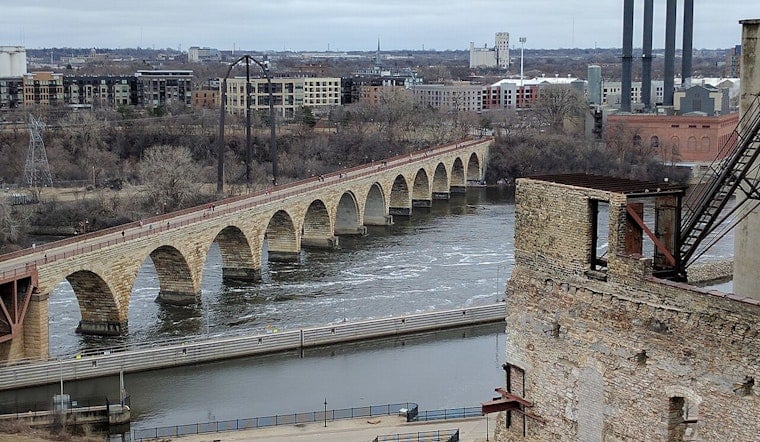
Later this month, a long stretch of concrete along the Mississippi by Minneapolis’ Stone Arch Bridge will start trading rebar for roots. Construction crews are set to move in and begin turning a hardened riverfront near the Upper Lock into native grassland, oak savanna, and a reconnected shoreline that elevates Dakota language and culture. The Dakota-led nonprofit Owámniyomni Okhódayapi is steering a multi-phase restoration of roughly five acres next to the Upper Lock, a spot long dominated by U.S. Army Corps of Engineers infrastructure and parking. The first, land-focused phase is scheduled to kick off in mid-May, with water-restoration work following in later years.
Design, habitat and access
The overhaul calls for tearing out unneeded concrete, reshaping the bluff and bringing back native plant communities while adding ADA-accessible paths down to the river. According to Mpls.St.Paul Magazine, designers plan to restore about 5.2 acres at the Upper Lock, convert an upper-lot parking area and an unused building into native grassland, and create interpretive spaces focused on Dakota lifeways. Project leaders say seeds and soils will come from Dakota tribal lands to re-establish oak savanna, upland prairie and much-needed pollinator habitat.
Dakota stewardship at the center
Organizers describe the effort as cultural restoration as much as ecological repair. “The Dakota worldview is that we see the plants, the animals, the land, and the water as relatives, and we believe that when you see them in that way, you tend to treat them better,” Owámniyomni Okhódayapi president Shelley Buck said in a statement via Owámniyomni Okhódayapi. Dakota Knowledge Keepers guided the design process, and organizers say cultural programming and educational spaces will be woven throughout the restored landscape.
Construction timeline and early work
As reported by KARE 11, site construction is expected to start in mid-May, with crews initially focused on demolition, grading and planting to remake the land. CBS Minnesota reports that a later water-restoration phase is set to re-create a roughly 25-foot cascade and add new river access points, and that demolition will remove the second level of the former Army Corps visitor center along with the Upper Lock parking lot.
Funding and land transfer
Owámniyomni Okhódayapi is running a $60 million fundraising campaign and reports that about $35 million has been secured so far, leaving roughly $4.7 million still needed to start the land work, according to Owámniyomni Okhódayapi. Municipal records indicate that conveyance of federal parcels from the U.S. Army Corps is anticipated in 2026, per Saint Anthony Falls Heritage Board minutes, and the Corps’ disposition study outlines options for how the land might be transferred and repurposed.
Why this matters locally
The Upper Lock and surrounding falls sit on land central to Dakota lifeways that was heavily reshaped during 19th- and 20th-century industrialization, an erasure local historians say this kind of restoration helps confront. Star Tribune coverage of the area’s history highlights why Dakota stewardship is a core part of the project, and the Minneapolis Parks Foundation has been hosting walk-and-talk events this spring to share the site’s cultural and ecological significance with neighbors and visitors.
What to expect this spring
In the near term, neighbors and riverfront visitors can expect temporary closures, construction fencing and signage near the Stone Arch Bridge while grading and planting work unfolds. The Minneapolis Parks Foundation posts event and update information, and project leaders say they will share construction updates on the Owámniyomni Okhódayapi website as work moves forward.





