

























































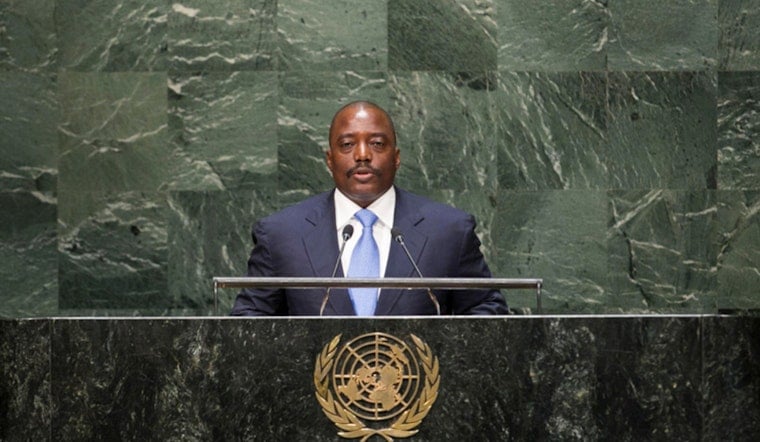
Washington, The United States on Thursday slapped sanctions on former Democratic Republic of the Congo president Joseph Kabange Kabila, accusing him of providing financial and political backing to the M23 rebel coalition that has seized large parts of eastern Congo. The move freezes any assets he may hold in the United States or that transit U.S. financial institutions and bars most transactions with U.S. persons. U.S. officials say the step is meant to shore up a fragile U.S.-brokered peace framework and to squeeze actors seen as trying to undermine it.
What the Treasury announced
The Treasury Department’s Office of Foreign Assets Control said it has added Kabila to the Specially Designated Nationals list for materially assisting the March 23 Movement (M23) and the Congo River Alliance, meaning U.S. persons must generally block and report property tied to him, according to the U.S. Treasury. OFAC said the designation falls under Executive Orders 13413 and 13671 and warned that violating these sanctions can bring civil or criminal penalties.
State Department backs the move
The State Department issued a separate statement saying, "The United States stands with the Congolese people and calls on all regional leaders to reject those who perpetuate violence and instability," as reported by Boston 25 News. Officials cast the coordinated move by Treasury and State as support for the Washington Accords and for efforts to clamp down on outside backing for armed groups in eastern DRC.
Why Kabila was targeted
U.S. officials allege Kabila reentered eastern DRC politics in 2025 and provided funds, encouragement and political direction to AFC/M23, including efforts to lure defections from the Congolese armed forces. He previously served as president from 2001 until 2019 and was tried in absentia by a military court last year, a ruling his supporters call politicized, as reported by Reuters.
Human cost and regional stakes
The M23 campaign has taken a severe toll on civilians. Human Rights Watch and U.N. investigators have documented killings, sexual violence and mass displacement as the group and allied forces have seized towns in North and South Kivu. HRW's 2026 country report describes patterns of summary executions, forced evictions and the displacement of hundreds of thousands of people across the east.
Sanctions: what they mean in practice
OFAC's action blocks "all property and interests in property" of designated individuals in the United States or in the possession or control of U.S. persons, and can reach entities that are 50% or more owned by a blocked person, according to OFAC. Treasury emphasized that sanctions are designed to change behavior, urging financial institutions to screen for possible exposure and to report any assets they block.
The designation also raises practical questions about enforcement and about whether other alleged backers of M23 will face similar action at a moment when diplomats say implementation of the U.S.-brokered Washington Accords is fragile. Kabila's immediate response was not available on Thursday, and the sanctions now add a fresh diplomatic and legal pressure point in an already volatile region.




