

























































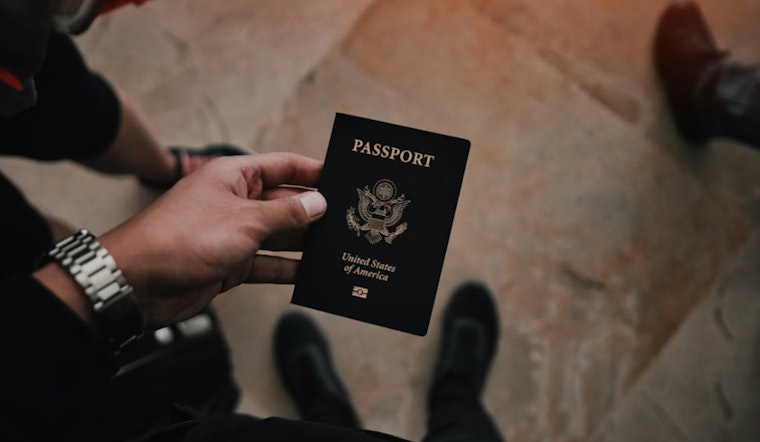
Starting May 8, 2026, the U.S. State Department will begin pulling passports from parents who owe large amounts of unpaid child support, with the first wave aimed at people who owe $100,000 or more. Federal officials estimate that roughly 2,700 passport holders fall into that top tier. A broader crackdown is expected once the Department of Health and Human Services (HHS) finishes compiling child support arrears data from every state. Parents who lose their passports while overseas will have to visit a U.S. embassy or consulate to get emergency travel documents so they can return home.
According to The Associated Press, the State Department says it will start with the biggest debts, then move into a larger sweep that uses the $2,500 legal threshold. Officials told the AP the goal is to push parents to settle what they owe, promising that passport privileges will be restored once debts are paid or otherwise cleared. The AP also reports that the department has credited the Passport Denial Program with prompting lump sum payments from some parents since the program ramped up in 1998.
What the law says
The power to deny or revoke passports in these cases comes from a 1996 federal law that directs the Secretary of Health and Human Services to certify people who owe at least $2,500 in past due child support, and authorizes the Secretary of State to refuse or revoke passports for those who are certified, according to the U.S. Code. That $2,500 trigger has not often been used in a systematic way. Officials say the new approach is meant to make referrals and revocations more automatic as HHS shares broader arrears data with the State Department. The law also permits waivers and case by case decisions at the state level, which means some parents may be spared enforcement depending on how their state handles certifications.
Program history and collections
The Passport Denial Program has been used off and on for decades. According to the Office of Child Support Enforcement, it has helped states bring in hundreds of millions of dollars in payments since 1998. OCSE materials say states have reported more than $600 million in collections tied to passport denials, with thousands of lump sum payments showing up when parents discover that long planned trips are suddenly at risk. Officials say taking a more proactive stance could coax even more lump sum settlements, although it may also increase the workload for state child support agencies as they certify more cases.
How this could affect travelers
Under current consular practice, U.S. embassies and consulates can issue limited or emergency passports if a citizen needs to get back to the United States quickly. The State Department's travel guidance also notes that those documents, or future renewals, may be withheld until the outstanding child support is resolved. Travelers who find out their passport has been revoked while they are abroad are told to contact the nearest U.S. embassy or consulate to get instructions on emergency travel documents and how to return home. That process could be a serious headache for parents who work overseas or have essential travel they cannot easily delay.
What researchers and advocates warn
Policy researchers point out that there is not much rigorous evidence that isolates the long term impact of travel based sanctions on payment behavior or on outcomes for children. Some analysts and advocates warn that enforcement tools like this can fall hardest on low income parents. A review by the Congressional Research Service and other analyses say the policy change is modest in terms of mechanics, but it still raises questions about fairness, whether agencies can handle the extra administrative load, and what unintended consequences judges and lawmakers may eventually need to confront. Supporters argue the policy is about basic compliance and making sure children receive financial support. Critics call for guardrails so that already vulnerable families are not pushed into deeper crisis.
The State Department and HHS say they intend to move forward as the arrears data are finalized, and officials are urging parents with questions to contact their state child support office or the federal Office of Child Support Enforcement. Local outlets were among the first to highlight the AP report; see MySanAntonio for the initial story. Officials will be watching to see how many more parents are pulled into the net once the $2,500 threshold is fully activated nationwide.


