

























































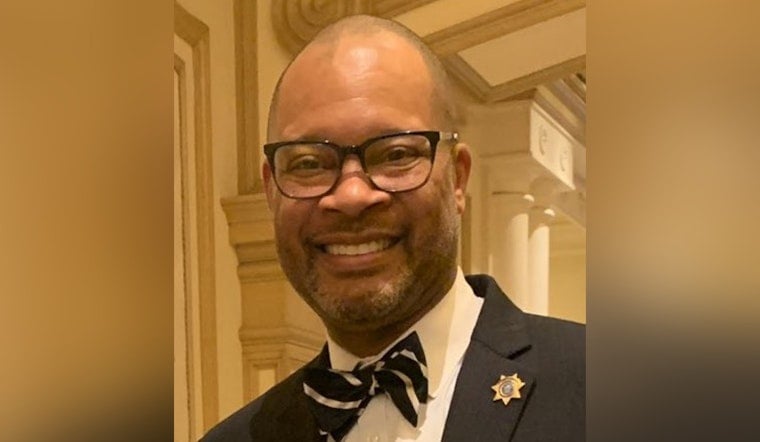
Nevada Attorney General Aaron Ford, the leading Democratic contender for governor, is putting the state’s right-to-work law on notice. In a pledge that has quickly turned a long-simmering policy fight into a 2026 campaign flashpoint, Ford told union leaders he would push to repeal the decades-old statute and promised to sign a repeal bill during his first term if it lands on his desk.
The commitment surfaced after comments Ford made in December on the union-hosted GangboX podcast drew renewed attention. On the show, he said that if lawmakers sent him a repeal bill, “the moment you send it to me, first term, I ain’t waiting,” adding that reversing the law “can be done legislatively.” As reported by The Nevada Independent, Ford framed repeal as a way to “restore workers’ rights” and reiterated that he would sign such legislation if the Legislature passed it.
A law rooted in the 1950s
Nevada’s right-to-work statute dates back more than seventy years. Voters adopted it through a statewide initiative in 1953, and it has stayed on the books ever since. According to archival records compiled by the Nevada Legislative Counsel Bureau, lawmakers have returned to the issue again and again, considering at least 10 separate measures to amend or repeal the law since 1959. That history helps explain why advocates on both sides say that undoing the statute would be politically difficult even with a governor who is publicly on board.
Labor leaders hail the pledge
Union leaders wasted little time embracing Ford’s comments, treating his on-air promise as a green light to push right-to-work back into the center of Nevada’s policy debate. Marc Ellis of Communication Workers Local 9413 told The Nevada Independent that Ford’s stance helped secure his union’s endorsement. Ellis said repeal would bolster workers’ leverage at the bargaining table in Nevada’s hospitality-driven economy.
Business groups warn of consequences
On the other side of the fight, business and resort interests are ringing alarm bells. Industry groups argue that Nevada’s right-to-work protections help attract employers and investment, and they are not eager to see that change. Reporting by the Las Vegas Review-Journal notes that the Vegas Chamber and allied business organizations have consistently defended the current law as critical to the state’s competitiveness, warning that a repeal could unsettle employers and developers weighing projects in Nevada.
What the research shows
Beyond the political brawl, there is data on what right-to-work laws tend to do. A 2022 paper from the National Bureau of Economic Research found that recent adoptions of right-to-work statutes were associated with about a four-percentage-point drop in unionization within five years and roughly a 1 percent reduction in wages. Those findings are likely to feature prominently as both labor and business groups try to persuade voters about the real-world stakes of Nevada’s law.
Politics and process
Ford has been clear that he sees a legislative route as the path forward, saying he would sign a repeal bill if the Legislature approves one. Republican Gov. Joe Lombardo, by contrast, has said he supports Nevada’s right-to-work policies, setting up a sharp contrast for the 2026 gubernatorial contest. Coverage in the Las Vegas Review-Journal notes that Lombardo’s campaign has not shifted its position on the issue.
Legislative history tracked by the Nevada Legislative Counsel Bureau suggests that any repeal effort would require sustained partisan control in Carson City, along with persistent organizing from both labor advocates and business allies who have been trading arguments over the statute for decades.
Michigan’s recent experience offers a nearby example of how quickly a state’s right-to-work status can flip when political winds change. The Detroit Regional Chamber and other observers noted that Michigan’s repeal took effect after lawmakers and the governor moved to undo a 2012 right-to-work law, with the legal changes beginning to roll in during early 2024, according to the Detroit Regional Chamber.
What happens next in Nevada is squarely political. Ford’s pledge is poised to energize union resources and endorsements, draw fierce counter-mobilization from business and resort groups, and turn right-to-work into a de facto referendum on jobs, wages and workers’ rights in the fall campaign. Lawmakers and voters will ultimately confront a straightforward but contentious question: whether the state’s seven-decade-old rule should be overturned, and if so, how quickly.



