

























































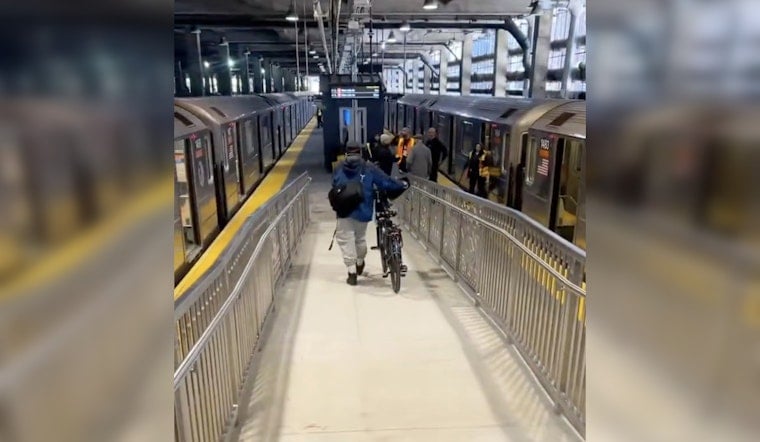
Harlem riders at the 148th Street subway stop just scored a major upgrade, with the MTA unveiling a new wheelchair ramp that finally provides a step-free path from street level down to the platform. The project wipes out a long-standing barrier at the northern terminus of the 3 train and is expected to make trips easier for riders using mobility devices, caregivers with strollers and anyone who usually avoids flights of stairs.
Transit officials say opting for a ramp instead of elevators delivered accessibility faster and with lower maintenance needs. In other words, the agency got a fully accessible station without signing up for decades of extra mechanical headaches.
In a post on X, the agency wrote, "Accessibility doesn’t always mean elevators" and said the Harlem-148 project came in about $7 million under budget, freeing roughly $30 million to invest in accessibility work elsewhere across the system, per MTA Newsroom. The agency added that the ramp now renders the station fully accessible.
Accessibility doesn’t always mean elevators. At Harlem 148 St, a new ramp delivers a fully accessible station while saving money for other station upgrades.
— MTA Newsroom (@MTANewsroom) May 1, 2026
How the ramp works
The new wheelchair ramp runs from the station mezzanine, wrapping around the stairwell and down to the island platform. That layout gives riders a continuous, stair-free route from the fare control area to the trains. The design, which uses a ramp instead of new vertical lift equipment, is documented in station records and makes Harlem-148 fully ADA-compliant, according to Wikipedia.
Part of a bigger ADA package
The ramp is one piece of ADA Package 5, a 13-station bundle that includes Harlem-148 and was procured as contract A37758. The package carries an award of roughly $577.2 million, as listed on the MTA C&D contracting page. That broader package folds into the agency’s 2020–2024 capital push to add accessibility to dozens more stations citywide.
Why ramps sometimes make sense
Ramps avoid the long-term mechanical complexity and maintenance costs that come with elevators and can be a quicker route to accessibility when the station layout cooperates. The MTA has made access a central piece of its recent capital plans and legal agreements, including a settlement that set long-term accessibility goals, and officials say lower-cost tools like ramps help stretch limited capital dollars, per Wikipedia.
Riders at Harlem-148 can now use the step-free route, and transit planners say the savings from this project will be redeployed to other accessibility upgrades, although a specific schedule for those future improvements has not yet been released. For now, the new ramp offers a clear, immediate win for local riders who previously had to manage stairs at the northern 3-train terminal.





