

























































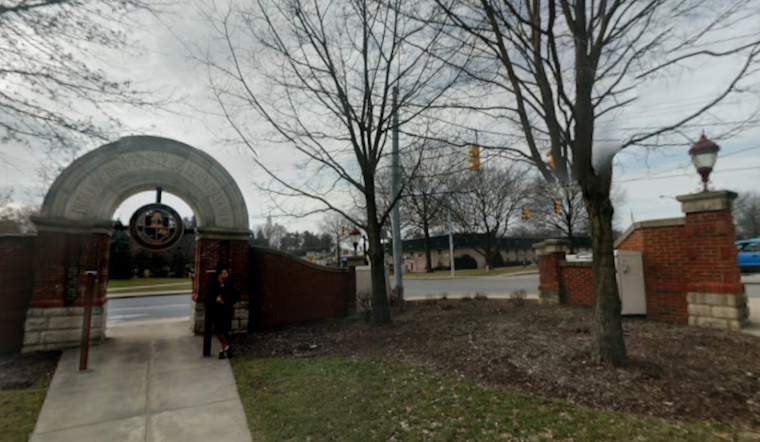
Indiana University of Pennsylvania just cleared a major hurdle in its bid to open a medical school, after the Pennsylvania State System chancellor approved the university's Doctor of Osteopathic Medicine degree program. The move clears an internal state-system requirement and lets IUP move ahead to seek national pre-accreditation. If that next step comes through, the university says it could admit its first class as soon as 2027.
Chancellor Sign-Off And Local Economic Pitch
IUP President Michael Driscoll called Chancellor Christopher Fiorentino's approval "strong momentum" toward creating what the school describes as the first college of osteopathic medicine at a public Pennsylvania university. University materials link the chancellor's sign-off to both fundraising efforts and projected economic benefits. IUP reports that it has raised more than $54 million for the project and estimates the college would generate almost $50 million in annual economic impact for the commonwealth, with long-term gains if graduates remain in Pennsylvania. Those figures, along with details of the approval, were outlined by IUP Now.
Candidate Status From The National Accreditor
IUP's proposed college already holds "candidate status" from the American Osteopathic Association's Commission on Osteopathic College Accreditation. That designation recognizes that the university has completed required planning and may apply for pre-accreditation. Pre-accreditation would permit IUP to begin recruiting students, and the accreditor's public notice records the candidate-status decision. As outlined by the American Osteopathic Association, IUP was granted candidate status in mid-2025.
Clinical Pipeline And Rural Focus
Securing clinical training sites has been central to IUP's plan. The university says it has lined up partnerships at more than 20 sites, roughly 270 percent of the clinical spots accrediting bodies require, and has regional partners that will host student rotations. Local systems, including Conemaugh Nason Medical Center and Indiana Regional Medical Center, have announced affiliation agreements to provide hands-on rural clinical experience. The proposed college's founding dean, Miko Rose, described the curriculum as "medical education with a rural focus" and emphasized four-year, longitudinal coursework in mental and behavioral health, according to the university announcement reported by IUP Now.
Why Osteopathic Schools Matter Here
Osteopathic medical programs have been a major pipeline for primary care and rural placements nationally, with the American Association of Colleges of Osteopathic Medicine noting that osteopathic colleges account for a large share of schools placing graduates into primary-care and rural roles. The need is urgent: the Association of American Medical Colleges projects a shortfall of as many as 86,000 physicians nationwide by 2036, a gap many experts say will hit rural communities hardest. Those national trends are a key part of IUP's rationale for building a college focused on underserved areas (AACOM; AAMC).
Residency Slots Remain A Bottleneck
Experts caution that opening a new medical school does not instantly translate to more practicing physicians, because graduates must secure residency positions to enter the workforce. Analysts and professional groups point to the limited supply of GME slots as a major constraint and are urging expansion of federally funded residency capacity. The AMA and others say growing GME slots is essential if new schools are to relieve provider shortages in rural and underserved regions.
What happens next: IUP will pursue the pre-accreditation step with the national body and, if granted, begin recruiting for the class it hopes to launch in 2027. University officials and regional health partners will continue to finalize clinical pipelines and fundraising, while state and federal policymakers weigh how to expand residency capacity to absorb new graduates. For now, the chancellor's approval stands as a concrete administrative milestone on a multi-year plan to train doctors for Pennsylvania's rural communities.





