

























































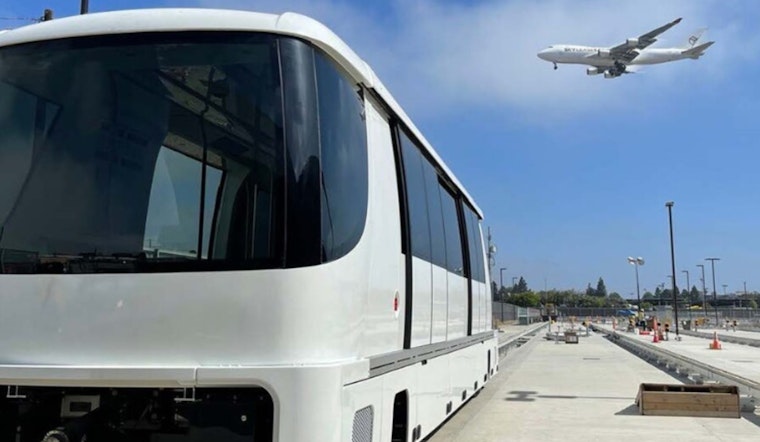
The long-delayed LAX Automated People Mover just picked up another plot twist, and this one hits the wallet. An arbitrator has ruled that the crews who tested and commissioned the train system must be paid at the International Union of Elevator Constructors’ national wage and benefits rate, finding that their work is covered by the project’s labor agreement. The March decision orders Alstom Transport USA to recalculate pay going back to hours worked starting 60 days before the union filed its grievance. Union officials say roughly 28 workers are affected and estimate that the back pay could total in the millions.
The arbitrator held a hearing last December and ultimately sided with the union, according to LAist. International Union of Elevator Constructors Local 18 lodged its grievance in May 2025, accusing Alstom of paying its testing and commissioning crews less than the rates spelled out in the project’s labor agreement. Arbitrator David Weinberg concluded that the work falls under that agreement and added that if Alstom refuses to comply, project developer LINXS could be responsible for a smaller share of the tab.
The ruling lands just as empty trains started looping the tracks for reliability runs in mid-April, part of a roughly 60-day testing window ahead of passenger service, as reported by The Los Angeles Times. Those trains may be running without riders for now, but the project itself is crowded with contract claims and legal disputes that have already slowed construction and pushed up costs. That backdrop makes the question of who cuts the back paychecks, and how fast, a high-stakes issue for both workers and contractors.
An Alstom spokesperson said the company is "reviewing the arbitrator’s recommendations," according to LAist, and argued to the arbitrator that it never signed a separate Letter of Assent that would formally bind it to the project labor agreement. Weinberg rejected that defense, finding that Alstom’s contract with LINXS contains a pass-through obligation that pulls the subcontractor under the PLA’s wage rules. Alstom has not publicly agreed to pay the multimillion-dollar figure the union is floating, and may look at legal avenues before any enforcement effort moves forward.
What This Means For Workers And Contractors
If Alstom declines to follow the award, the arbitrator’s pass-through finding means LINXS could be next in line to cover the retroactive pay, although actually collecting the money could turn into a slow, contested process. Recent labor filings list LINXS Operators, Alstom Transport USA, and Express Employment Professionals as involved parties, according to the National Labor Relations Board. Since LINXS is already wrapped up in claims and disputes with Los Angeles World Airports and other subcontractors, any attempt to claw back millions in back wages risks getting tangled in a wider web of litigation.
For the roughly 28 workers identified by the union, the ruling has the potential to become significant retroactive pay, so long as hours and applicable rates are confirmed. Arbitration awards, however, still require follow-through to be enforced. Union leaders say they plan to press until the money is paid out, while Alstom and LINXS retain the option to respond or seek judicial review before collection efforts really bite. In the meantime, the decision adds yet another legal and financial pressure point to a People Mover project already straining under delays and overlapping contractor fights.





