

























































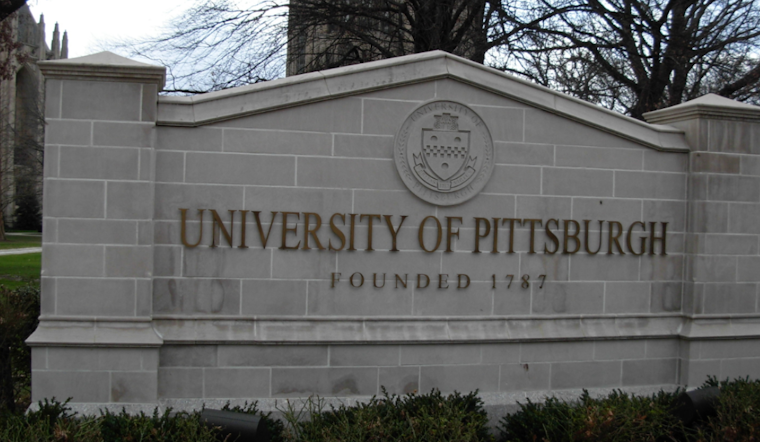
The University of Pittsburgh just flipped the switch on a new scientific playground that operates a whisper above absolute zero. On Monday, the school unveiled the Western Pennsylvania Quantum Information Core, a cross-disciplinary lab built so researchers can probe matter at about 20 millikelvin, where particles start behaving in ways that rewrite the usual rules. The facility is designed to give students hands-on time with the gear and to pull physicists, engineers, and chemists under one roof.
The push to build the core came with an $11.6 million boost from Pitt’s Strategic Advancement Fund, a university loan approved to seed shared instrumentation and staffing. As Pittwire details, the investment builds on the region’s existing quantum ecosystem and is meant to centralize capabilities that both researchers and industry partners can tap.
“Understanding that allows us to build things that we could never build before,” Rob Cunningham, Pitt’s vice chancellor for research infrastructure, said at the unveiling, according to 90.5 WESA. The WESA report notes the core took more than four and a half years to assemble and relies on a stack of gold-plated plates, pumps, and vacuum lines to keep the dilution refrigerator that cold. Adam Leibovich, dean of the Dietrich School of Arts and Sciences, told WESA the machine reaches temperatures “much colder than even the temperature of deep space,” and that at 20 millikelvin particles can be in two states or two places at once.
What's inside the core
The WPQIC houses cryostats, measurement systems, and staff-operated shared facilities that support experiments in quantum sensing, communications, and computing, according to Pitt Research. Leaders say those instruments will let researchers model everything from aerodynamic materials to climate systems and could speed work on quantum-enabled diagnostics for illnesses such as cancer and Alzheimer’s. The core is also set up as a training ground for students across chemistry, physics, engineering, and computing.
Why this matters for Pittsburgh
Regional leaders point to the Pittsburgh Quantum Institute and existing university partnerships as the bedrock for the new facility, which they hope will make the city more competitive for quantum investment. The institute and university officials say shared instrumentation and industry ties can attract companies hunting for talent and give students clearer pathways into quantum jobs, as Pittsburgh Quantum Institute and Pitt officials have noted. When the funding was announced in 2023, university leaders framed the core as a way to centralize capabilities that support commercialization and cross-disciplinary work, according to Pittwire.
“The quantum industry is hiring, and it needs engineers who can build, test, and deploy these technologies,” Michele Manuel, dean of Pitt’s Swanson School of Engineering, told 90.5 WESA. University leaders say the WPQIC will be a recruiting asset as programs expand and employers look for graduates who can work with cryogenic systems and quantum instrumentation. Officials expect the core to open doors for students and to speed up conversations with industry partners about applied research projects.





