

























































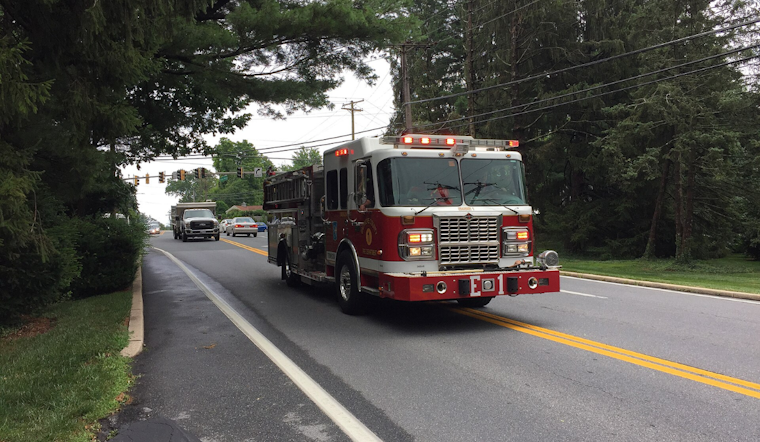
What started as a routine Thursday evening in White Hall turned into a propane scare after a vehicle hit the top of an underground tank on the 1300 block of Bernoudy Road, releasing gas and triggering a full hazardous-materials response from Baltimore County crews. County officials said there were no reported injuries.
What officials are reporting
According to The Baltimore Banner, Baltimore County police said a vehicle struck the top of an underground propane tank along Bernoudy Road, causing gas to leak into the surrounding area. The outlet reported that the Baltimore County Fire Department hazmat team and the Maryland Department of the Environment were headed to the scene to secure and assess the site.
At the time of the initial report, police told the outlet there were no injuries, and officials had not yet offered an estimate of how long the cleanup and stabilization work would take.
State and regulatory response
The Maryland Department of the Environment’s Oil Control Program oversees suspected releases from underground storage tanks and coordinates state cleanup and oversight when a spill is reported. The agency’s website outlines how the program backs up local responders in situations involving compromised tanks and potential environmental impacts.
Federal guidance from the U.S. Environmental Protection Agency details what tank owners and operators must do when an underground storage tank is damaged or leaks, including how releases are reported and investigated. Those state and federal rules are built to pinpoint the source quickly and limit public and environmental exposure once a tank is compromised.
Why underground tanks matter
Propane vapor is heavier than air and can settle into low spots or depressions, where it can create a fire or explosion risk if it reaches an ignition source, according to NOAA. That behavior, along with the pressure inside liquefied petroleum gas systems, is a big reason standards and preplanning are treated so seriously.
Codes such as those published by the NFPA set requirements for how propane systems are stored, spaced and handled in emergencies, with the aim of keeping leaks from turning into something far worse.
How neighbors should stay safe
The Propane Education & Research Council advises that if you suspect a propane leak, you should leave the area immediately, avoid open flames and anything that might spark, and call 911 or your propane supplier from a safe location. Do not return until emergency responders or your propane provider say it is safe.
If you are instructed to evacuate, safety guidance says you should move upwind and to higher ground, since propane vapors tend to drift into and collect in lower-lying areas.
Status and next steps
As of Thursday evening, officials had not released a cleanup timeline or an estimate of how much propane escaped, The Baltimore Banner reported. Baltimore County fire and hazmat crews were expected to remain at the scene while environmental teams worked to investigate and secure the tank and surrounding area.
The Maryland Department of the Environment lists its Oil Control Program and a 24-hour spill line for reporting concerns, and the program’s main page provides contact information for questions about reporting and oversight.





_near_Maryland_State_Route_139_(Charles_Street)_in_Towson,_Baltimore_County,_Maryland.jpg)