

























































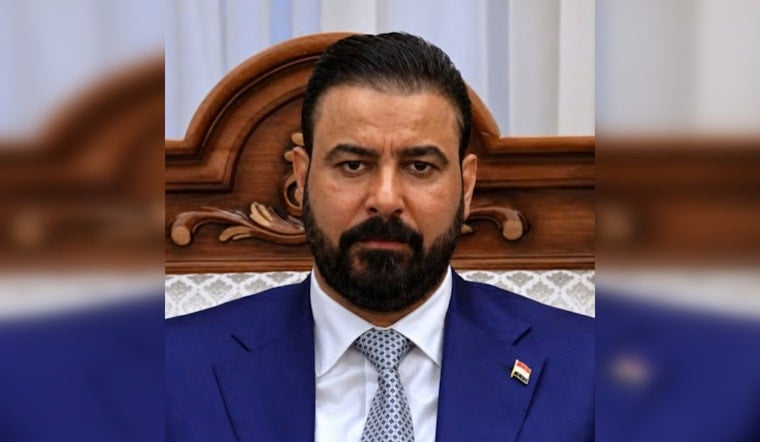
Former President Donald Trump phoned Iraq’s prime minister-designate, Ali al-Zaidi, on Thursday and invited him to visit Washington once he assembles a cabinet. The call, paired with a congratulatory post on Trump’s Truth Social account, amounts to an early U.S. blessing for a compromise candidate who surfaced after weeks of infighting inside Iraq’s dominant Shiite bloc. Al-Zaidi, a businessman and political newcomer chosen by the Coordination Framework last week, now faces a 30-day deadline to form a government and secure parliamentary approval.
The Iraqi prime minister’s office said the call and invitation came in an official statement, and Trump posted that “we look forward to a strong, vibrant, and highly productive new relationship between Iraq and the United States,” according to AP. The statement and social media post together signal Washington’s acceptance of al-Zaidi after the U.S. had publicly opposed an earlier frontrunner. The outreach gives Baghdad an early diplomatic opening, although Iraqi politics at home will ultimately decide whether that relationship becomes more than a photo op.
How al-Zaidi Won The Nod
Al-Zaidi was selected by the Coordination Framework, the largest Shiite bloc in parliament, and President Nizar Amidi formally tasked him with forming a government after the bloc announced its choice on April 27, according to Al Jazeera. The coalition had previously rallied around former prime minister Nouri al-Maliki, then shifted to a compromise candidate after internal divisions and external pressure made a Maliki return increasingly costly. The nomination breaks a months-long stalemate but does not guarantee that parliament will sign off on al-Zaidi’s cabinet.
Washington’s Red Line On Maliki
Trump had publicly opposed any comeback by Maliki and warned that U.S. support could be scaled back if the former prime minister returned to power, a move that helped shake up the selection process in Baghdad, as reported by the Los Angeles Times. That warning pushed Iraqi leaders to look for someone who could pass muster with both Tehran-aligned factions and Washington. Even so, the decisive test will come on the floor of Iraq’s parliament, not in an American phone call.
A Banker, Not A Politician
Al-Zaidi chairs Al-Janoob Islamic Bank, and Iraq’s central bank barred several lenders, including Al-Janoob, from dollar auctions in 2024 during a crackdown on illicit dollar flows, according to Reuters. AP notes that neither Al-Janoob nor al-Zaidi himself are currently under U.S. sanctions. His backers have leaned on his business background as a selling point in a country facing serious economic strain, although those same banking links are likely to draw close scrutiny from Washington and international financial partners.
The 30-Day Test And The Obstacles Ahead
Under Iraq’s constitution, the prime minister-designate has 30 days to present a cabinet to parliament and must secure 167 votes to win a confidence vote, a compressed timetable that leaves little room for missteps, according to Al Jazeera. Al-Zaidi steps into the role as Iraq absorbs the shock of the broader regional war: attacks and the effective closure of the Strait of Hormuz have tightened the flow of Gulf exports and squeezed Baghdad’s oil revenues. That financial pressure is expected to loom over his cabinet negotiations, especially around who controls key security and economic ministries.
Why The Washington Invite Matters
A trip to Washington would serve as a public seal of approval that could ease concerns among international lenders and those guarding Iraq’s access to global financial networks. The U.S. embassy in Baghdad offered its “best wishes” to the prime minister-designate as he works to assemble a government, according to The National. Real cooperation on security and financial support, however, will hinge on whether al-Zaidi can meet U.S. expectations on curbing militias and improving financial transparency.
For al-Zaidi, the immediate battle is inside Iraq: putting together a cross-sectarian cabinet that can reach 167 votes while keeping both Tehran-aligned factions and Washington’s red lines in view. If he pulls it off, the outreach from Trump and the wider U.S. establishment could translate into practical backing. If he falls short, Iraq risks sliding back into paralysis, and the high-profile invitation will be remembered mainly as political theater. Either way, the next month will show whether this compromise choice can turn an early diplomatic embrace into a functioning government.




