

























































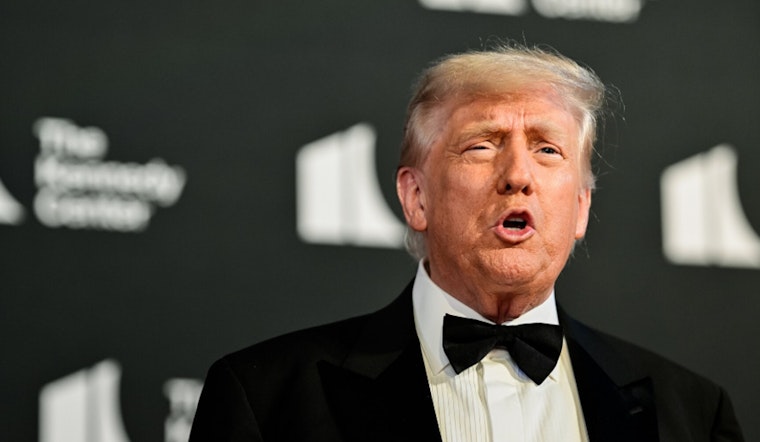
President Donald Trump is turning up the heat on European automakers, announcing Friday that the U.S. will raise tariffs on cars and trucks imported from the European Union to 25% next week. He accused Brussels of blowing off a trade deal agreed to last summer and made clear that vehicles built in U.S. plants will be exempt, a not-so-subtle nudge for foreign carmakers to shift more assembly to American soil.
In a post on Truth Social, Trump said the tariff rate would jump to 25% and blamed the EU for failing to honor the Turnberry framework. The move lands as the White House is already juggling other trade investigations and exploring alternate legal paths that could expand how far any new duties might reach.
What the Turnberry framework set
Trump and European Commission President Ursula von der Leyen unveiled a political framework at Turnberry in July 2025 that capped most U.S. tariffs on EU goods at 15% as part of a broader package involving energy purchases and investment commitments. The European Parliament later signed off with its own implementation conditions, including a suspension clause allowing Brussels to pause its concessions if the U.S. were to impose duties above that ceiling, as outlined in the European Parliament.
The court ruling that changed the legal map
On Feb. 20, 2026, the U.S. Supreme Court in Learning Resources v. Trump held that the International Emergency Economic Powers Act does not authorize the president to impose sweeping tariffs, wiping out the administration’s primary emergency tool for broad duties. Legal analyses say the decision forced the White House to pivot to narrower statutes for any new nationwide levies; see Sidley Austin.
Workarounds and limits
Within days of that ruling, the administration rolled out a temporary global tariff under Section 122 of the Trade Act, initially at 10% and then signaled as high as 15%. By statute, that tool can be used only for a limited 150‑day stretch without fresh action from Congress. That legal ceiling and time limit mean any broader, longer-lasting tariff plan would need new authority or risk being knocked down in court; background on the shift is available at Axios.
Brussels says 'a deal is a deal'
The European Commission has publicly urged Washington to stick to the Turnberry commitments, repeating that “a deal is a deal” and pressing for full clarity on U.S. plans after the Supreme Court decision. EU officials have warned that erratic tariff moves could rattle supply chains and hinted they may tie their own approval steps and safeguards to clear, durable U.S. compliance; see the Commission briefing in the European Commission.
Industry and market impact
Brussels had estimated the Turnberry framework would save European automakers roughly €500–600 million a month, and EU‑U.S. trade in goods and services totaled about €1.7 trillion in 2024. Those figures show how fast a 25% U.S. duty on EU cars could ripple through production chains and consumer prices. Market and legal observers say such a move would hit exports and could sharpen political friction as well as corporate planning; reporting and analysis are available from Bloomberg.
Legal and political next steps
Raising the tariff ceiling beyond the Turnberry terms would likely trigger fresh litigation and force Congress to decide whether to expand or curb new tariff authorities. Legal observers note that the Supreme Court’s ruling narrowed the White House’s toolkit and that any attempt to lock in a higher, long-term tariff rate will have to survive court scrutiny and intense rounds of diplomatic bargaining; see a legal overview at Foley Hoag.
For now, the White House announcement ramps up pressure on Brussels and on global automakers selling into the U.S. market. In the coming days, watch for fast-moving diplomacy, potential legal filings and shifting market bets as governments and companies test whether the Turnberry ceiling holds or cracks.


