

























































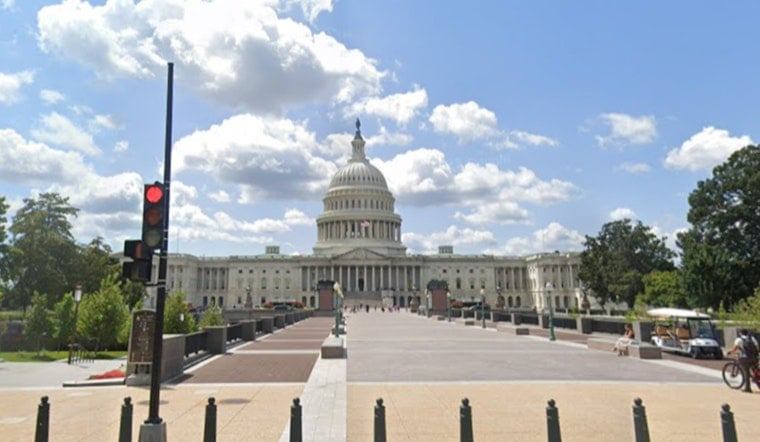
Connecticut Sens. Chris Murphy and Richard Blumenthal stood on the steps of the U.S. Capitol on Thursday to roll out the Living Wage for All Act, a sweeping proposal that would lift the federal minimum wage to $25 an hour through a multi-year phase-in. The senators are pitching the measure as an affordability fix that would also scrap special subminimum rules for tipped workers, youth workers and workers with disabilities, while giving large corporations a shorter ramp-up period than small businesses.
As reported by The Washington Post, Murphy said the plan is designed in part to reconnect Democrats with working-class voters and would start with an early jump that moves hourly pay into the double digits. The Post described the Senate plan as a two-track system that would push "major corporations" to the new wage floor more quickly while allowing smaller employers a much longer adjustment period. Backers say the $25 target comes from living-wage calculations, while critics warn it could trigger job losses or encourage automation.
How the phase-in would work
The bill’s architecture, mirrored in the House companion measure H.R.8555, lays out a detailed schedule of year-by-year increases and defines what counts as a "large employer" by nationwide revenue or headcount. The House draft charts a steeper climb for large firms and a slower ladder for other employers. It also includes a provision that would eventually peg the federal minimum wage to two-thirds of the national median hourly wage. Senate sponsors said at the Capitol event that their version follows the same basic two-track design.
Connecticut workers weigh the stakes
Outside the Capitol, the stakes were not theoretical for service workers who said higher pay could reshape their daily lives, provided the transition is timed and enforced carefully. According to News12, Bridgeport server Sylvie King told reporters, "Sometimes up to 13 hours a day. My base pay is $8 an hour." Connecticut already has one of the higher state wage floors: the Connecticut Department of Labor lists the state minimum wage at $16.94 an hour effective Jan. 1, 2026. That means a new federal standard would not immediately bump paychecks for many workers in the state.
What the research says
Research on large, phased-in minimum wage hikes is mixed and often hinges on local conditions and methodology. A detailed study of Seattle’s stepwise increases found modest wage gains but noticeable cuts in hours for low-wage jobs, with roughly a 3.2% rise in wages paired with a 6.9% decline in hours over the quarters examined, according to an NBER working paper on the Seattle case. A 2021 NBER review likewise concluded that much of the evidence points to larger negative employment effects for teens, young adults and workers with less education, even as other studies report smaller or no employment impacts.
Politics and next steps
Murphy and Blumenthal are presenting the Living Wage for All Act as both a policy blueprint and a signal on the broader affordability fight, but with Republicans running Congress, the bill faces steep odds this session. The push is backed by the Living Wage for All coalition and allied labor organizations, which lay out their goals and endorsements on livingwageforall.org. If the measure secures hearings, analysts say the debate will center on how lawmakers balance the promise of higher pay against transition costs for employers and the possibility that businesses change hiring, hours or investment in response.



