

























































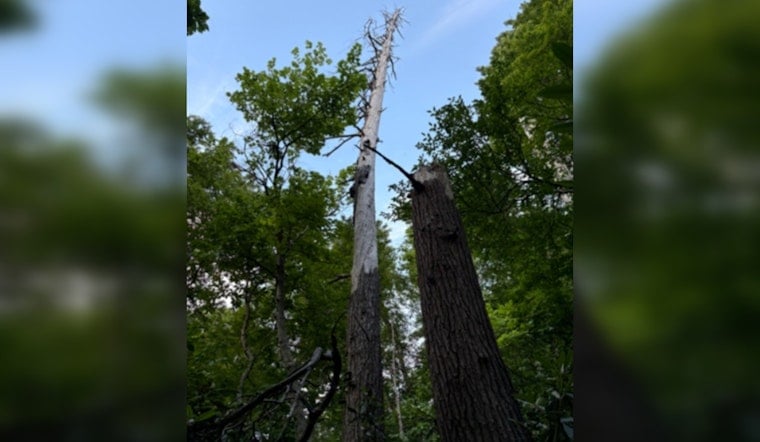
Out in the 531,148-acre Nantahala National Forest, a dead eastern hemlock roughly 20 miles west of Robbinsville turned out to be anything but lifeless. Biologists discovered an endangered Indiana bat maternity colony tucked inside the snag, with state crews counting about 24 bats emerging from the tree and capturing five reproductive females during the survey. The discovery, the first documented Indiana bat maternity roost in North Carolina in 14 years, gives wildlife managers a rare shot at tracking summer roosting and pup survival for a species that has declined dramatically.
As reported by The Charlotte Observer, biologists trapped the five reproductive female Indiana bats near a gravel road, then outfitted two of them with radio transmitters that led the team to the 60-foot hemlock. The tracking crew, made up of staff from Brown Environmental Consulting and the U.S. Forest Service, said the steep terrain and the bats’ knack for covering ground made the roost especially tough to find. State officials told the paper they plan to keep tabs on the colony through the summer to learn more about how faithfully the bats return to the roost and how well their pups do.
Why the find matters
The Indiana bat is federally listed as endangered, and the U.S. Fish & Wildlife Service says range-wide populations have fallen substantially compared with historical counts. The agency points to white-nose syndrome, habitat loss and other stressors as key drivers of that decline. Summer maternity roosts are especially critical because pups cannot fly for weeks, and the N.C. Wildlife Resources Commission notes that North Carolina forbids deliberate bat evictions during the pup-rearing season, May 1 through July 31, to avoid orphaning newborns.
The tree and the threat to hemlocks
State biologists say the roosted bats were using a roughly 60-foot eastern hemlock that likely died after an infestation of the invasive hemlock woolly adelgid. As reported by The Charlotte Observer, the snag’s loose, peeling bark created exactly the kind of microhabitat Indiana bats prefer. The tree stands inside the 531,148-acre Nantahala National Forest, which the U.S. Forest Service notes is the largest national forest in North Carolina. Widespread hemlock decline tied to the adelgid and related stresses has been documented across the southern Appalachians, which makes surviving snags and intact forest stands increasingly important as summer habitat, according to U.S. Forest Service research.
Monitoring and next steps
Wildlife managers say they will stick with periodic, noninvasive monitoring of the roost so they can track habitat use without disturbing flightless pups. The N.C. Wildlife Resources Commission offers guidance on summer bat roosts and advises against eviction or tree removal during the pup-rearing window, with more details available from the agency. The find in this out-of-the-way corner of Nantahala gives scientists a chance to pair on-the-ground observations with range-wide monitoring so they can better target habitat protection and recovery work.
The fact that a remote dead tree can shelter an endangered colony is a reminder that small, overlooked pieces of forest can play an outsized role in species recovery. For now, the plan is simple: let the bats raise their pups in peace while biologists keep a careful, distant eye on the hemlock and its seasonal tenants as summer rolls on.





