

























































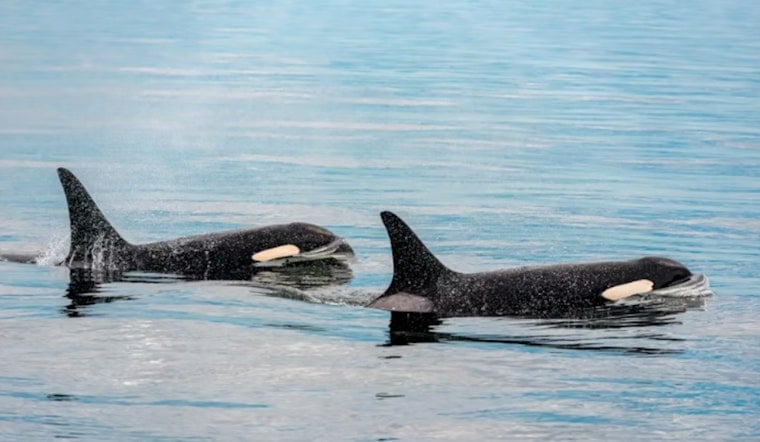
A small group of transient orcas turned Saturday afternoon into an impromptu whale-watch as they cruised south past Blakely Rock off Bainbridge Island, drawing eyes from shore and water alike. The whales moved through the ferry lane and appeared headed toward Elliott Bay, giving onlookers brief but close views from West Seattle and nearby shores while local naturalists and volunteer spotting networks fired off quick updates as the animals moved through the central Sound.
According to West Seattle Blog, naturalist Kersti Muul reported the sighting and asked readers to share any follow-up observations. Muul, who runs the Salish Wildlife Watch alert network, has been a frequent source for on-the-ground whale reports in the region, as noted by AP News. West Seattle Blog said the animals were “headed southbound from Blakely Rock” and urged anyone who spots them to let the site know.
What kind of orcas were these?
As described by NOAA Fisheries, the whales in these sightings are likely transients (Bigg's killer whales), an ecotype that typically hunts marine mammals such as seals and porpoises. Transients often pass through nearshore channels and ferry lanes while searching for prey, so sightings along the West Seattle and Bainbridge shorelines are familiar to local observers. NOAA adds that vessel noise and crowding can disrupt the whales' behavior, even when they are not the endangered Southern Resident population.
How to watch without disturbing them
State and federal guidance spell out safe distances and behavior for boaters and beachgoers. As outlined by the Washington Department of Fish & Wildlife, boaters must stay 1,000 yards from Southern Resident killer whales and at least 200 yards from other orcas, slow to 7 knots or less, and move out of a whale's path. If whales approach within 400 yards, WDFW advises slowing or, when safe, disengaging the transmission and waiting for the animals to pass. WDFW also asks observers to report violations to WDFW Enforcement at 1-877-933-9847 or file a report at Be Whale Wise.
Why these visits matter
Visits like Saturday's are a reminder of how active the Salish Sea is and why researchers track movements. NOAA Fisheries notes orcas face threats including prey shortages, vessel noise and contaminants that can affect health and foraging. Community networks and logs such as Orca Network and local tip-lines like West Seattle Blog's help scientists and managers understand where whales are moving and how people are interacting with them. If you see the animals, consider photographing from a safe distance and sharing time-and-location details with sighting networks to aid tracking and conservation.




