

























































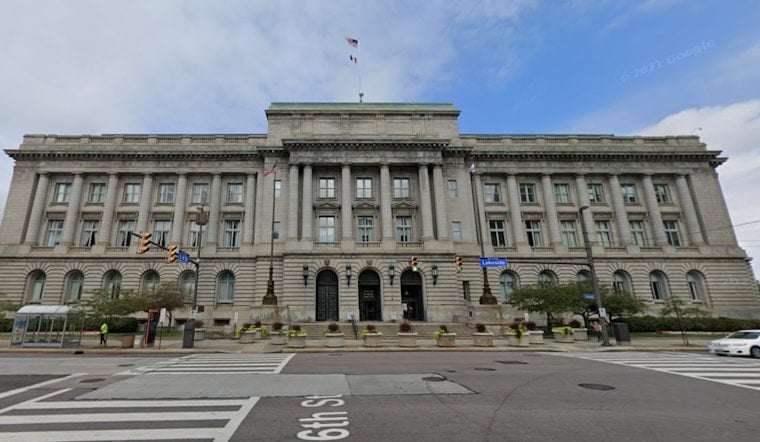
Cleveland City Council on Monday signed off on an emergency ordinance that sharply increases penalties for threatening health care workers, upgrading the charge of "menacing" in those situations to a first-degree misdemeanor with a mandatory minimum jail stint. Backers called it a necessary response to a spike in violence inside local hospitals, while critics worried the city is stepping into territory that could sweep in patients who are in crisis.
The measure, File 1380-2025, amends Section 621.07 of the city code and spells out which employees count as "healthcare workers" under the updated rule. According to Legistar, the tougher charge applies when an offender knows or reasonably should know that the victim is a health care worker and the facility offers de-escalation or trauma-informed training.
Hospital systems pressed the council to act after presenting data that included thousands of incidents and described fast-rising threats against staff. As reported by WOSU Public Media, Cleveland Clinic officials told the council that their Cleveland facilities saw roughly a 34% jump in reported workplace-violence events over a recent period.
The proposal did not sail through without pushback. Councilwoman Stephanie Howse-Jones cast the lone "no" vote and urged the addition of trauma-informed protections and tighter data-collection rules to make sure prosecutions do not land hardest on people experiencing mental or medical crises, Signal Cleveland reported. Council members also pressed hospital leaders to give workers paid time off to file police reports, a perk they said could be key if the city expects staff to actually pursue cases.
What the law says
The ordinance states that anyone convicted under the upgraded section faces a mandatory minimum of at least three days in jail that cannot be suspended, and that other penalties allowed under city law can still apply. It ties the first-degree misdemeanor classification to employers that provide de-escalation or crisis-intervention training and allows the mandatory minimum to be stacked and served consecutively for multiple qualifying offenses, according to Legistar.
Hospital leaders and advocates
Hospital officials told council the stiffer penalties could finally give caregivers confidence that reporting threats is worth the trouble and could help the justice system deal with repeat offenders. WOSU Public Media reported that clinic representatives described caregivers being physically attacked, spat on, and threatened in a range of settings, not only in busy emergency departments.
What happens next
Council passed the measure as an emergency ordinance, which means it will take effect immediately if it secures the required supermajority and the mayor signs off. If not, it will follow the standard timetable laid out in the city code. The law also directs the Director of Public Safety, in coordination with Public Health, to put out an annual anonymized report titled "Menacing Incidents in Healthcare Settings" that includes aggregated counts, the settings where incidents occurred, and demographic indicators, Signal Cleveland noted.
Supporters argue the new penalties are a long-overdue tool to protect people on the front lines, while opponents say the real test will be how the law is enforced in practice. "They have been allowed to hit us, bite us, to scratch us," Rick Lucas told Fox8, adding that he applauded the council for acting to protect caregivers.





