

























































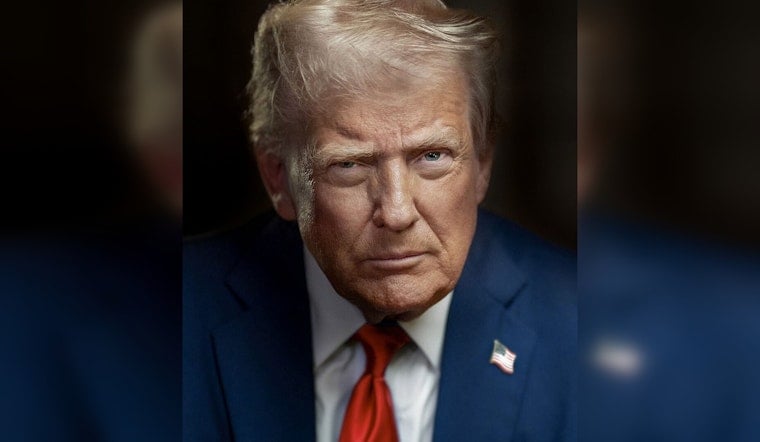
President Donald Trump has ordered the national security bureaucracy to hit the gas on military and intelligence use of artificial intelligence, while insisting that civil liberties and human oversight will not get left on the side of the road. A new national security memorandum tells senior Cabinet officials and the Pentagon to strip away barriers that slow AI deployments and to update the rules that govern autonomous weapons.
What the Memo Orders
The memorandum, formally titled National Security Presidential Memorandum/NSPM‑11, instructs secretaries across the national security apparatus to pinpoint mission areas where AI can “enhance operational effectiveness” and to “streamline the acquisition and deployment” of those tools, according to the White House. It orders the Secretary of War to update DoD Directive 3000.09 on autonomy in weapon systems within 90 days, requires a classified annex, and directs agencies to submit annual reports on how AI is being governed.
Memo's Guardrails and Accountability
The memo tries to draw a bright line around how far military AI can go. “The use of AI by the national security enterprise must always be consistent with United States civil liberties and protections afforded by the Constitution,” it states. It explicitly bans using AI to “censor free speech, embed ideological bias, or conduct unauthorized or unlawful surveillance.”
The White House also tells agencies that any system they field has to be “reliable, robust, steerable, and controllable” before it is put to work in real operations, signaling that speed is supposed to come with some brakes attached.
Where the Pentagon Already Stands
The Defense Department has already been weaving AI into targeting, intelligence analysis, maintenance, and logistics. It updated its autonomy rules in 2023 to preserve human judgment in decisions about the use of force, according to the Defense Department. Public guidance from the department leans heavily on testing, evaluation, verification, and human oversight as the military scales up AI experimentation and procurement.
Tech Pushback and Courtroom Fights
The memo lands in the middle of an increasingly public tug of war between Pentagon leaders and AI companies over how far the government can push vendors on battlefield uses. Anthropic, maker of the Claude chatbot, pushed back on contract language that would have allowed fully autonomous weapons or mass domestic surveillance, and the resulting standoff brought public threats of supply chain restrictions and legal filings, according to AP.
A federal judge later temporarily blocked the Pentagon's supply chain designation and the administration's directive that had halted agency use of Anthropic products, a ruling reported by CBS News.
What to Watch Next
The White House timeline means the bureaucracy has to move quickly. The Pentagon's 90 day deadline to revise DoD Directive 3000.09, along with the classified annex due in the same window, is likely to shape how AI is bought, tested, and fielded, and what rules vendors have to live with.
At the same time, the Anthropic lawsuits and any appeals are poised to define how far the government can go in pressuring AI companies over acceptable use policies, and whether courts will put limits on the administration's power to single out specific domestic firms.





_(cropped)(2).jpg)