

























































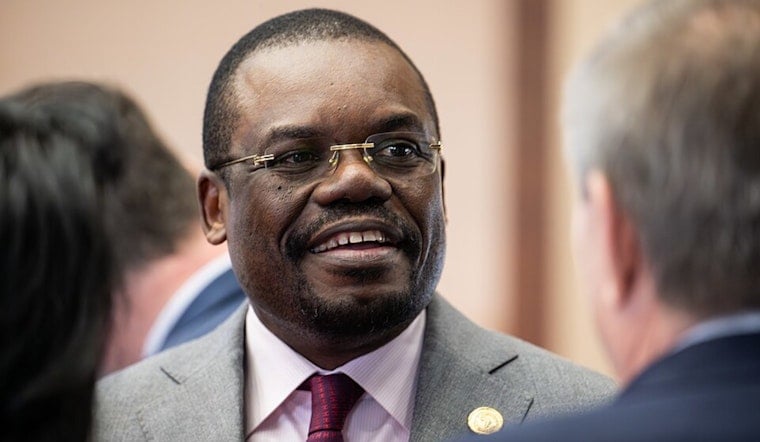
Africa's top public health official is telling Washington it is time to ease up. Jean Kaseya, director-general of the Africa Centres for Disease Control and Prevention, on Tuesday urged the United States to lift Ebola-related travel restrictions on Uganda after Kampala discharged its last confirmed patient on July 16. Speaking to delegates in Accra, he noted that Uganda has gone about a month without new infections and has entered the 42-day period of enhanced surveillance required before an outbreak can be declared over, arguing that the situation no longer looks like it did when the measures were first imposed.
His appeal, which included a written request to U.S. Health Secretary Robert F. Kennedy Jr., was reported by Reuters. The outlet quoted Kaseya as saying, "there is no reason for the U.S. to continue with this travel restriction." Reuters also reported that he is pressing African governments to publicly back his letter as a show of continental solidarity with countries hit by the outbreak.
WHO Counts and the 42-Day Clock
The World Health Organization's July 17 situation update lists 2,124 confirmed cases and 828 deaths in the Democratic Republic of Congo as of July 15, along with 20 confirmed cases in Uganda, according to the WHO. The same update notes that Uganda's most recent case was discharged on July 16, which started the 42-day period of intensified surveillance, and that no new Ugandan infections had been reported since June 21. Those technical benchmarks are the figures Kaseya pointed to in arguing that U.S. travel rules for Uganda should now be revisited.
U.S. Travel Measures and Recent Tightening
The United States put enhanced screening and entry restrictions in place in mid-May, suspending entry for some travelers who have been in the Democratic Republic of Congo, Uganda or South Sudan within the previous 21 days and routing affected arrivals through Washington-Dulles for health screening, according to an order from the U.S. Centers for Disease Control and Prevention (CDC). The CDC said the steps are intended to cut the risk of Ebola being imported into the country while international partners work to contain the outbreak.
In mid-July, Washington tightened controls further by invoking a federal "do-not-board" authority that blocks some Americans in the DRC from getting on commercial flights home until they have spent 21 days in a third country, as reported by CBS News. The move keeps those travelers off regular passenger flights while they complete the incubation period.
Why Experts Warn Against Blanket Bans
Public health specialists and WHO guidance have long cautioned that broad travel bans often backfire, disrupting logistics for outbreak response, fueling stigma and giving countries incentives to hide cases. A review of WHO's use of temporary recommendations during health emergencies shows the agency generally steers governments away from sweeping restrictions on travel or trade, and experts argue that such policies can undercut efforts to bring an outbreak under control, according to a peer-reviewed analysis. Reuters reported that Kaseya is asking African governments to rally behind his letter partly as a political statement while the technical surveillance work continues on the ground.
What Comes Next
Kaseya's push puts new pressure on U.S. officials to decide whether Uganda's travel status should be relaxed, but any shift will still run through federal health and homeland security agencies. For now, entry rules and enhanced screening remain in force while Uganda works through the WHO-prescribed 42-day countdown and the DRC outbreak stays under close watch by international partners.
Updates from the CDC and the WHO are likely to be the clearest signals that Washington or Kampala will use in weighing future changes to travel policies.





