

























































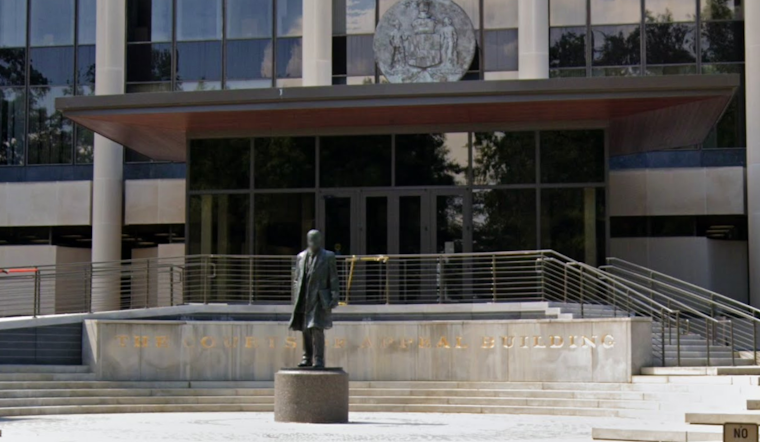
Maryland’s highest court has shut down a Baltimore man’s latest attempt to undo his 70-year sentence in a 2021 double homicide, ruling that the trial judge did not have to tell jurors to weigh whether his custodial statement was voluntary.
In a decision issued July 20, 2026, the Maryland Supreme Court left intact the convictions of Montay Shuler, who was found guilty of two counts of voluntary manslaughter, robbery with a dangerous weapon, and multiple firearms offenses stemming from a deadly encounter in a parked car. He remains on the hook for a total of 70 years in prison.
High court upholds verdict despite instruction dispute
Writing for the majority, Justice Brynja Booth concluded that the intermediate Appellate Court was wrong when it said a voluntariness instruction was unnecessary simply because Shuler’s statement to police was exculpatory or used only to impeach him. Even so, the majority held that Shuler failed to put forward the “some evidence” needed to trigger that instruction in the first place, according to the Maryland Supreme Court.
The court also said that even if the trial judge had slipped up, any error would have been harmless beyond a reasonable doubt and did not justify tossing out the convictions.
Case background: scene, phones and evidence
Police were called to the 4300 block of Flowerton Road on Aug. 5, 2021, where they found Brian Palmer and Darrin Stewart shot inside a red Ford Focus. Prosecutors said the meeting had been set up as a marijuana sale, according to the Maryland Daily Record.
Investigators leaned on cellphone location data and physical evidence to tie Shuler to the scene, including a Ruger 57 discovered under a seat in a Subaru linked to him, along with matching fingerprints. At trial, Shuler took the stand and said he acted in self-defense. Jurors rejected the top charges, acquitting him of first- and second-degree murder, but found him guilty of voluntary manslaughter and related counts, resulting in the 70-year sentence.
Split opinions from the bench
Justice Shirley Watts agreed that the legal framework mattered but parted ways with the majority on how the missing instruction played out with the jury. In a partial dissent, she wrote that “Had the jury believed Mr. Shuler’s testimony in its entirety, Mr. Shuler may have been exonerated of all of the murder charges,” and she argued that leaving out the voluntariness instruction could not simply be brushed off as harmless, according to the Maryland Supreme Court.
Justice Jonathan Biran filed a short separate opinion. He said there was at least some evidence that Shuler’s statement might have been involuntary, but he ultimately joined the majority in concluding that any error did not undermine the verdict.
What the ruling means for future cases
The decision reinforces Maryland’s two-step process for evaluating custodial statements: the judge first decides whether a statement is admissible at all, and then the jury gets to decide whether it was voluntary if the defense has generated “some evidence” on that point, as outlined by Justia.
The ruling also highlights the court’s willingness to apply harmless-error review when the overall record supports the jury’s decision. In practical terms, defense attorneys will need to put at least a minimal factual showing in front of the court to get a voluntariness instruction, while prosecutors can point to mixed verdicts, like the split between murder acquittals and manslaughter convictions here, to argue that jurors carefully weighed credibility instead of hanging everything on a single recorded statement.
Who spoke — and what comes next
The Maryland Office of the Public Defender declined to comment on the ruling. Shuler was also represented by attorneys from Williams & Connolly. The Maryland Office of the Attorney General likewise declined to weigh in, according to the Maryland Daily Record.
With the state’s high court now on record, Shuler’s 70-year sentence stands, and his appeals in Maryland’s courts appear to be exhausted.





