

























































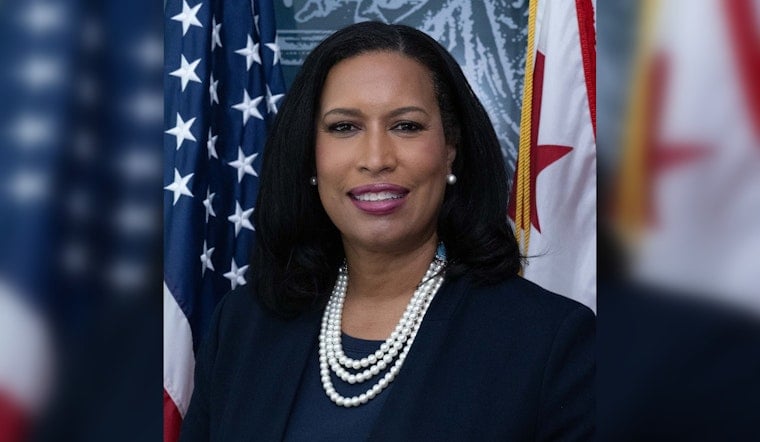
Mayor Muriel Bowser has tossed the District's latest budget back to the D.C. Council, unsigned and loaded with warnings that the city is barreling toward what she calls an $837 million "fiscal cliff." On July 24, 2026, Bowser returned the District's fiscal year 2027 budget bills, Bill 26-659 and Bill 26-660, without her signature and with a clear message: the Council's changes, she says, push big recurring costs into the laps of the next mayor and Council. Her office maintains that the Grow DC budget proposal she sent in April closed a $1.1 billion gap through spending reductions, savings and prior-year surplus, not one-time gimmicks. The standoff now centers on which programs stay funded and which trade-offs future leaders will be forced to make.
In a July 24 letter to Council Chairman Phil Mendelson, Bowser warned that restoring one-time funding for ongoing programs would create the $837 million shortfall for future budgets, according to reporting by WJLA. She framed her move as an attempt to protect the District's long-term fiscal health after her office says it already did the hard work of closing that $1.1 billion gap in the original plan.
Bowser spelled out the specific Council restorations she says drove the problem: a one-time $61.5 million boost for childcare worker subsidies, $27 million in grants to nonprofit legal-services providers, $15 million for hospital graduate medical education subsidies and roughly $13 million to roll back temporary-assistance reforms. In the letter, she argued those changes amount to deferred costs that someone will eventually have to pay. "It is Council's prerogative, of course, to either solve tough budget problems or simply kick the can down the road," she wrote in the July 24 message. The full letter is posted by WJLA.
What's in the bills
The local portion of the Council's budget legislation would appropriate roughly $11.79 billion in local funds for FY27, with total general-fund spending topping $13 billion, according to the text filed with LegiScan. These bills are the Council's response to Bowser's April Grow DC proposal, which placed particular emphasis on schools and public safety when it was transmitted to the legislative branch. For line-by-line detail on the mayor's original plan, see the release from the Mayor's Office.
Revenue and risk
The District's own number-crunchers are not exactly radiating optimism. The Office of the Chief Financial Officer warned in its February 2026 revenue certification that the city's outlook is fragile, pointing to slower growth in property, sales and deed taxes and noting that federal workforce reductions continue to drag on tax receipts. That estimate and subsequent updates flagged those downside risks, which Bowser now cites as a key reason she views using one-time fixes for recurring costs as a gamble the District should avoid.
What happens next
Procedurally, the Council still has several plays it can run. It can send the bills back to the mayor, try to repass them, or, if Bowser escalates with a formal veto, attempt an override with a two-thirds vote. Under the Home Rule Act, acts passed by the Council are then transmitted to Congress for a 30-day congressional review period, or 60 days for criminal measures, before they become final unless Congress steps in to disapprove. For a plain-English walkthrough of that process, the D.C. Council offers its Council 101 guide, and procedural specifics on this budget are laid out in the text filed with LegiScan.
For residents, service providers and anyone trying to plan beyond the current fiscal food fight, the practical bottom line is straightforward: the programs the Council restored are on the books for now. They stay that way unless the Council reverses course, Congress intervenes or future budget makers find offsets to avoid the cliff Bowser is warning about. The mayor has said she remains proud of her administration's record of fiscal stewardship and intends to keep pushing growth-focused policies in her remaining months in office. Her broader budget priorities are laid out by the Mayor's Office, and her detailed July 24 explanation is captured in the letter posted by WJLA.





_(cropped).jpg)