

























































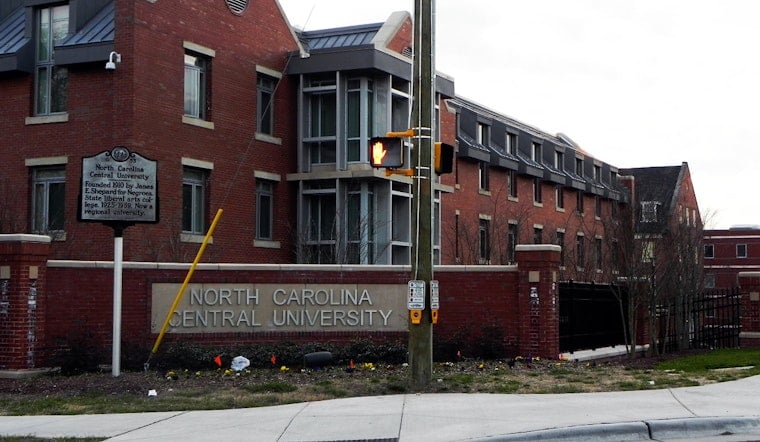
Karrie Dixon did not come to North Carolina Central University to coast. She was brought in to calm a campus rattled by financial reporting problems, rebuild trust with state lawmakers and turn NCCU into a larger, research-focused anchor for Durham. Now the university has more than $110 million in new state money, and Dixon is publicly laying out plans to grow enrollment toward roughly 10,000 students and secure an R2 research designation. Her case hinges on two big promises: tighter financial oversight and the kind of fundraising muscle she showed at Elizabeth City State University.
State budget pumps $110 million into NCCU
According to North Carolina Central University, the newly enacted state budget delivers roughly $110.3 million to NCCU. That includes $98.6 million in recurring base funding, along with support tied to enrollment and specific programs. University officials say the money will cover faculty and staff compensation, targeted academic offerings and physical upgrades such as work on the Edmonds Classroom Building. That infusion is the financial backbone of Dixon’s near-term agenda and is expected to be tapped as NCCU scales up its capacity.
Dixon’s Elizabeth City State run turned heads in philanthropy circles
Dixon points to her tenure at Elizabeth City State University, where leaders credit major enrollment gains, as evidence that she can grow an HBCU at speed and scale. ECSU also pulled in headline-making philanthropy: a $15 million donation reported in 2020 and a $42 million gift announced in March 2026, bringing MacKenzie Scott’s total support there to roughly $57 million, as reported by Forbes. That mix of enrollment growth and big-dollar fundraising is at the center of the argument Dixon is making for replicating her playbook in Durham.
Audit alarms, then a reset on financial oversight
The state auditor’s office identified more than $45 million in financial reporting errors at NCCU for the year ending June 30, 2024, the North Carolina Office of the State Auditor reported. The audit cited misclassified items and inaccurate journal entries as the main drivers of the discrepancies. University leaders point to follow-up fixes, including a clean audit and an A3 issuer rating affirmed by Moody’s, as proof that the books are back in order, according to statements on the chancellor’s office website at North Carolina Central University.
Old buildings, rental chillers and expensive stopgaps
Stabilizing the numbers is one thing; fixing the campus itself is another. Dixon told The News & Observer that seven buildings, including the law school, were relying on temporary HVAC systems when she arrived. NCCU had to rent chillers at roughly $30,000 a month each. Those short-term fixes, she noted, swallow operating dollars that could otherwise pay for faculty positions, student support services and strategic hires. The new state funding includes money for targeted campus improvements, but it will not erase years of deferred maintenance in one budget cycle.
The big swing: R2 research status and 10,000 students
“We are on track to reach 10,000 students soon,” Dixon told The News & Observer, adding that an R2 research designation is one of her top priorities as NCCU expands partnerships across the Research Triangle. She argues that a stronger research profile will draw more grants, industry partners and graduate students, which in turn can help sustain undergraduate growth. Moody’s affirmation of NCCU’s A3 rating gives the university added credibility in the bond market as it weighs capital projects tied to those ambitions.
What this means for Durham
If Dixon can convert state dollars into new classrooms, more faculty and modern research labs, Durham could see a steadier pipeline of NCCU graduates feeding local employers and stepping into lab and healthcare roles. At the same time, rapid growth will test the city’s housing market and transit network, and the university will have to match enrollment goals with investments in housing and student services to avoid putting extra pressure on surrounding neighborhoods. Local officials say the next 18 months will reveal whether this surge of money leads to lasting improvements or mostly patches the most visible problems.
Dixon’s strategy is relatively simple on paper: pair tighter fiscal discipline with an aggressive fundraising push, then use the state’s investment as leverage to build long-term research capacity. The coming stretch of capital planning approvals, potential bond talks and on-the-ground campus repairs will show whether Durham’s much-discussed HBCU fixer can turn that blueprint into reality.





