

























































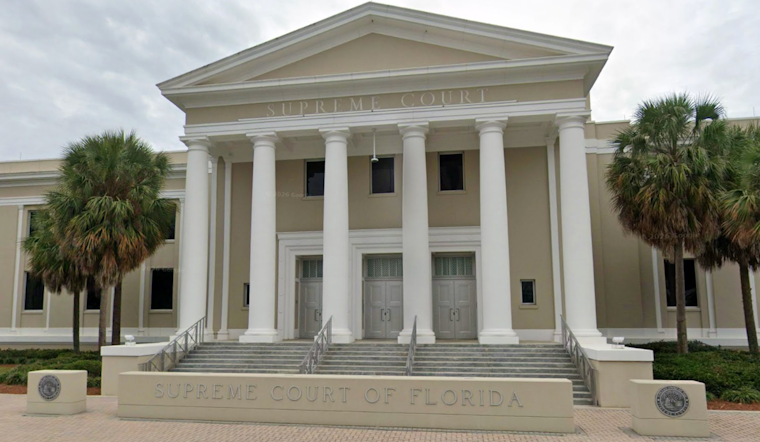
A routine five-minute courtroom break has turned into a statewide constitutional debate in Florida. A state appeals court has upheld a defendant's sexual battery convictions and lengthy prison term, yet it is asking the Florida Supreme Court to settle a thorny question: can a judge bar a testifying defendant from talking to their lawyer during a brief recess?
Appeals court upholds verdict but flags a bigger issue
In a July 24 opinion, the Fifth District Court of Appeal affirmed Joel Gingery's sexual battery convictions and his combined 20.188-year sentence. At the same time, the panel certified what it called "a question of great public importance" about whether trial judges may stop a defendant from consulting with counsel during short, mid-testimony breaks. The written decision is available in the court's published ruling, as reposted by Justia.
What sparked the fight in the trial courtroom
The dispute traces back to Volusia County Circuit Court. While Gingery was on the stand, the trial judge called a recess of roughly five minutes and instructed him not to speak to anyone, including his attorney. On appeal, Gingery argued that this no-contact order violated his right to counsel. The appellate panel disagreed on the bottom line, concluding that even if the instruction was improper, any error was harmless and did not warrant a new trial, as reported by the Tampa Free Press.
The federal rule: Perry v. Leeke
The opinion walks through the controlling federal precedent from the U.S. Supreme Court. In Perry v. Leeke, the Court held that the Sixth Amendment does not automatically guarantee a right to consult with counsel during short, routine mid-testimony recesses. Trial judges, under that decision, have discretion to limit lawyer-client contact during brief interruptions in order to guard against coaching and preserve the integrity of testimony. The full opinion is available in Perry v. Leeke.
Florida precedent pulls the other way
Florida case law, however, has been read much more defendant-friendly. The state supreme court and several district courts have relied on earlier rulings, most notably Bova and later Amos, to conclude that a criminal defendant must have access to counsel during any trial recess. As the Fifth District summarized it, Florida precedent has been interpreted to require that "no matter how brief the recess, a defendant in a criminal proceeding must have access to his attorney." Seeing a direct tension with the federal approach, the panel formally certified the conflict for the state's high court to resolve. The opinion was reposted by Justia.
Why a five-minute break suddenly matters
This is not just academic hair-splitting. If the Florida Supreme Court sides with the state-court line of cases, trial judges would have to allow attorney consultation even during five- or fifteen-minute pauses in testimony. That could change how lawyers handle witness preparation in the middle of trial and how judges structure breaks, objections, and scheduling.
If the court instead leans into the federal approach, judges would retain discretion to block lawyer-client contact during short recesses to avoid coaching or disruption. How that choice is framed and implemented is governed by Florida's appellate rules and the standards that apply when a lower court sends up a certified question, according to the Florida Courts system.
What happens next
The Florida Supreme Court must first decide whether it will take up the certified question. If it does, the case could produce a statewide rule that will shape criminal trials across Florida and ripple into other appeals raising the same issue. For now, Gingery's convictions and 20.188-year sentence remain in place, while the Fifth District effectively invites the state's highest court to say once and for all what rule applies to short mid-testimony breaks, as reported by the Tampa Free Press.





