

























































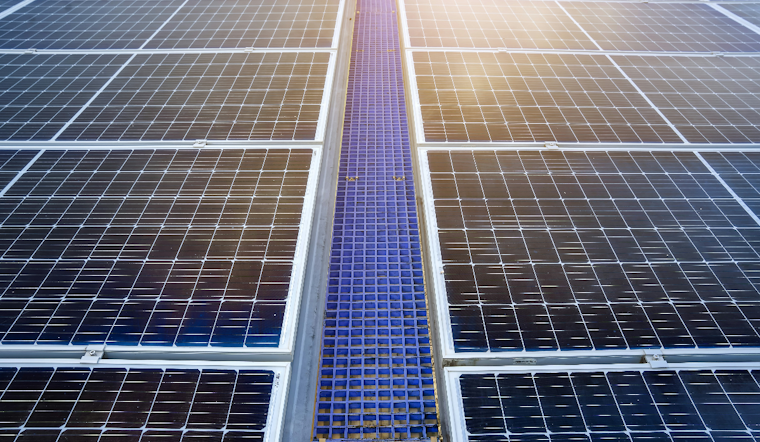
Florida is quietly turning those unremarkable stormwater ponds lining its highways into something far more ambitious: floating solar farms. Developers say the plan could add roughly 1 gigawatt of power to the grid, enough to run more than 200,000 homes, by covering these man-made ponds with solar panels instead of using farmland or conservation land. A pilot array in Orlando is already feeding electricity into the system, and state and company officials say a new master lease could make the concept plug-and-play across much of the state.
According to pv magazine, the Florida Department of Transportation (FDOT) and floating-solar developer D3Energy rolled out the first project under a statewide master lease this spring. The agreement gives D3Energy exclusive rights to develop floating photovoltaic systems on FDOT-managed stormwater ponds, and the company says the pond network could support more than 1 gigawatt of floating solar. D3Energy further described the lease structure and its goals in a company release carried by PR Newswire.
How the master lease works
FDOT has been kicking the tires on the idea of leasing ponds for floating solar for several years. Its procurement materials spell out the agency’s intent to make retention ponds available for photovoltaic projects as part of right-of-way planning. The Florida Department of Transportation explains that it shifted to a negotiated lease framework instead of cutting separate deals for each individual pond. D3Energy’s project overview says the master lease bundles site access and permitting into a single statewide agreement, so utilities and municipalities can hook into a repeatable process at multiple roadside locations instead of reinventing the wheel every time.
How big could this get
The national technical ceiling for floating solar is enormous. Researchers at the National Renewable Energy Laboratory estimated that federally owned reservoirs alone could theoretically host on the order of 1,042 gigawatts of floating PV under ideal assumptions. Against that backdrop, D3Energy’s estimate that FDOT’s pond inventory could support more than 1 gigawatt in Florida is a modest slice of the pie, but still enough, the company says, to avoid roughly 5,000 acres of traditional ground-mounted solar development, as highlighted in industry coverage from Solar Power World.
Benefits and hurdles
Floating arrays are not just a clever use of space. Water can help keep panels cooler, which can boost performance, and shading a portion of a managed pond’s surface cuts down on evaporation. Those advantages show up both in reporting and in NREL research. But the approach comes with a to-do list: higher upfront costs for anchoring and mooring systems, exposure to storm surge and wave action, shifting water levels and tricky shoreline geometry, maintenance access headaches, and open questions about aquatic ecosystems and permitting.
Details on the Orlando installation, including system size, equipment and commissioning timeline, come from project pages and vendor partners. The Orlando case study from SMA America notes that operators are watching closely to see how the array performs and what the ecological tradeoffs look like as it generates real-world data for future sites.
D3Energy’s leadership argues that the lease arrangement goes straight at a fundamental solar problem: siting. As the company’s managing director said in the release, “In Florida, the bottleneck on new solar is rarely capital or technology — it’s available land. This lease solves that at the state level.” If the pilot projects hold up against storms and environmental scrutiny, the FDOT framework could offer a relatively fast, low-footprint way to add renewable capacity along existing transportation corridors. The ultimate scale, though, will still hinge on permitting hurdles, project economics, and how local communities respond as more ponds start pulling double duty as power plants.





