

























































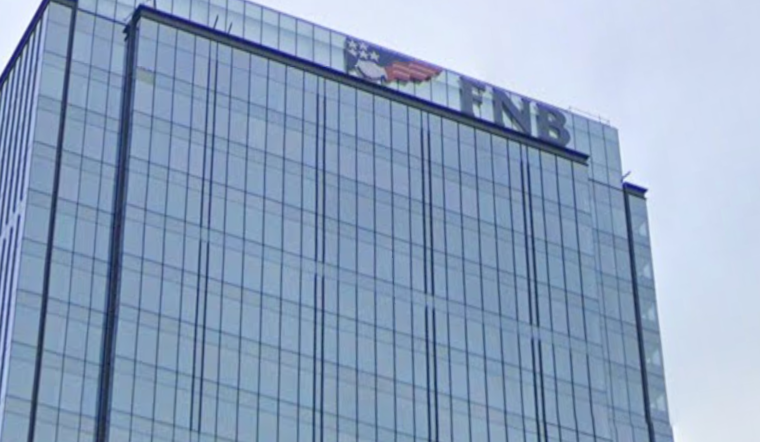
Pittsburgh’s newest office tower has become the prize in a legal fight that could reshape ownership of the Lower Hill District project. Rival lawsuits accuse the partners behind FNB Financial Center of manipulating leasing, valuation and loan terms while the 26-story building works to fill its office space. The dispute puts a major piece of Pittsburgh’s redevelopment strategy under a very public microscope.
According to TribLive, FNB offered to buy out its partners for $240 million in April. The tower is owned by a joint venture involving First National Bank, Buccini Pollin Group and Clay Cove Capital, with FNB also serving as the project’s primary lender. FNB declared a default in May 2025 and said the joint venture agreement gave it the right to acquire the other partners’ interests.
Clay Cove Says FNB Kept The Tower’s Value Down
Clay Cove’s lawsuit, filed in May, accuses FNB of intentionally suppressing the building’s value by preventing prospective tenants from renting space. The investor alleges the strategy helped keep a $28 million loan from converting into equity, while creating a path for FNB to take control of the property.
As reported by Law360, Clay Cove is seeking to convert the loan from debt to equity, invalidate FNB’s default notices, block the takeover and recover damages. The complaint says roughly 30,000 additional square feet of leasing, worth about $1.2 million in annual rent, could have triggered the conversion under the deal’s terms.
Developer Fires Back Over Alleged Leasing Sabotage
Buccini Pollin Group sued Clay Cove in June, turning the dispute into a two-sided fight over who damaged the project. The developer alleges Clay Cove sabotaged a potential sale of the tower and improperly used veto powers it did not have, and it is seeking declaratory relief and compensatory damages.
TribLive reported that Buccini Pollin Group attributed the tower’s struggles to Pittsburgh’s post-pandemic office market and broader leasing conditions. The complaint also says brokers had brought prospective tenants representing about 450,000 square feet and $19 million in potential leases. FNB called Clay Cove’s lawsuit “baseless and self-serving,” while attorneys for the other parties declined comment.
Why The Fight Matters Beyond One Pittsburgh Tower
FNB Financial Center opened in late 2024 as the anchor of the Lower Hill redevelopment, with FNB later celebrating the opening of its $300 million headquarters building. First National Bank’s own announcement describes the tower as a major addition to Pittsburgh’s office market, while Urban Redevelopment Authority records identify the project as a joint venture among FNB, Buccini Pollin Group, Clay Cove Capital and the Pittsburgh Penguins’ real estate affiliate.
The building is also part of a much larger neighborhood redevelopment effort that includes public-space, entertainment and community-investment commitments. Hoodline previously reported on the nearby Citizens Live at The Wylie venue, another major Lower Hill project that is expected to bring new activity to the former Civic Arena site.
The legal fight arrives as Pittsburgh’s office market shows both improvement and continued strain. CBRE reported a 17.2% overall office vacancy rate for the region in the fourth quarter of 2025, suggesting that demand is stabilizing but that owners still face a difficult market for large blocks of space. That backdrop makes control over tenant deals, property value and financing terms especially consequential.
What The Lawsuits Could Decide
The cases could determine whether FNB’s default notices stand, whether the $28 million loan becomes an ownership stake and who controls leasing and valuation decisions at the tower. They could also affect the ownership structure of a building that was marketed as a cornerstone of Pittsburgh’s next development chapter.
No court has ruled on the allegations, and the lawsuits remain civil disputes between business partners. For now, the most visible symbol of Lower Hill’s comeback has become the center of a fight over who gets to control its future.



