

























































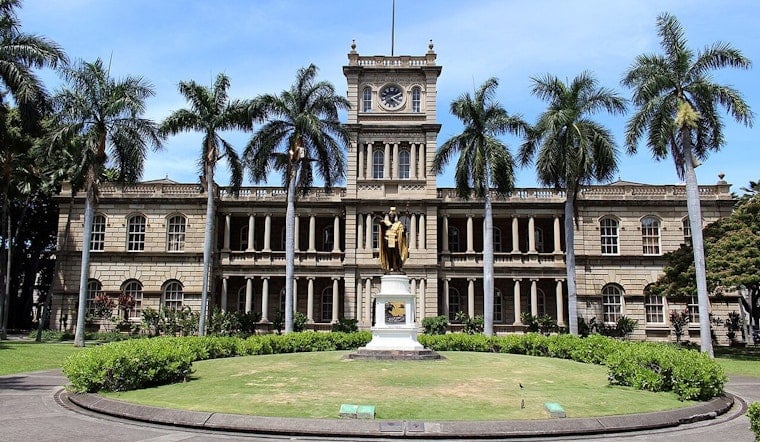
On July 15, the Hawaiʻi Supreme Court threw out the 1990 conviction of Daniel Granillo and ordered a new trial, turning a decades-old case into a sharply worded referendum on the U.S. Supreme Court. Justice Todd W. Eddins wrote the 91-page majority opinion and declared that the state constitution “takes no instruction” from recent federal rulings. The court set aside the original verdict after concluding that key forensic testimony used at trial is now considered scientifically unreliable.
Court orders new trial in decades-old case
In State v. Granillo, the high court found that expert testimony admitted at the 1990 trial was later shown to be unreliable and could not be brushed off as merely "newly discovered" evidence. Applying Hawaiʻi's false-evidence standard, the court reversed both the Intermediate Court of Appeals and the lower court’s denial of relief, and sent the case back for a new trial. The decision, captioned "Opinion of the Court by Eddins, J.," runs more than 90 pages, according to the Supreme Court of Hawaiʻi.
Forensic science at the center
The court leaned heavily on a 2017 Department of Justice review and other scientific reports that undercut confidence in microscopic hair and fiber comparisons, concluding that earlier FBI testimony in Granillo’s case "exceed[ed] the limits of the science." The opinion takes judicial notice of National Research Council findings from 2009 and the 2016 PCAST study, treating those reports as key support for classifying the disputed expert testimony as false evidence. The procedural posture and scientific backdrop are detailed in the ruling itself and summarized by FindLaw.
A blistering rebuke of the Roberts Court
After resolving the evidentiary issues, Eddins shifted gears and delivered an unusually direct critique of recent U.S. Supreme Court decisions, writing that "The Roberts Court sees only white" and reiterating that Hawaiʻi's constitution "takes no instruction from it." The opinion lists federal rulings on voting rights, campaign finance, administrative law, and the Second Amendment as examples of a jurisprudence the state court is declining to import, according to the court’s own language. That kind of pointed commentary, rare in appellate writing, is woven into the explanation of why state constitutional protections in Hawaiʻi may diverge from federal precedent.
Where Wolford and Bruen fit in
The timing of the Hawaiʻi court’s broadside comes on the heels of a headline-grabbing U.S. Supreme Court term that featured Wolford v. Lopez, the June ruling that struck down Hawaii's so-called "vampire rule" on concealed carry and applied the Bruen historical-tradition framework to gun regulations. National coverage of those cases provides the backdrop for the state court’s pushback; SCOTUSblog offers a rundown of Wolford and related opinions.
Legal implications
On the central legal question, the Hawaiʻi Supreme Court held that when later scientific developments show that trial evidence was false, a defendant can invoke the state’s false-evidence doctrine even if prosecutors had no idea the evidence was wrong at the time. "We hold that prosecution knowledge is not required to invoke the false evidence standard under article I, section 5," the opinion states. That reading of Hawaiʻi’s constitution could make it easier for other defendants to seek new trials when forensic science evolves, as outlined by FindLaw.
What comes next
The opinion’s broad political commentary has already caught the eye of legal commentators and court watchers, and the ruling will be closely monitored if any further appeal or federal review follows. A separate concurrence criticized the majority’s extended critiques of the U.S. Supreme Court as unnecessary to the core evidentiary holding, highlighting internal disagreement on tone and scope among the justices. Early reaction and analysis from commentators can be found at National Review.





