

























































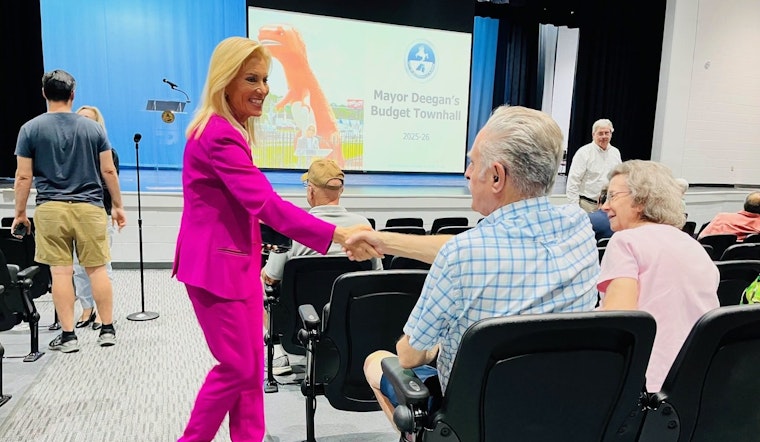
Jacksonville's budget season has officially begun, and City Council has chosen to keep the biggest tax-rate lever in place while a much larger fight over future revenue hangs over City Hall. The move keeps the city's maximum millage rate unchanged for now, but it does not lock in the final number residents will see on their tax bills.
Council members voted 17-1 Tuesday on Ordinance 2026-0500 to keep the maximum Duval County millage rate at 11.1919, according to the Jacksonville Daily Record. Rory Diamond voted against the ordinance, while Ken Amaro was absent.
The Rate Is Steady, But The Tax Bill May Not Be
A mill equals $1 in tax for every $1,000 of assessed property value, meaning the maximum city rate remains $11.1919 per $1,000 before any later council changes or other taxing authorities are factored in. The Beaches' contribution rate was capped at 9.238 mills, while Baldwin's was capped at 7.4373 mills, according to the City of Jacksonville.
The vote could still translate into more property-tax revenue because Jacksonville's tax base is growing. The Jacksonville Daily Record reported that the administration expects ad valorem revenue to rise 6% in fiscal 2026-27 as property values and new construction increase; a 10.6789-mill rate would be needed to keep that revenue flat.
November's Property-Tax Vote Is Driving The Caution
Council members are also looking beyond this budget cycle to a proposed constitutional amendment headed for Florida's November ballot. The Florida Senate describes a phase-in that would increase the homestead exemption from $50,000 to $150,000 in 2027 and $250,000 in 2028 for non-school property taxes.
Jacksonville council auditors estimate the change could cost the city about $300 million in property-tax revenue by fiscal 2029 if voters approve it. That looming gap helps explain why members may prefer to preserve room in the budget now rather than immediately lower the maximum rate.
Deegan's $2.03 Billion Plan Now Moves To Review
Mayor Donna Deegan has proposed a $2.0265 billion general-fund budget for fiscal 2026-27, a 1.1% increase that does not draw from reserves. Public safety accounts for about 53% of the plan, with major investments also aimed at roads, drainage, septic-tank phaseout, housing and city facilities, according to the News4JAX.
The mayor's budget materials put the property-tax haul at roughly $1.29 billion and call for $35.9 million in roadway resurfacing, $25 million for septic-tank phaseout and $27 million for Museum of Science and History improvements. Deegan has framed the spending plan as a lean budget that maintains public safety and infrastructure work while avoiding a reserve draw, as outlined in the Mayor's budget address.
Final Millage Decision Still Weeks Away
Tuesday's action was only the opening move. Council members can still reduce the rate during the budget process, with the city's current schedule listing Finance Committee hearings beginning Aug. 13 and continuing later in August before the final budget and tax rates are adopted.
For Jacksonville homeowners, the immediate takeaway is less about a final bill than about the direction of the debate: city leaders are weighing today's service demands against the possibility of a major property-tax revenue hit in the next few years. The maximum rate stayed put, but the real budget fight is just getting started.




