

























































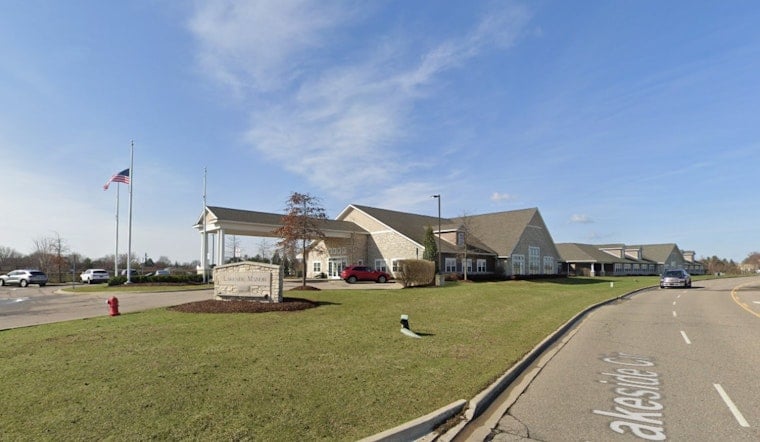
Michigan has sued a nursing-home operator over what the state describes as chronic understaffing, putting Sterling Heights’ Lakeside Manor Nursing and Rehabilitation Center under fresh scrutiny. The case lands as families across Michigan are already being asked to judge care quality by a number that can feel brutally simple: how many people are actually on the floor.
As reported by Crain's Detroit Business, Lakeside Manor is the Sterling Heights facility connected to the state’s case against the chain. The suit alleges a long-running staffing problem, but the accusations remain unproven and the operator will have an opportunity to respond in court.
A 66-Bed Facility At The Center Of The Case
A 2026 MDHHS report lists Lakeside Manor as a 66-bed nursing facility in Sterling Heights. That puts the dispute squarely in a local setting where staffing levels can affect everything from medication passes to response times for residents who need help.
CMS-derived ownership data reviewed by ProPublica lists Lakeside Manor among nine Michigan facilities affiliated with Pioneer Healthcare Management. The database reports average nurse staffing of 3.3 hours per resident day and nurse turnover of 57.2% across those affiliated homes, figures that provide context but do not by themselves prove the allegations in the new lawsuit.
Michigan’s Staffing Rules Set A Floor
Michigan law requires nursing homes to provide enough personnel for continuous care and at least 2.25 hours of nursing care per resident per day, along with shift-based patient-to-staff ratios, according to the Michigan Legislature. The statute also says staffing must be sufficient to meet each patient’s needs, meaning a numerical minimum is not necessarily the entire legal test when regulators or courts examine care conditions.
The lawsuit also arrives as Michigan lawmakers and elder-care advocates are taking a broader look at how nursing homes are financed and managed. A report by Michigan Advance described an April oversight hearing where speakers raised concerns about opaque corporate structures, staffing shortages and the difficulty of tracking whether public dollars reach resident care.
The Operator’s Regional Footprint
Separate federal records show the ownership group behind the facilities has operated on a sizable Southeast Michigan footprint. In a 2023 complaint, the U.S. Department of Labor said skilled-nursing facilities owned and operated by Fahim Uddin operated under Pioneer Healthcare Management, which it described at the time as running 11 nursing facilities and two specialty hospitals.
That federal filing involved alleged overtime and worker-classification violations at a related staffing company, not the current allegations about resident care. The distinction matters: the new Michigan case will turn on its own evidence, including what staffing records, inspections and resident-care documentation show.
What Happens Next
The case is civil, so it does not represent criminal charges or a finding that the operator is liable. As the lawsuit moves forward, the court could be asked to weigh whether staffing practices violated Michigan law and what remedies, if any, should be imposed.
For families with loved ones in nursing homes, the practical question is less abstract than the legal language: whether a lawsuit produces more trained staff on the floor or simply another thick paper trail. The answer will depend on the filings and evidence that emerge in the coming months.




