

























































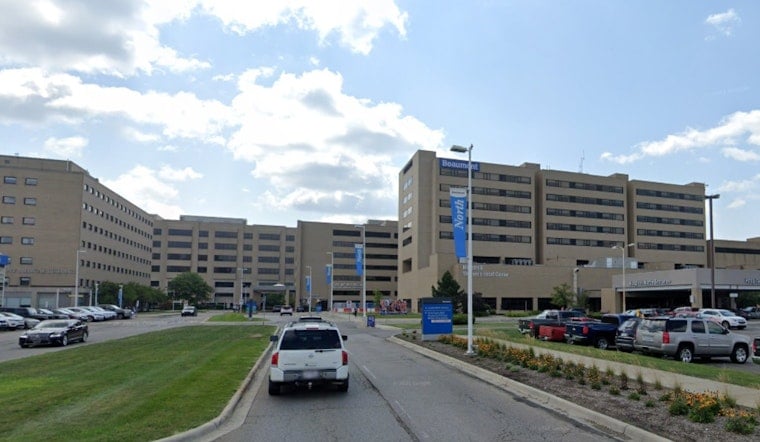
In a move that could reshape how some heart surgeries are done, surgeons at Corewell Health William Beaumont University Hospital in Royal Oak say they have pulled off the world's first documented single‑port robotic mitral valve repair. Instead of the usual five robotic access ports, the team slimmed the operation down to one main robotic port plus a second tiny utility incision for a 60‑year‑old patient. Hospital officials and the patient say the new setup meant he was walking within hours and home in days instead of weeks, with the potential for less pain, smaller scars and a faster recovery for certain people with leaking mitral valves.
According to a news release from Corewell Health, the first patient was Patrick O’Brien, 60, of Royal Oak, a longtime patient whose heart murmur had progressed to bothersome palpitations. The hospital reports that O’Brien was up and walking within hours of surgery and went home on day four.
Local coverage at ClickOnDetroit notes that the Royal Oak team essentially reengineered its established five‑port robotic setup. Surgeons condensed the work into a single robotic access port, using a small utility incision to reach the mitral valve. Doctors quoted in that report emphasize that the single‑port method will not be right for every patient and say Corewell plans to roll it out slowly, tracking results and using it only in carefully chosen cases.
How The Single-Port Operation Differs
Instead of spreading instruments across multiple incisions in the chest, the single‑port technique channels the robot’s tools through one primary port, which is intended to cut down on tissue disruption and the number of skin cuts. Reporting in The Detroit News says the robotic platform used in this case feeds three working arms and a camera through that main port, while a second tiny access incision gives surgeons limited manual access when they need it.
Why It Matters For Patients
Corewell’s release notes that mitral valve regurgitation affects an estimated 3–5% of people and that repairing a leaking valve earlier can help head off heart failure and atrial fibrillation. The access route into the chest may be changing, but the core surgical priorities remain familiar: a durable repair, good valve coaptation and a low complication rate. For clinical background on mitral valve disease and repair techniques, see StatPearls.
Corewell’s Royal Oak program already points to high repair rates and extensive experience with robotic valve procedures, and Suri’s team frames the single‑port milestone as the product of years of incremental refinement. Even so, the technique will not be something every hospital can adopt overnight. It will require focused training and careful case selection before it can move toward broader use, experts told Cardiovascular Business.
For patients around Metro Detroit, the development strengthens Royal Oak’s bid to be seen as a regional hub for cutting‑edge, minimally invasive cardiac care. Hospital leaders say they will share outcomes as they accumulate more cases and stress that the single‑port approach is being reserved for patients who meet specific criteria, as noted in local coverage by ClickOnDetroit.
Surgeons involved in the program caution that much more experience, along with peer‑reviewed data, is needed before anyone can call single‑port robotic mitral repair a new standard of care. For O’Brien, though, the early result already feels like a second chance. Corewell says it will keep refining training and evaluation as it figures out exactly where this one‑port strategy fits in the broader toolkit for treating mitral valve disease.





