

























































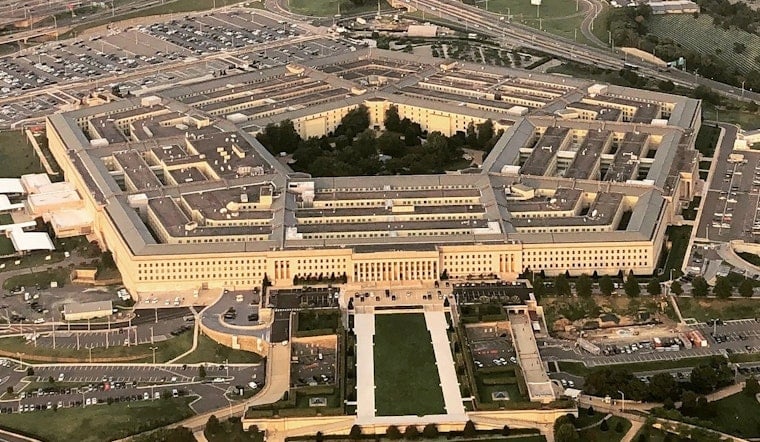
Senate Democrats slammed the brakes on the annual defense policy bill Tuesday, blocking the National Defense Authorization Act just as the U.S.-Iran confrontation ratcheted up again. A key procedural vote to move the massive Pentagon policy package forward came up short, freezing the bill in place while lawmakers brawled over war powers and oversight. The stalemate hit as U.S. forces resumed strikes on Iran and the military reimposed a naval blockade of Iranian ports after recent attacks on commercial ships.
Senate vote and absentees
On the Senate floor, the motion to invoke cloture on S.4784, the fiscal 2027 NDAA, failed on a 50-46 vote, well below the 60 votes needed to open full debate. Four senators were listed as not voting, and Majority Leader John Thune switched his vote as a procedural maneuver so he can bring the measure back up later. The tally and the list of absent senators appear in the official Senate record and were also picked up by local outlets that cover Capitol Hill.
According to News 4 San Antonio, the four who did not cast votes were Sens. John Fetterman, Alex Padilla, Mitch McConnell and Jim Justice.
Democrats say the timing is wrong
Democratic leaders framed their move as a deliberate protest against the administration’s renewed military operations, arguing that Congress should not push ahead with a sweeping defense blueprint while the White House is waging a conflict without more extensive briefings. Senate Minority Leader Chuck Schumer warned that the NDAA “cannot become a permission slip” for further escalation and demanded tighter oversight of war spending. Several Democrats said they want clearer answers on the cost, mission and legal basis of current operations before they sign off on broad authorizing language for the Pentagon.
As reported by AP News, that objection was the central reason for the party-line resistance.
What the bill would do
The Senate’s version of the NDAA would sign off on roughly $1.14 trillion in discretionary national defense authorizations for fiscal 2027. That topline tracks with the administration’s request and comes in substantially higher than last year. Backers spotlight provisions for troop pay raises and military modernization. Critics counter that such a large authorization risks functioning as de facto funding for ongoing operations without fresh, specific checks from Congress.
According to analysis from EveryCRSReport.com, the committee-approved NDAA would authorize about $1.14 trillion in defense-related discretionary activity.
Escalation at sea
The procedural showdown unfolded as the U.S. military resumed strikes on Iran and announced it had reinstated a naval blockade of Iranian ports following a series of attacks on commercial vessels transiting the Strait of Hormuz. Those incidents included damage to a container ship and missile strikes on tankers that left crew members dead or injured. Senators cited the maritime attacks on the floor as the immediate spark for Democrats’ refusal to advance the defense bill.
The U.S. decision to bring back the blockade was reported by AP News, while international outlets tracked the back-and-forth of strikes and shipping assaults that set the backdrop for Tuesday’s vote.
What comes next
Republican leaders said they intend to push the NDAA back onto the Senate calendar and look for other ways to move military priorities, even as House Republicans work on supplemental packages that could include war funding. The standoff sets up a broader fight later in the year over whether Congress will bolt tougher oversight to future war-related spending or let emergency-style measures glide through with fewer constraints.
As The Guardian notes, the vote leaves the normally bipartisan defense bill unexpectedly stalled while lawmakers and the White House wrangle over strategy and authority.





.jpg)