

























































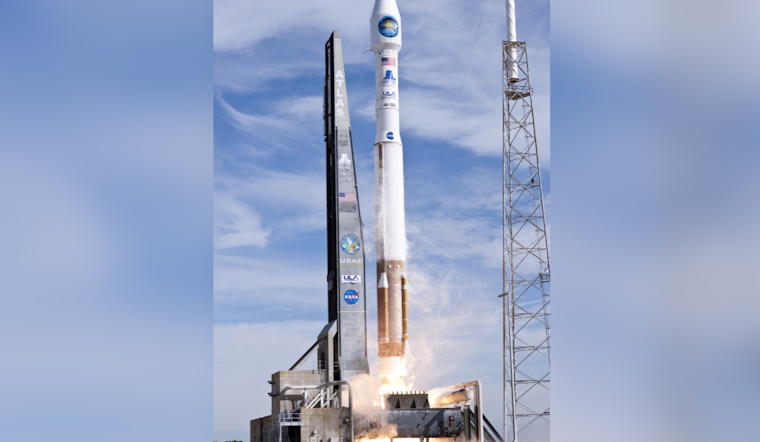
Night owls along the Space Coast are in for another late‑night light show as United Launch Alliance targets an early pre‑dawn liftoff from Cape Canaveral. An Atlas V 551 is set to haul 29 Amazon Leo satellites into low Earth orbit in a short launch window that opens at 12:24 a.m. ET Thursday, part of a rapid deployment that has already pushed hundreds of Amazon satellites into orbit this year. The flight marks another step in Amazon’s drive to build a global low‑Earth‑orbit broadband constellation.
Mission snapshot
The mission, listed as LA‑08 on Amazon’s schedule, will lift off from Space Launch Complex‑41 and carry 29 Amazon Leo satellites, according to Amazon. Amazon’s update notes that the LA‑08 attempt opens at 12:24 a.m. EDT early Thursday and describes this flight as one of the final Atlas V deliveries before the program shifts to ULA’s Vulcan vehicle. The company presents the current launch tempo as an accelerated rollout aimed at expanding global coverage and capacity.
Launch window and weather
Range notices outline a roughly 29‑minute launch window beginning at 12:24 a.m. ET, and the Space Force’s 45th Weather Squadron is calling for an 85% chance of favorable liftoff conditions, as reported by Spectrum News. The main watch item is the cumulus‑cloud rule, which can force a hold if low clouds drift into the flight corridor. If weather or range issues trigger a scrub, ULA and Amazon will stand down and move to the next available opportunity.
The rocket
The Atlas V 551 configuration, the heavy variant with five solid strap‑on boosters, is an expendable vehicle that ULA has used to haul multi‑satellite stacks, per United Launch Alliance. Unlike reusable first stages, Atlas V hardware is not recovered, and stage separation sends spent components away from the vehicle while the upper stage continues to deploy payloads. That expendable profile allows the rocket to lift heavier, denser payloads per mission, a useful trait for these multi‑satellite deployments.
What this flight means
Amazon says the constellation stood at about 367 satellites in orbit before this launch and that it ultimately plans for more than 3,000 spacecraft to deliver global broadband, according to the company’s mission update. Each Atlas V flight adds capacity and additional orbital planes that help Amazon edge toward initial service and compete with incumbent mega‑constellations; Space.com has pointed out the gap between Starlink’s larger footprint and Amazon’s rapid buildup. For the Space Coast, a steady cadence of launches translates into more night‑and‑pre‑dawn traffic and more chances for public viewing events.
How to watch
United Launch Alliance will carry a live webcast and post mission updates on its site as the countdown moves along, according to United Launch Alliance. Local viewing guidance and launch‑day tips for Cape Canaveral are available from Visit Space Coast, which keeps up schedules, suggested vantage points, and safety reminders for spectators. If you are heading out in person, plan to arrive early, expect typical summer coastal weather, and keep an eye on provider and range notices for any last‑minute changes.





