

























































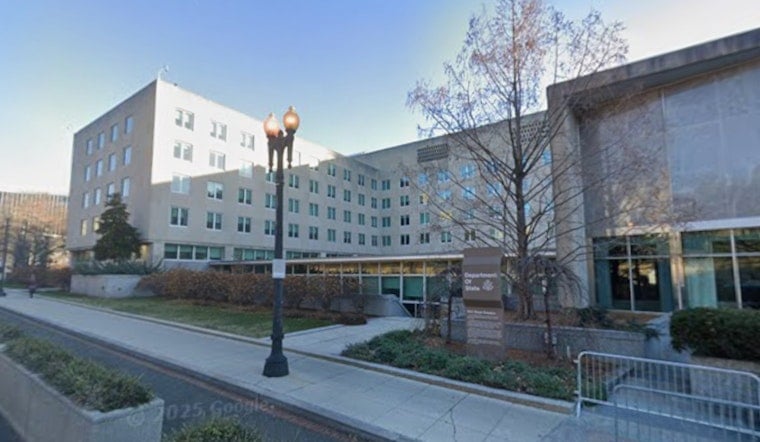
Washington, DC, is weighing a costly new gatekeeper for some immigrants: refundable bonds that could reportedly climb as high as $100,000 for certain overseas applicants seeking green cards. The State Department says the idea is to make sure new arrivals can support themselves. Critics say it could slam the door on family reunions and turn legal immigration into a realistic option mostly for the well off.
According to Time, the agency is considering requiring bonds from a slice of visa applicants. The Wall Street Journal has reported that internal talks have zeroed in on a potential bond of up to $100,000 for some green card seekers abroad. Public reports so far do not spell out who exactly would be tagged for the requirement, how the system would run, or how refunds would work in practice.
In a statement to Time, State Department spokesperson Tommy Pigott said the agency is "exploring the use of a long-standing legal authority ... to require certain visa applicants - those who are otherwise ineligible for a visa because they are likely [to] become a public charge - to post a bond as a way to demonstrate that they have access to the funds necessary to support themselves." Officials are presenting the proposal as a way to conserve public benefits for U.S. residents while creating an alternate route for applicants who can front the money.
How A Bond Would Work
The concept of a visa bond is not entirely new. The State Department already runs a pilot program that requires certain visitor visa applicants from countries it labels as having elevated overstay or public-benefits risk to post a bond. Those deposits have been set in the range of $5,000 to $15,000. As outlined on Travel.State.Gov, these bonds are paid through a U.S. Treasury system and can be canceled when the traveler follows the rules tied to the visa and their departure.
Existing immigration law also already allows for public-charge bonds in certain limited situations, and consular officers routinely comb through applicants’ finances to decide if they qualify for immigrant visas. That broader screening framework is laid out in guidance from USCIS.
Who Could Be On The Hook
Early reporting indicates the bond would be aimed at people applying for immigrant visas at U.S. consulates abroad who are flagged as likely to become a "public charge" under federal law. That standard allows officials to look at a mix of factors, including a person’s age, health, financial resources, and other circumstances.
The Wall Street Journal reports that some officials have floated rolling out the idea first as a pilot in a small group of countries. The $100,000 figure has been discussed as a possible ceiling, although under the emerging concept the size of any bond could vary by case.
Part Of A Bigger Crackdown
The bond talk is unfolding as part of a larger tightening around legal immigration. In June, the Department of Homeland Security proposed a new rule that would significantly increase naturalization fees and scrap some fee waivers for Form N-400, the main citizenship application. The agency describes the plan as an effort to fully recover its operating costs. The proposal, which is detailed in the Federal Register, is open for public comment.
Immigration attorneys and advocates argue that, stacked together, higher fees, tougher public-charge scrutiny, and the prospect of hefty bonds could push the lawful immigration process far out of reach for many people who might otherwise qualify. Law firm analyses, including one from Ogletree, have raised alarms that the combined financial barriers amount to a quiet but consequential policy shift.
What Lawyers And Advocates Say
Immigration lawyers warn that the proposal risks turning consular processing into what many describe as a "pay-to-play" system, one that would advantage wealthier applicants while stalling or derailing family reunification for others. The American Immigration Lawyers Association has repeatedly argued that stricter public-charge enforcement and higher fees give officials more discretionary power and could "prevent many immigrants from securing lawful permanent residence," according to AILA.
Legal Questions And Possible Challenges
Legal specialists point out that the administration is already battling over money-related immigration rules in court. In one closely watched case, a federal judge in Boston first vacated, then partially paused, a ruling that had invalidated a $100,000 H-1B fee imposed by the administration, highlighting how fast such measures can land in litigation, according to Bloomberg Law.
The Supreme Court’s recent decision that upheld birthright citizenship has also reshaped the legal backdrop for immigration policy. The full opinion is posted on supremecourt.gov. Within hours of that ruling, the Justice Department sent out a memo instructing federal prosecutors to prioritize investigations into alleged "birth tourism" schemes, signaling that new enforcement pushes and court fights are likely to move forward at the same time, according to CBS News.
What Happens Next
For now, the bond idea remains just that - an idea. No formal rule has been issued, and officials have not provided a public timeline for deciding whether to move ahead. The State Department says only that it is reviewing its existing authority.
The DHS naturalization fee proposal is further along in the pipeline and has a public comment period that runs through Aug. 24. Any green card bond system would likely need coordination between multiple agencies and, if history is any guide, would almost certainly face court challenges before it could be fully implemented.





