

























































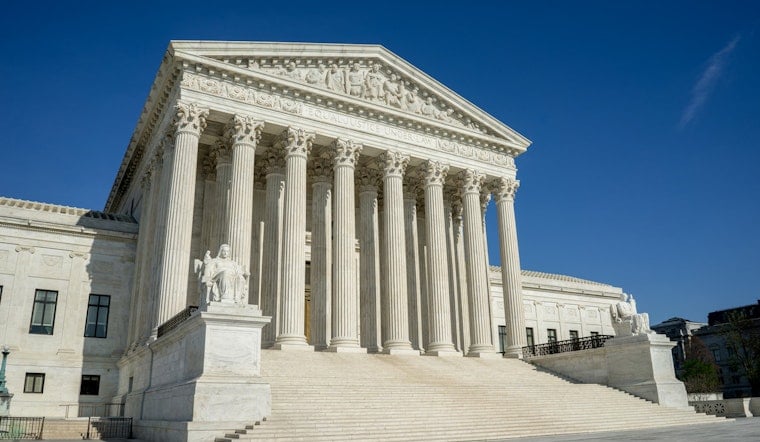
An Alaska bush pilot’s six-pack of Budweiser has turned into a U.S. Supreme Court showdown over how far governments can go when they seize people’s property.
The Court agreed Monday to hear the case of Kenneth Jouppi, an Alaska pilot now in his 80s who says the state is trying to take his 1969 Cessna, worth about $95,000, because troopers found a six-pack of beer in a passenger’s luggage before a flight to a dry village. Jouppi argues that losing the entire aircraft over a misdemeanor violates the Eighth Amendment’s Excessive Fines Clause, and the Court’s answer could reshape asset forfeiture rules nationwide.
As reported by the Associated Press, Alaska State Troopers, preparing to watch his flight from Fairbanks to the dry village of Beaver, spotted a six-pack of Budweiser in a clear grocery bag during a preflight search more than a decade ago. Jouppi, his company KenAir LLC, and the passenger were convicted of a misdemeanor, and a judge sentenced him to three days in jail. Now, his long-running fight over the plane has landed on a Supreme Court docket that could clarify when a forfeiture becomes an excessive fine.
What’s at Stake
Jouppi’s lawyers at the Institute for Justice say the Alaska Supreme Court looked at the case “purely in abstract terms” and did not seriously weigh whether taking an entire airplane is proportional to a single, small-scale alcohol offense. The Institute for Justice urged the justices to step in, arguing that seizing a $95,000 plane over a six-pack raises obvious constitutional red flags.
The State of Alaska counters that its courts already apply a multi-factor proportionality test and that forfeiture is an important deterrent, particularly in remote regions where airplanes can be the only realistic way to run alcohol into dry villages. In its briefing, the state frames the plane not as an innocent asset, but as a key tool in illegal alcohol importation that lawmakers are entitled to target.
How the Case Reached the High Court
The dispute dates back to April 3, 2012, when troopers in Fairbanks watched Jouppi help a passenger load groceries and beer into his Cessna before a scheduled flight to Beaver, then seized the alcohol before takeoff. At first, the trial court agreed that taking the entire plane would be excessive punishment.
The reprieve did not last. The Alaska Court of Appeals reversed, and the Alaska Supreme Court eventually sided with the state as well. In an opinion issued April 18, 2025, that court held that full forfeiture was not “grossly disproportional” to the offense under existing precedent and applied the Bajakajian proportionality test to reach that conclusion, as laid out in the opinion reproduced on the U.S. Supreme Court website.
Why Attorneys Say This Matters
Lawyers and legal groups on both sides say the outcome could ripple across the country, affecting how courts evaluate not just forfeiture but a broad range of financial penalties. The case has attracted amicus briefs from a mix of organizations, and SCOTUSblog has tracked filings that spotlight a central question: should judges focus on the abstract seriousness of the offense, or on what the particular defendant actually did and what was actually at stake?
The Institute for Justice argues that a ruling in Jouppi’s favor would set clearer limits on forfeiture practices that critics say often strip people of valuable property over relatively low-level wrongdoing. Supporters of tighter limits say this case shows how easily the balance can tilt when the government’s power to seize assets is left largely unchecked.
Legal Implications
If the Supreme Court sides with Jouppi, defendants around the country could have a stronger hand when invoking the Excessive Fines Clause to challenge large forfeitures attached to comparatively minor crimes. Courts would likely face more aggressive arguments that the value of seized property must be closely tethered to the actual harm caused by the offense.
Alaska’s briefing, however, leans hard on public-health and public-safety concerns. The state stresses its interest in keeping alcohol out of dry villages and notes that in isolated parts of Alaska, aircraft are sometimes the only realistic conduit for illegal alcohol. The Alaska Attorney General has urged the Court to treat the state high court’s ruling as a fact-bound application of existing law rather than a vehicle for announcing a sweeping new national standard.
The Supreme Court’s docket confirms that the justices granted review in Jouppi’s case, docket No. 25-246, and that the petition was granted on July 20, 2026; the case is now moving toward argument in the coming term, according to the Supreme Court. The docket lists the filings and participants, and the Associated Press reported that oral argument is expected this fall.
For Jouppi, who has already spent more than a decade fighting through Alaska’s courts, the Supreme Court chapter is the most high-profile and perhaps final round in a legal battle that began with a six-pack and has grown into a major test of government power.





.jpg)