

























































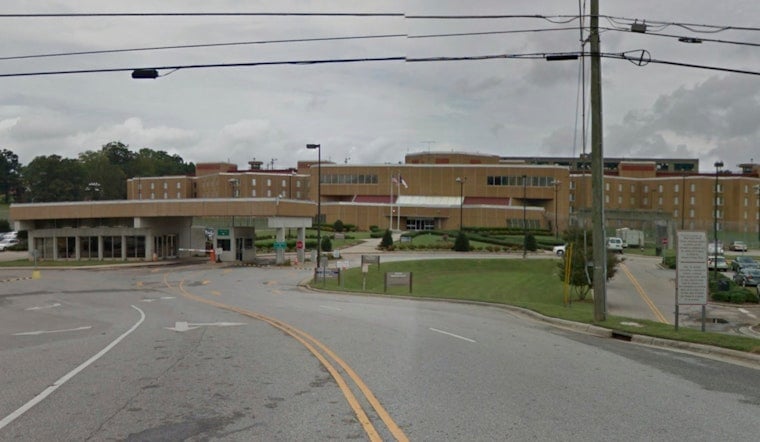
North Carolina has not put anyone to death since Samuel Flippen was executed by lethal injection at Central Prison in Raleigh on August 18, 2006, for the murder of his two-year-old stepdaughter. Twenty years later to the day, the state is spending real money and passing new laws to try to end that moratorium, but a tangle of unresolved court challenges means there is still no execution date on the calendar.
North Carolina Republican lawmakers have committed hundreds of thousands of dollars to restart executions, according to WRAL. The state is now spending nearly $900,000 a year on speeding up capital appeals, and the state budget funded 11 additional lawyers and support staff to work through pending capital cases. The North Carolina General Assembly separately provided $4.5 million for capital litigation attorneys over three years, though those positions remain time-limited, and lawmakers may consider making some of them permanent.
The push traces back to House Bill 307, known as Iryna’s Law, which Governor Josh Stein signed after the August 2025 fatal stabbing of 23-year-old Ukrainian refugee Iryna Zarutska on a Charlotte light-rail train, as detailed in Hoodline’s earlier coverage of the federal case. Zarutska’s killing became the catalyst state lawmakers cited for tightening pretrial release rules and inserting death-penalty acceleration measures into the bill, according to Elon News Network. The law requires that automatic North Carolina Supreme Court reviews of death sentences generally occur within 24 months, and that capital post-conviction motions generally be heard within the same window, though judges can allow additional time for specified case deadlines.
A Law With No Set Execution Date
Despite the acceleration measures, Iryna’s Law does not require the governor’s administration to resume executions by a specific date, per WRAL’s reporting. The law does set December 1, 2026, as a deadline for scheduling or reviewing certain older cases, and December 1, 2027, as a deadline for hearing or reviewing others. Stein has said there will be no firing squad in North Carolina while he is governor, and he opposes the law’s execution-resumption provision even as he signed the broader bill into law.
Lethal injection remains North Carolina’s only legal execution method, but the drugs used for it have become more scarce because of export bans and manufacturers’ restrictions, the station’s report notes. Iryna’s Law requires the Department of Adult Correction secretary to select another method if lethal injection becomes unconstitutional or unavailable, but the law does not specify what that alternative would be. Any substitute must be a method the U.S. Supreme Court has not declared unconstitutional. Leslie Cooley Dismukes leads the North Carolina Department of Adult Corrections, which would oversee any such switch.
Neighboring South Carolina has already turned to firing squads, executing two death-row inmates that way in March and April 2025 — the first U.S. executions by firing squad in 15 years, according to the Associated Press. South Carolina authorized firing squads in 2021 after pharmaceutical companies refused to sell lethal injection drugs to prison departments. North Carolina Republican lawmakers have considered the electric chair and firing squads as alternative execution methods, per the same account, but per WRAL, Stein’s opposition leaves lethal injection as the state’s sole viable statutory mechanism for now.
The Racial Justice Act Logjam
The biggest obstacle to actually carrying out an execution is not the law itself but the courts. More than 100 of North Carolina’s 123 death-row prisoners have pending Racial Justice Act claims, according to Mark Rabil, a Wake Forest University School of Law clinical professor and director of the school’s Innocence and Justice Clinic. Rabil, who spoke with WRAL, said executions cannot occur while those court motions remain pending.
North Carolina enacted the Racial Justice Act in 2009, allowing death-row prisoners to challenge their sentences based on racial bias in jury selection or sentencing. In 2012, Superior Court Judge Greg Weeks commuted the death sentences of four prisoners after finding evidence of pervasive statewide racial bias in capital jury selection, prompting Republican lawmakers to repeal the law in 2011, per the Equal Justice Initiative’s account of the fight. In February 2025, Superior Court Judge Wayland J. Sermons Jr. ruled in State v. Hasson Bacote that racial bias systematically infected capital jury selection in Johnston County, vacating Bacote’s death sentence and setting a precedent that could apply to the more than 100 similar pending claims, according to the ACLU. That court found prosecutors deliberately struck Black potential jurors at three times the rate of white potential jurors. The North Carolina Supreme Court has ruled that Racial Justice Act claims filed before the 2011 repeal could still be litigated.
State Senator Danny Britt expects that pending appeals and motions must be resolved before an execution can happen, and he said North Carolina remains a few years away from beginning the execution process, per WRAL. North Carolina cannot control federal proceedings either, since defendants can pursue federal constitutional claims even after state-court cases conclude. North Carolina’s current death-row population also traces back to a legal collision with the medical profession: the state’s execution pause originally began in January 2007 after the North Carolina Medical Board declared physician participation in executions a violation of medical ethics subject to license revocation, prompting the Department of Correction to sue. The North Carolina Supreme Court ruled in 2009 that the board could not discipline doctors participating as required by law, but drug shortages and further litigation kept executions paused anyway, according to the Civil Rights Litigation Clearinghouse.
Attorney General's Role and Political Divide
Attorney General Jeff Jackson lacked the staff lawmakers considered necessary to move capital cases forward, WRAL reported, though he will continue defending death-penalty convictions while required by his duties. On the last day of 2024, outgoing Governor Roy Cooper resentenced 15 men from death row to life without parole, the largest capital clemency action in state history, further reducing an already large death-row population. North Carolina has since exonerated 12 people who were once sentenced to death, and a 2019 Public Policy Polling survey found that 70 percent of North Carolinians believe innocent people were likely executed by the state.
The political split over restarting executions runs through the legislature itself. State Senator Carl Ford supports executions for heinous crimes with conclusive proof and has said he would personally pull the trigger for an execution. Rabbi Sandra Lawson, who leads North Carolina Jews for Justice, opposes resuming executions and has planned a protest outside Central Prison; she has said human beings should not decide who is put to death. A 2009 Duke University study by economist Philip Cook estimated the state could save about $11 million annually by eliminating the death penalty in favor of life without parole, a figure Elon News Network cited amid the debate over the cost of capital litigation infrastructure.
With 121 people on death row following the 2024 commutations — a number WRAL now puts at 123 — North Carolina holds the fifth-largest death-row population in the country despite two decades without an execution, according to the Death Penalty Information Center. Most of those inmates were convicted in the 1990s. North Carolina keeps the death penalty legal, and in May 2026 the state Supreme Court ruled in State v. William Eugene Robinson that prisoners whose sentences were commuted to life without parole by Cooper no longer retain an automatic right to direct appellate review, according to FindLaw. The related overcrowding pressures from Iryna’s Law’s pretrial provisions have already strained local jails, as Hoodline reported in its look at Charlotte's jail overcrowding, underscoring how the new law's ripple effects extend well beyond death row itself. For now, with racial bias claims still working through the courts and no alternative execution method chosen, North Carolina's 20-year pause shows no sign of ending soon.



