

























































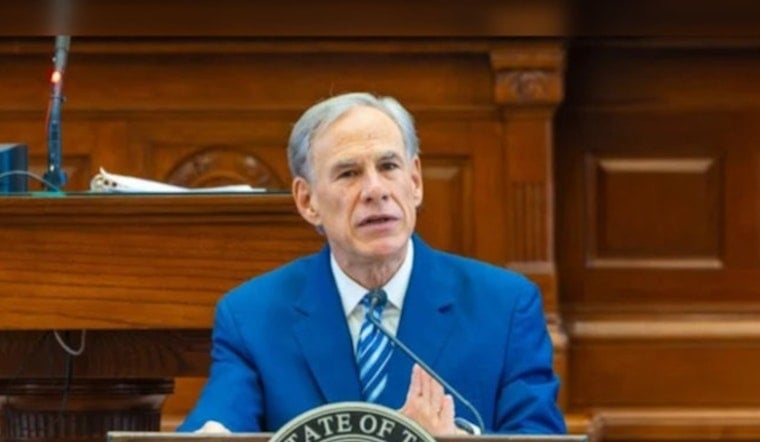
Texas homeowners have watched their insurance bills climb 79% in six years, and Governor Greg Abbott is now ordering state regulators to do something about it. In an August 24 directive to Texas Department of Insurance Commissioner Amanda Crawford, Abbott ordered five specific administrative actions aimed at reining in costs, from requiring insurers to factor storm-resistant roof upgrades into their rates to banning insurers from refusing to renew policies based solely on a home's age.
The average Texas homeowner paid $3,506 for coverage in 2025, up from under $2,000 in 2020, according to Community Impact. That premium has since climbed past $3,500 in 2026, and Texas now carries the nation's fourth-highest home insurance premiums, per Insurify data cited in the same report. Houston homeowners have it worse still — the metro's average annual premium hit $5,653 in 2025, driven by the region's combined hurricane and tornado risk, as Hoodline previously reported.
What Abbott Is Ordering TDI to Do
Abbott's directive to Crawford lays out five concrete steps: insurers must factor IBHS FORTIFIED roof designations into their rate calculations, they can no longer decline to renew a policy based purely on a home or roof's age, TDI must issue a bulletin banning “price optimization” — the use of personal data in setting insurance prices — the agency must stand up an Insurance Fraud Task Force, and it must launch a market study on inflated claim costs, according to the Office of the Texas Governor. Abbott also asked insurers to weigh homeowner participation in a roof fortification program when setting rates, and directed officials to identify immediate actions to reduce costs and recommend legislative fixes to better protect consumers.
The FORTIFIED standard at the center of the roof push was developed by the nonprofit Insurance Institute for Business & Home Safety. It uses techniques like sealed roof decks and ring-shank nails that can cut storm water intrusion by up to 95% and help homes resist winds up to 130 mph, per SageSure Insurance. The directive builds on a roof-fortification grant program Abbott proposed in July, which would give homeowners up to $10,000 to reinforce roofs against wind and hail; state officials estimate fortified roofs could save homeowners up to 8% annually on premiums and nearly $16,000 over time.
A Structural Problem Regulators Can't Simply Order Away
Texas operates under what's known as a file-and-use system under Chapter 2251 of the state insurance code, meaning insurers can put new rate increases into effect immediately after filing them with the state — before regulators finish reviewing them. Consumer groups like Texas Watch have pushed for prior-approval authority that would let the state block hikes before they hit policyholders, rather than reviewing them after the fact.
Ware Wendell, executive director of Texas Watch, argued the department needs to stop overcharges before they ever reach homeowners' bills. “Consumers are paying more for less coverage,” Wendell said, pointing to Texas's mandate that the state promote market competition and prohibit excessive or unfairly discriminatory rate setting.
Hail and Denied Claims Are Driving the Squeeze
Physical risk is a major piece of the cost equation. Texas leads the nation in hail-related property losses; State Farm alone paid out $1.4 billion for Texas hail claims in 2025, a 27% jump from 2024, out of $5.6 billion in total hail payouts nationwide, according to Carrier Management. Those losses have pushed many insurers toward percentage-based deductibles of 2% or higher on wind and hail damage — meaning a homeowner with a $350,000 house could owe $7,000 out of pocket before coverage even kicks in, per reporting from FOX 26 Houston.
At the same time, a December 2025 study from watchdog group Unlocking America's Future found that Texas home insurance claim denial rates rose from 35% in 2004 to 47% in 2024, with ten state insurers closing more than half of filed claims without payment, as reported by The Houston Defender. Consumer groups trace part of that surge to a 2017 state law that weakened penalties for wrongful claim denials.
Alabama's Model and a Political Fight Ahead
Texas's move toward voluntary rate consideration for fortified roofs contrasts with Alabama, which pioneered a statutory model mandating that insurers offer explicit rate discounts to policyholders who achieve FORTIFIED designations — a policy that reportedly drove roof retrofits regardless of whether homeowners used state grant funding, per Community Impact's reporting on the Houston Chronicle's comparison.
Abbott's directive sets a September 14, 2026 deadline for officials to submit recommendations for additional affordability measures and legislative changes ahead of the legislative session that begins in January 2027. Texas Lieutenant Governor Dan Patrick has tasked state senators with studying ways to reduce property taxes and make insurance more affordable, while House Speaker Dustin Burrows has directed representatives to examine drivers of high property insurance costs and consumer protections. Abbott, who was first elected governor in 2014 and is running for a fourth term this year, has framed the directive as part of a broader push on energy, healthcare, insurance and property tax costs, saying he will work with the legislature next session to enhance consumer protections and curb premium increases.
Not everyone is convinced. Austin state representative Gina Hinojosa, who is challenging Abbott in the November 3 election, called the directive an attempt to distract from rising costs under his leadership, saying Texas has been among the most expensive states for owning and maintaining a home during his tenure. Hinojosa argued that if Abbott truly wanted to lower costs, he would have done so during his prior 12 years as governor — a period in which the average Texas home insurance premium rose from $1,791 in 2016 to more than $3,500 today.
Amanda Crawford, who took over as insurance commissioner on February 3, 2026 after Cassie Brown's retirement, now oversees a $293.9 billion state insurance market — the second-largest in the country and fifth-largest in the world, as Hoodline reported when she stepped into the role amid what consumer advocates were already calling an affordability crisis. Whether her department's new mandates translate into real savings for homeowners in Houston and beyond will depend largely on what lawmakers decide to make permanent when they convene in January.





