

























































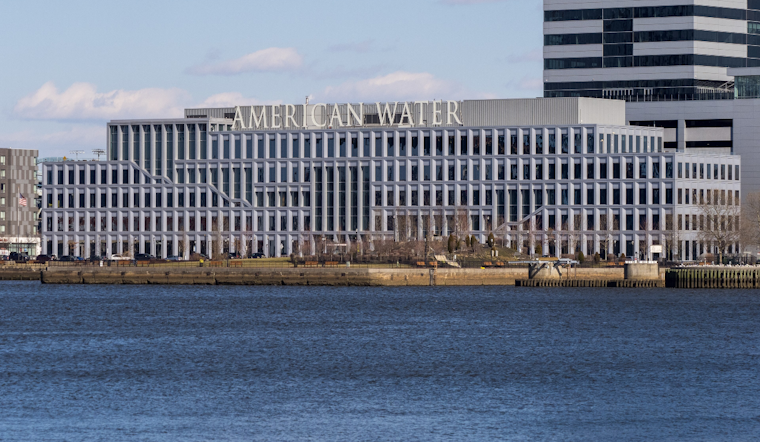
American Water says buying up struggling municipal water and wastewater systems is a win for cash-strapped cities, pointing to a Pennsylvania steel town that avoided bankruptcy and a Los Angeles County suburb that finally got its arsenic problem under control. The nation's largest regulated water and wastewater utility released a white paper Wednesday laying out its case, but the argument arrives just as Pennsylvania customers of the same company are grappling with the rate increases that critics say these very acquisitions can trigger.
The white paper, titled Community Benefits of Water and Wastewater System Partnerships, was announced on August 26 and examines systems acquired by American Water's local state operations across its national footprint, according to ROI-NJ. Founded in 1886 and headquartered in Camden, New Jersey, American Water serves roughly 14 million people across 14 regulated states and 18 military installations, a scale the company highlighted as it marked its 140th anniversary this year, per American Water. The company says it plans to invest about $48 billion in capital improvements to its systems over the next decade, covering everything from infrastructure renewal and water quality to technology and resiliency, the white paper notes.
McKeesport's $40 Million Escape From Bankruptcy
The paper's centerpiece case study is Pennsylvania American Water's 2017 acquisition of the wastewater system run by the Municipal Authority of the City of McKeesport. The utility assumed responsibility for compliance and long-term stewardship of the system, according to the ROI-NJ report, and the $159 million deal was the first finalized municipal sale under Pennsylvania's Act 12, according to Water World, which reported the deal covered roughly 22,000 direct and bulk customer connections across 13 Allegheny County municipalities.
McKeesport received $40 million in net proceeds from the sale, which the white paper says allowed the city to avoid bankruptcy. The city put that money toward financing upgrade projects, stabilizing wastewater rates, and enhancing customer service, per the same report. Act 12, enacted in April 2016, established Section 1329 of the Public Utility Code, letting investor-owned utilities acquire municipal water and wastewater systems at fair market value instead of depreciated net asset value — a shift that, according to the Spotlight PA, opened the door for private utilities to fold acquisition premiums into what customers pay.
Bellflower's Arsenic Problem and a $17 Million Deal
On the other side of the country, California American Water completed its acquisition of the City of Bellflower's municipal water system in November 2022 for $17 million, folding roughly 1,800 customer connections into its Los Angeles County operations managed from Rosemead, according to California American Water. Before the sale, Bellflower's system faced rising arsenic levels that intensified regulatory demands, along with mounting maintenance needs and aging asbestos-cement mains, the white paper states.
Since taking over, California American Water has replaced 8,510 feet of outdated mains in Bellflower and completed $4.5 million in upgrades, the company says, with plans for more than $10 million in additional improvements by 2027. The utility says it has enhanced water quality and compliance in the community using its advanced treatment expertise. System acquisition proceeds, the white paper argues, can provide communities with financial flexibility that might otherwise take decades to achieve.
Pennsylvania's Rate Hikes Complicate the Pitch
That framing runs up against real numbers already showing up on Pennsylvania American Water bills. Reporting from Spotlight PA found that Act 12 has led to post-acquisition water and sewer bill increases of up to 166% in some communities, prompting state lawmakers to debate repealing or reforming the fair market value law. Consumer advocates argue the rules let private utilities pass high acquisition costs directly onto ratepayers who had no say in the original sale.
Regulators have responded with more scrutiny. In June 2024, the Pennsylvania Public Utility Commission adopted updated guidelines under Section 1329 requiring mandatory in-person public hearings and enhanced public notifications before private utilities can purchase municipal water or wastewater assets, a move the commission approved on a 5-0 vote aimed at increasing transparency. Just last month, the same commission approved a $74.9 million annual rate increase for Pennsylvania American Water across 38 counties, cutting the company's original $143.4 million request nearly in half, as Hoodline's earlier reporting detailed.
A National Funding Gap Behind the Deals
The tension between short-term municipal relief and long-term ratepayer costs sits atop a much larger national problem. U.S. drinking water and wastewater infrastructure will require more than $1.2 trillion in total capital investments over the next 20 years, according to a 2024 analysis by Pew Charitable Trusts based on Environmental Protection Agency surveys — a figure that includes $625 billion for drinking water and $630.1 billion for wastewater and stormwater systems.
The physical toll of aging pipes adds urgency to that price tag. EPA data shows public water distribution systems nationwide lose more than 2 trillion gallons of treated drinking water annually to leaks and main breaks, enough to supply more than 30 million households for a year. Separately, the EPA's 7th Drinking Water Infrastructure Needs Survey estimated roughly 9.2 million lead service lines remain in service across the country, requiring between $50 billion and $80 billion to replace. Against that backdrop, American Water's pitch to municipalities is straightforward: sell now, and let a regulated utility absorb the compliance burden and capital costs going forward. Whether that trade proves as clean for ratepayers as it does for city budgets remains the open question hanging over every deal that follows McKeesport and Bellflower.





