

























































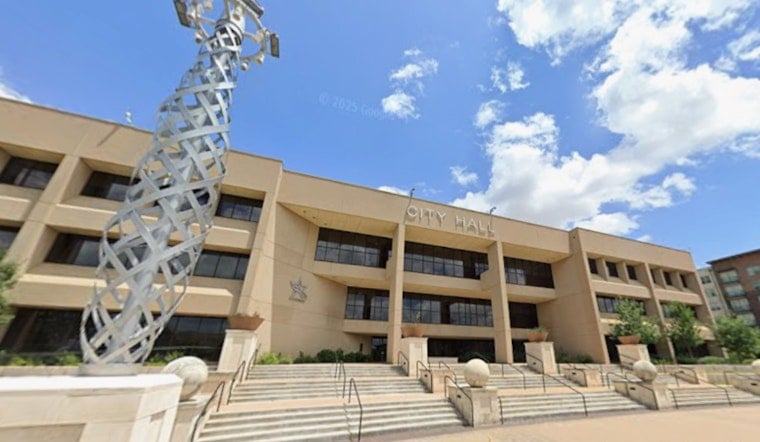
Arlington city staff have proposed a $769 million budget for the coming fiscal year that shows a modest reserve surplus, but city officials say a slight increase to the property tax rate may still be necessary to keep current service levels intact. The proposal holds the tax rate at roughly 62 cents per $100 of assessed value while raising water fees, even as sales tax and other city revenues are expected to hit their highest point since 2019. Before the Arlington City Council adopts a final version on Sept. 15, members are set to hold a budget retreat, town hall meetings and an initial public hearing.
Arlington officials said on Tuesday that the slight tax increase would likely be required to pay for additional street maintenance and homelessness services that aren't currently funded, according to the Fort Worth Report. City official Trey Yelverton said those two priorities won't be addressed without the increase, even as the proposed budget assumes the overall tax rate stays flat.
A Shortfall That Has Lingered for Nearly a Year
The new proposal follows a $25 million budget shortfall Arlington has been wrestling with for nearly a year, the outlet reported. City officials expect property tax revenue to come in lower than what was projected for 2026, even as they project a surplus of roughly $3.4 million for reserve funds if the new budget is adopted as written.
Last year, the city eliminated 42 vacant municipal positions and cut $7.7 million in operational spending, including lobbying, vehicle purchases and employee events, to help close a similar gap, according to WFAA. That round of belt-tightening came alongside a 3-cent property tax rate hike that, combined with utility and drainage fee increases, cost the average Arlington homeowner about $147 a year, the station reported at the time.
Appraisal Freeze and Protests Erode the Tax Base
Yelverton said tax appraisal protests, a district-wide appraisal freeze and lower property valuations all weighed on this year's budget math. Arlington properties lost 1.23% of their taxable value this year, and residential taxable value fell for the first time since 2013, with residential properties alone losing 5.13% of their taxable value, per the Fort Worth Report's account.
The freeze traces back to the Tarrant Appraisal District, which paused residential reappraisals until 2027 amid an unprecedented wave of successful property owner protests, according to KERA News. That freeze and the related rollback in protested values cost Arlington an estimated $15.5 million in lost property tax income, the station reported. Adding to the pressure, Arlington's property appraisals are running at least 10% behind market values based on available data. Last year, valuations swung by roughly $1 billion between the initial and post-protest figures, a gap that widened to about $5 billion overall this year, per the same report.
State Rules Add to the Financial Squeeze
Arlington officials are also bracing for Texas House Bill 9, which expands the business personal property tax exemption from $2,500 to $125,000 per location starting Jan. 1. The change, passed by lawmakers in July 2025, is expected to further shrink Arlington's commercial property tax revenue in the 2027 fiscal year, according to Bracewell LLP.
State law also requires governmental bodies to declare the highest tax rate they will consider before holding public tax hearings. That framework stems from the Texas Property Tax Reform and Transparency Act of 2019, known as Senate Bill 2, which caps most cities' annual revenue growth from existing property taxes at 3.5% before triggering a voter-approval election, according to Texas Legislature Online. Hoodline has reported that Arlington raised its rate by 3 cents last year, ending a two-decade streak of holding the rate steady or cutting it.
Council Members Split Over How High to Set the Ceiling
Some council members are now weighing a roughly 63-cent rate ceiling for meeting purposes, according to the Fort Worth Report. Sticking with the no-new-revenue rate for public notice would leave about $2.2 million out of the proposed budget, while raising the rate to roughly 63 cents would be needed just to maintain the city's base tax revenue.
Council member Jim Ross said he supports using the no-new-revenue rate for the public notice but doesn't want to set a higher rate ceiling. Mauricio Galante said the tax rate directly affects the level of city services Arlington can provide. Brittney Garcia-Dumas said she would consider setting the ceiling higher specifically to let residents weigh in during the public hearing process.
Water Bills Set to Climb as Regional Costs Rise
Separately, city staff has proposed raising water usage charges by between 4.7% and 7.8% depending on how much a household consumes, though Arlington's water rates would remain lower than those in nearby cities. The increases are driven partly by pass-through costs Arlington has little control over: the city's water utility needed $13.9 million in additional operating revenue for the 2026 fiscal year, including a $1.7 million jump in raw water purchases from the Tarrant Regional Water District and a $7 million increase in wastewater treatment costs billed by the Trinity River Authority, according to the City of Arlington.
What Got Tabled, and What's Being Restored
The initial budget proposal tabled a 24/7 expansion of the city's real-time crime center, expanded homelessness services, fire bunker-gear replacements, additional replacement vehicles, additional employee compensation increases, extra funding for risk self-insurance and workers' compensation funds, additional facility maintenance, police officer gas-mask replacements and additional street maintenance, per Fort Worth Report's reporting.
Even so, staff is proposing to restore some smaller items: $100,000 for the library collection budget, $66,253 for animal shelter hours and $12,000 for the annual employee picnic. Looking ahead to 2027, the budget also proposes $303,987 for parks maintenance increases and a new senior landscape technician position, $1.1 million for police fleet expansion, $4.6 million for enterprise IT projects and a $40,344 police motorcycle officer stipend increase. Police and fire departments remain the city's largest spending items overall.
Yelverton has also asked the council to weigh a fee recovery policy before adopting the budget, telling members that any future fee creation or increases to market rates would need council approval going forward. That request follows a phased overhaul of the city's planning and development fee schedule in 2025, which added or increased fees for special events and building inspections.
Part of a Wider Regional Squeeze
Arlington isn't alone in feeling the pinch. Neighboring Fort Worth is projecting a $77 million budget deficit for its 2027 fiscal year after certified property values there grew just 0.89%, according to Hoodline. Arlington, Texas's seventh-largest city with more than 392,000 residents, runs an annual operating and capital budget exceeding $800 million with a workforce of nearly 2,900 employees, per the City of Arlington.
Not every part of the tax base is shrinking, though. Reinvestment zones such as Tax Increment Reinvestment Zone No. 1 have added more than $1.9 billion in taxable property value to Arlington's rolls, supporting master-planned projects including Viridian's rapid growth in North Arlington, as per Hoodline.



