

























































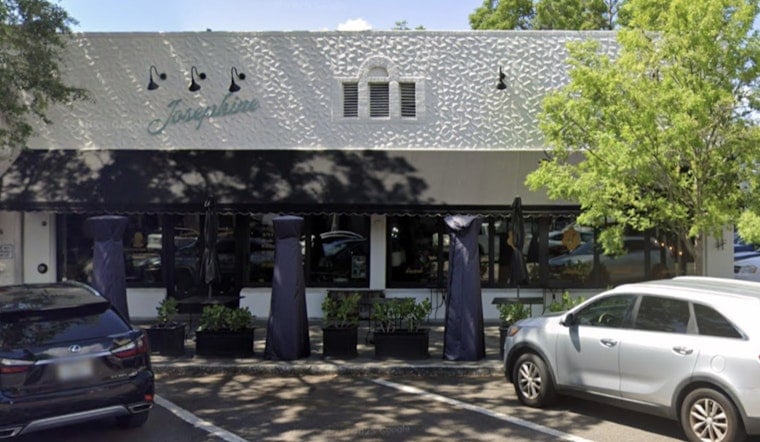
The man behind one of Avondale's most celebrated restaurant openings admitted this week that the money behind it was never what it seemed. George Joshua Floyd, 45, pleaded guilty to wire fraud after federal prosecutors said he defrauded investors out of more than $1.4 million tied to two restaurant ventures in Jacksonville and Clay County, siphoning cash meant to build a business into personal debts, cryptocurrency trades, and predatory loans.
Floyd was a familiar face in Avondale's dining scene long before he became a defendant in federal court. He spent 15 years in Jacksonville hospitality and served as beverage manager at Biscottis, directly across the street from where he would eventually open his own place, according to the Jacksonville Daily Record. That local standing helped him raise approximately $1.44 million from investors beginning in April 2022 for a new restaurant, which he opened that November as Josephine, a 5,200-square-foot Italian-American concept at 3563 St. Johns Avenue in the historic Shoppes of Avondale.
Floyd had told backers he planned to spend between $250,000 and $300,000 remodeling the former Barrique Kitchen & Wine Bar space, working with local designers and contractors on the renovation, the Daily Record reported at the time. The gamble initially looked like a hometown success story: in February 2023, Riverside Avondale Preservation gave Josephine a Design & Construction Preservation Award for its rehabilitation of the historic St. Johns Avenue building.
Cash Withdrawals and High-Interest Loans Drained the Restaurant
Behind that acclaim, federal prosecutors say Floyd was quietly bleeding Josephine's finances. He took control of the restaurant's bank account, wired money into his personal account, withdrew large amounts of cash, and used a business credit card for personal expenses, according to seed facts drawn from the case. He also made representations to investors about how their funds would be used and how he planned to manage the business — representations prosecutors say did not hold up.
To keep the restaurant afloat, Floyd caused it to take out unauthorized merchant cash advance loans at high interest, according to the U.S. Department of Justice. Those loans piled on additional interest and fees, and Floyd used much of the proceeds either for himself or to cover prior financial shortfalls rather than the restaurant's operations, federal prosecutors said. The Justice Department noted that Josephine was generating significant cash flow even as Floyd allegedly embezzled from it.
A Second Restaurant, a Second Round of Investors
By 2024, Floyd had shifted his focus to a second restaurant concept, this time telling investors it would open in Clay County. He solicited and raised approximately $570,000 for the project that year, according to federal prosecutors. Rather than building the new venue, Floyd diverted the money toward cryptocurrency trading, personal expenses, and covering losses at Josephine — effectively using new investors to plug holes left by the first scheme, per the Justice Department's account.
As reported by News4JAX, federal authorities calculated the combined fraud loss across both the Jacksonville and Clay County ventures at approximately $1,397,500. The station also reported that Floyd has agreed to forfeit $1,159,596.26 and to make full restitution to his victims as part of his plea.
Federal Charges and What Comes Next
U.S. Attorney Gregory W. Kehoe announced the guilty plea and forfeiture agreement on Wednesday, capping a multi-year investigation by the Middle District of Florida, according to the Florida Times-Union. The Federal Bureau of Investigation led the probe, with Assistant U.S. Attorney David B. Mesrobian prosecuting the case and Assistant U.S. Attorney Clint J. Locke handling asset forfeiture, per the Justice Department's announcement.
Floyd pleaded guilty to wire fraud under 18 U.S.C. § 1343, a charge that carries a maximum statutory penalty of 20 years in federal prison per count, along with mandatory court-ordered restitution and asset forfeiture, the Justice Department said. Action News Jax reported the $1,397,500 total loss figure as well, corroborating the scale of the scheme across both restaurant projects.
What remains unclear is how much of the forfeited $1.16 million can actually be recovered for the investors who lost money, and what happens next for Josephine itself, including its current ownership and operational status. Floyd's sentencing date has not been announced, and neither has any word on whether the Clay County restaurant project will ever move forward under new ownership.





